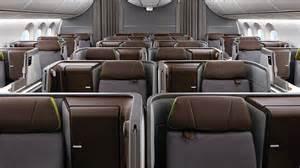
For travelers crossing the Pacific Ocean, the difference between an ordinary business class seat and a genuinely spacious one becomes obvious long before landing. EVA Air has built its long-haul reputation around precisely that distinction, combining attentive service, thoughtfully designed cabins, and lie-flat seating on some of the world’s longest routes. Among its most notable features is the generous 60-inch seat pitch found in its long-haul Royal Laurel Class product.
On a transpacific journey that can stretch beyond 12 hours, space is not simply a luxury. It affects how easily passengers can work, dine, relax, and eventually sleep. EVA Air’s approach gives passengers substantially more room between seat structures than they might expect from a conventional premium cabin, while the airline’s 1-2-1 configuration ensures direct aisle access for every traveler.
The result is a business class experience that feels deliberately designed around long-haul comfort rather than simply adding a larger reclining seat to a crowded aircraft. With fully flat beds, dedicated storage, generous personal space, and a refined cabin environment, EVA Air Royal Laurel Class has become an important part of the airline’s transpacific identity.
EVA Air’s Rise Into a Global Airline
EVA Air’s story begins in March 1989, when Dr. Chang Yung-Fa founded the airline under the umbrella of Evergreen Marine Corporation. Taiwan’s changing aviation regulations created an opening for private international carriers, and EVA Air moved quickly to establish itself as a serious competitor in the regional and international market.
Commercial operations began on July 1, 1991, with services connecting Taipei to important Asian destinations. The airline subsequently expanded beyond Asia, building a network that eventually reached Europe, North America, and Oceania.
From the beginning, EVA Air positioned itself as an airline willing to experiment with cabin design. One of its most important innovations was the introduction of premium economy seating on long-haul Boeing 747 services, at a time when the concept was still unusual across the industry. Wider seats, personal entertainment systems, and additional legroom helped establish a philosophy that would later become central to the airline’s premium products.
EVA Air eventually joined Star Alliance in 2013, placing it alongside major global carriers and strengthening its connectivity for international travelers. Its Taipei hub also became increasingly important for passengers traveling between North America and destinations throughout East and Southeast Asia.
What 60 Inches of Legroom Actually Means
The phrase 60 inches of legroom requires some clarification because airline seat measurements can easily be misunderstood. The figure generally refers to seat pitch, or the distance from a fixed point on one seat to the same point on the seat directly ahead.
That does not mean every passenger has a literal 60-inch-long empty floor area in front of their feet. The actual usable space depends on the seat structure, footwell, console, and the specific aircraft configuration.
Nevertheless, a 60-inch pitch creates a substantial amount of cabin volume around the passenger. On EVA Air’s long-haul business class aircraft, that additional space contributes to a feeling of openness that is especially valuable during overnight flights.
The advantage becomes even clearer when the seat is converted into its sleeping position. Instead of treating legroom as merely an upright seating measurement, EVA Air’s cabin design uses the available space as part of a broader sleeping environment.
Royal Laurel Class and the 1-2-1 Layout
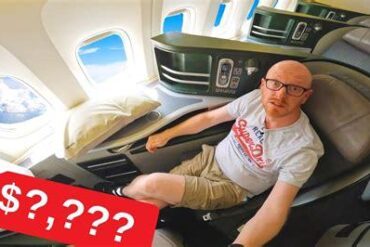
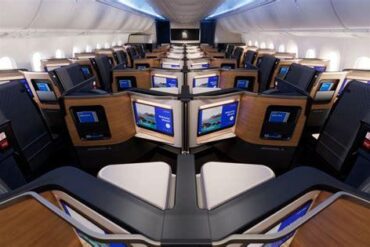
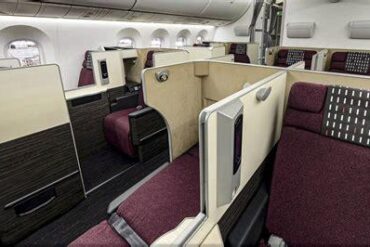
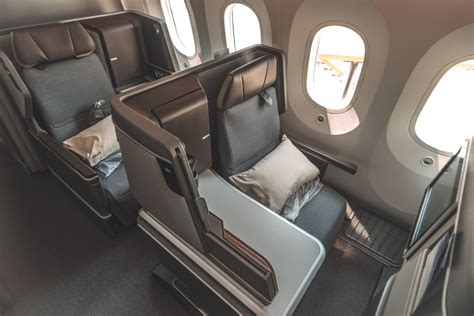
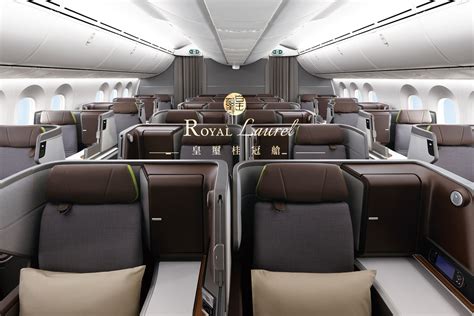
The heart of EVA Air’s long-haul premium experience is Royal Laurel Class, which is offered on aircraft including the Boeing 777-300ER and Boeing 787-9. These aircraft use a 1-2-1 seating arrangement in business class, giving every passenger direct access to the aisle.
This arrangement is now considered one of the defining characteristics of competitive international business class. Older 2-2-2 cabins could require passengers seated by the window to climb over a neighbor when they wanted to leave their seat. On overnight flights, that small inconvenience could become surprisingly disruptive.
EVA Air avoids that problem entirely. A window passenger can stand up without disturbing anyone, while travelers seated in the center section can use the space between the seats and privacy dividers to create a more secluded environment.
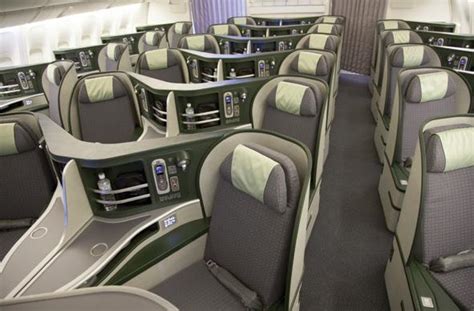
The staggered seat design also creates useful surfaces around the passenger. Side consoles, storage areas, armrests, and personal compartments can be incorporated without making the main seating area feel overloaded.
For passengers carrying headphones, tablets, passports, phones, books, or other small items, this organization matters. A premium seat is not particularly premium if everything a traveler owns has to be placed on the floor.
From Business Class Seat to Lie-Flat Bed
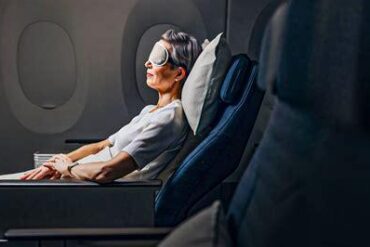
The biggest benefit of EVA Air’s generous cabin footprint appears when the seat transitions into a bed.
Royal Laurel Class seats convert into fully flat sleeping surfaces, allowing passengers to move from an upright working and dining position into a horizontal sleeping position. Depending on the aircraft and configuration, the bed is roughly 78 inches long, giving most passengers considerable room to stretch out.
The 60-inch seat pitch supports this transformation by providing additional space around the seat structure. A passenger can adjust their sleeping position without feeling as though every movement brings them into contact with a hard partition or neighboring seat.
That matters enormously on transpacific services. A passenger leaving Taipei for the United States may spend much of the flight trying to establish a normal sleep cycle while crossing multiple time zones. A lie-flat bed cannot eliminate jet lag, but it can remove one of its most frustrating companions: an uncomfortable sleeping environment.
The seat also functions as a practical workspace when upright. A large tray table provides room for a laptop or meal, while charging connections allow passengers to keep electronic devices powered throughout the journey.
A Cabin Designed Around Personal Space
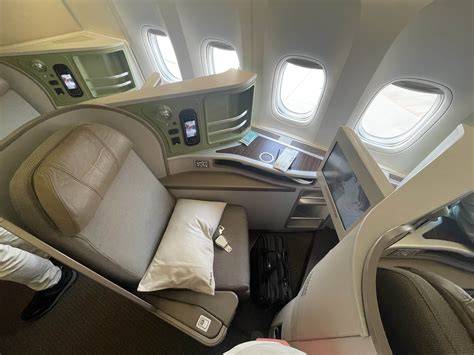
EVA Air’s business class cabin does more than maximize the distance between seats. Its design attempts to divide the passenger’s surroundings into functional zones.
The seat itself provides a primary sitting and sleeping area, while nearby consoles offer places for drinks, reading material, electronic devices, and personal belongings. Enclosed storage can help keep smaller items organized, which becomes particularly valuable when the seat is converted into a bed.
The 1-2-1 arrangement also changes the psychological feel of the cabin. Instead of seeing a continuous block of seats, passengers experience individual spaces with defined boundaries.
Window seats can feel particularly private. The combination of the aircraft wall, window position, seat shell, and surrounding furniture creates something approaching a personal cocoon. For overnight travelers, that sense of separation can be almost as important as the physical dimensions of the bed.
Center seats provide a different experience. Couples and colleagues traveling together can communicate more easily, while privacy dividers provide separation when passengers want to focus on their own activities.
Dining Across the Pacific
Business class dining is another area where additional cabin space becomes useful.
Meals are served using proper tableware, and the wider seating environment gives passengers enough room to dine without feeling as though their tray table is competing with every other object in the immediate area.
For a flight lasting more than half a day, dining also becomes part of the rhythm of the journey. Passengers may eat after departure, work for several hours, sleep, and then have another meal or refreshment service before arrival.
EVA Air has traditionally placed emphasis on both Taiwanese and international culinary choices, reflecting the airline’s role as a bridge between Asia and the rest of the world. The dining experience therefore complements the broader philosophy behind Royal Laurel Class: international standards with a distinctly Taiwanese identity.
EVA Air’s Transpacific Network
The value of a premium cabin becomes even clearer when we consider where EVA Air operates it.
From Taiwan Taoyuan International Airport (TPE), the airline connects Taiwan with major cities across North America. Its transpacific network includes destinations such as Los Angeles, San Francisco, Seattle, Chicago, Dallas/Fort Worth, Houston, New York, and Washington, D.C.
In Canada, EVA Air serves major gateways including Vancouver and Toronto, giving passengers throughout North America access to Taipei and onward connections across Asia.
These routes are ideally suited to a spacious business class product. A short regional flight may not provide enough time for passengers to fully appreciate a premium seat, but on a journey across the Pacific, every improvement accumulates over many hours.
A more comfortable seat, easier aisle access, useful storage, a proper workspace, and a flat bed can collectively change the character of an entire trip.
Boeing 777-300ER and Boeing 787-9
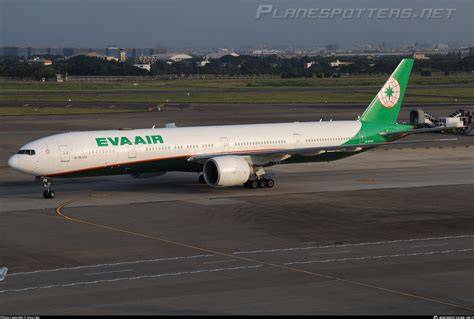
EVA Air’s widebody fleet has historically played a central role in its international network. The Boeing 777-300ER remains particularly important, combining substantial passenger capacity with the range needed for long-distance services.
The airline also operates the Boeing 787-9, a newer-generation aircraft designed with improved efficiency and modern passenger amenities. Its lower cabin noise and updated interior environment can complement the spaciousness of Royal Laurel Class.
EVA Air has also continued modernizing its fleet. Its future plans include additional Boeing 787 aircraft and Airbus A350-1000s, alongside Airbus A321neos. This combination reflects the airline’s intention to maintain a largely modern fleet capable of serving both high-density routes and long-haul markets.
The fleet strategy matters because cabin comfort is not determined by seat dimensions alone. Aircraft age, lighting, ventilation, noise levels, cabin design, and maintenance standards all influence how passengers perceive a long flight.
Why Legroom Matters More on a 12-Hour Flight
The importance of 60 inches becomes easier to understand when viewed through the reality of long-haul travel.
On a two-hour flight, an uncomfortable seating position can be tolerated. On a 12-hour transpacific journey, the same problem can become exhausting.
Passengers need to change positions. They need to work, eat, sleep, stretch, access personal items, and leave their seats without disturbing others. Every one of these activities becomes easier when the seat has been given enough surrounding space.
That is why EVA Air’s 60-inch seat pitch is more than a marketing number. Its significance comes from how the space interacts with the rest of the cabin design.
The combination of generous pitch, direct aisle access, substantial storage, and a lie-flat bed creates an experience that is greater than any single specification.
A Premium Cabin Built for the Pacific
EVA Air has developed its Royal Laurel Class product around a simple reality: transpacific travel is demanding.
Passengers crossing the Pacific do not merely need a seat that reclines. They need somewhere to spend an entire day or night in relative comfort. That requires thoughtful use of space, reliable access to the aisle, a practical work surface, comfortable sleeping arrangements, and a cabin environment that does not feel chaotic.
The airline’s approach has helped make its business class one of the more distinctive premium products linking Taiwan with North America. The 60-inch seat pitch stands out, but it works because it is supported by the wider design philosophy.
From the first stages of the journey at Taipei Taoyuan to the moment passengers arrive on the other side of the Pacific, the cabin is designed to make distance feel less demanding.
The Real Advantage of EVA Air’s 60 Inches
The headline number is impressive, but the real story is what passengers can do with that space.
Sixty inches of seat pitch provides the foundation for a business class environment where seating, sleeping, dining, and working can coexist without constantly competing for room. Combined with direct aisle access and a fully flat bed, it gives EVA Air’s long-haul passengers a cabin designed around the realities of modern international travel.
For travelers crossing between Taiwan and North America, that distinction can be significant. A transpacific flight is long enough for every small inconvenience to become memorable—and for every thoughtful design choice to become equally noticeable.
EVA Air’s Royal Laurel Class demonstrates why premium aviation is not simply about adding luxury touches. Space is itself a premium feature. When an airline gives passengers more room to move, sleep, work, and settle in, the entire journey can feel different.
That is ultimately what makes the airline’s 60-inch business class proposition so compelling. It is not merely about having more room in front of a seat. It is about using that room intelligently to create a more comfortable way to cross one of the world’s largest oceans.