Premium air travel has entered a new era where business class seats are no longer marketed only through comfort, privacy, and service. Increasingly, airlines are presenting their flagship cabins like consumer electronics products, highlighting measurable specifications such as screen size, display resolution, charging speed, Bluetooth connectivity, and seat dimensions.
For decades, airlines competed primarily through intangible experiences. A refined meal, attentive crew, luxury bedding, and exclusive lounge access defined the premium journey. Today, those elements remain important, but a new language has emerged. Passengers comparing long-haul business class products are now looking at numbers first.
How large is the screen? Is it 4K? Does it support Bluetooth headphones? Does the seat include wireless charging? How wide is the bed? These questions increasingly influence purchasing decisions before a traveler even reaches the airport.
The shift represents a fundamental change in how airlines communicate luxury. Instead of simply promising a better journey, carriers are increasingly selling business class as a collection of premium hardware features — almost like choosing a new smartphone, laptop, or home entertainment system.
The Rise of the Business Class Specification Race
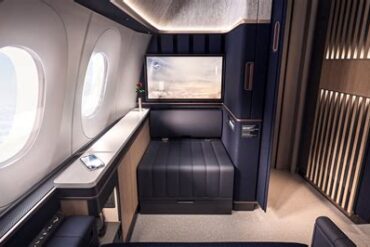
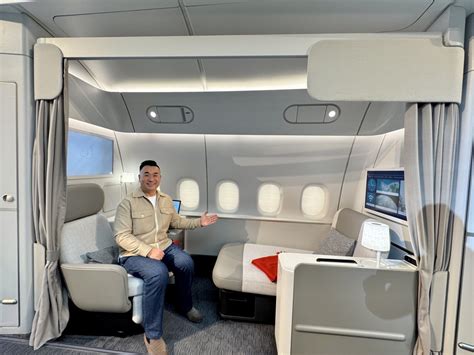
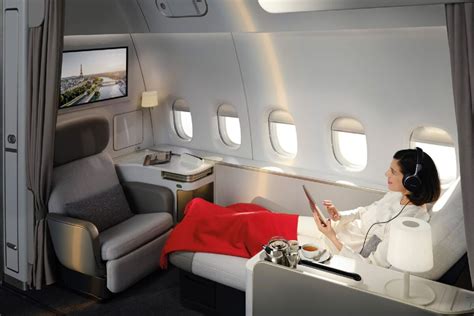
The clearest example of this transformation comes from Air France and its redesigned La Première first class suite. The airline’s latest premium cabin introduces a remarkable hardware feature: two 32-inch 4K anti-glare screens inside each private suite.
One display serves the main seat area, while the second faces the chaise longue. The purpose is practical because the suite contains multiple living zones, but the commercial impact is even more significant. A pair of 32-inch screens is a specification that passengers can immediately understand and compare.
That simple number has become powerful marketing language.
A traveler may not know the difference between one type of seat cushioning and another, or how a cabin designer improves airflow around a suite. However, almost every passenger understands that a 32-inch 4K screen sounds more premium than a 15-inch display.
This is the same psychology that drives consumer electronics markets. Smartphone companies compete through camera megapixels, processor speeds, and display technology. Television manufacturers advertise screen size and resolution. Laptop brands highlight battery life and performance benchmarks.
Now, airlines are adopting the same strategy.
Premium cabins are increasingly becoming products that can be evaluated through specifications before purchase. Online booking platforms, aviation review websites, and social media discussions have created an environment where passengers compare aircraft interiors with the same attention they once reserved for hotels or electronics.
The result is a new competitive battlefield where business class seats must win both emotionally and technically.
Why 4K Screens Became the New Symbol of Luxury Aviation
The importance of large screens is not only about entertainment. It reflects a broader shift in passenger expectations.
Modern travelers already own advanced consumer devices. Many carry smartphones with OLED displays, tablets capable of streaming high-definition content, and wireless headphones with premium audio technology. When they board an aircraft, they naturally compare the cabin experience with what they use every day.
A traditional aircraft entertainment system with a smaller display and wired headphones can suddenly feel outdated, even if the seat itself remains comfortable.
This explains why airlines have invested heavily in next-generation inflight entertainment systems. The cabin experience is no longer isolated from consumer technology trends.
Panasonic Avionics Corporation has played a major role in this transition through platforms designed around modern passenger expectations, including 4K HDR displays, Bluetooth audio pairing, USB-C charging, and enhanced sound technology.
These innovations allow airlines to advertise features that passengers recognize immediately. A traveler who owns premium wireless headphones can now connect them directly to an aircraft entertainment system. Someone accustomed to ultra-high-definition streaming can expect a similar visual experience in the sky.
The boundary between aviation and consumer electronics has become increasingly blurred.
Airlines Are Turning Cabin Features Into Shopping Specifications
The transformation of business class marketing is especially visible among global carriers introducing new premium products.
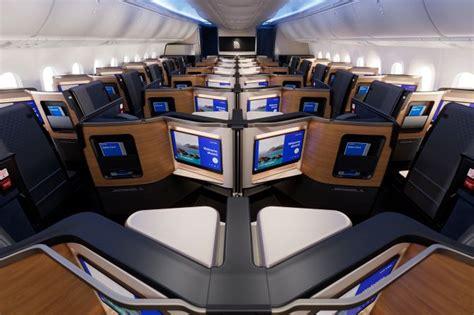
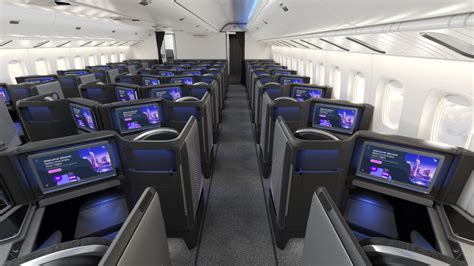
United Airlines has promoted its latest Polaris Studio concept with a 27-inch 4K OLED display, positioning it as one of the largest business class screens offered by a US airline.
Meanwhile, Qatar Airways continues to market its famous Qsuite concept through measurable features, including private doors, flexible seating arrangements, and large entertainment displays.
All Nippon Airways has emphasized cabin architecture through products such as The Room, highlighting seat width and personal space.
Each airline is attempting to create a signature number.
The reason is simple: numbers travel well in digital marketing.
A passenger researching a 12-hour international flight may compare dozens of options. They may never read a detailed description of the cabin service philosophy. However, they will notice phrases such as:
- 27-inch OLED display
- 32-inch 4K screen
- 79-inch lie-flat bed
- private suite door
- wireless charging
These specifications create instant differentiation.
The challenge for airlines is that hardware advantages do not remain exclusive for long. Once one carrier introduces a new feature, competitors quickly respond.
A large screen today may become a standard requirement tomorrow.
The Problem Facing Older Business Class Cabins
The specification race creates significant pressure for airlines operating older premium cabins.
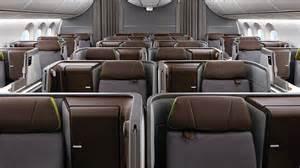
Many business class seats introduced between 2014 and 2019 were considered revolutionary at the time. They offered features that passengers wanted most: direct aisle access, lie-flat beds, improved privacy, and larger entertainment screens.
However, aviation innovation moves slowly because aircraft interiors require enormous investment and long planning cycles.
A cabin installed years ago may still provide an excellent passenger experience, but it can appear outdated when placed beside a newly launched suite featuring privacy doors, 4K screens, and wireless technology.
This creates what many analysts describe as a fleet-within-a-fleet problem.
Two aircraft from the same airline and the same model can offer completely different premium experiences. One Boeing 777 may feature a modern business class suite, while another still operates an older configuration.
Passengers increasingly research aircraft details before booking because they know the difference can dramatically affect their journey.
For airlines, this creates pressure to accelerate retrofit programs. A carrier cannot easily advertise a premium product if customers discover that only some aircraft offer the advertised experience.
Consistency has become almost as important as innovation.
Business Class Is Slowly Absorbing First Class Features
The evolution of business class explains why airlines are searching for increasingly specific ways to differentiate premium cabins.
Features that once defined first class have gradually moved downward.
Fully flat beds were once exclusive. Now they are expected in international business class.
Direct aisle access was once a luxury. Now it is considered a basic requirement for many long-haul travelers.
Private doors were once reserved for first class. Today, many flagship business class suites include them.
Large high-definition screens are following the same path.
This creates a difficult question for first class: if business class offers nearly every measurable feature, what remains exclusive?
Air France’s La Première provides an answer.
The cabin does not simply add bigger screens or more technology. Instead, it focuses on space architecture.
The suite separates different functions: sitting, relaxing, dining, and sleeping. The passenger does not need to transform one area into multiple uses because each zone has its own purpose.
The two-screen design is not actually about entertainment superiority. It exists because the suite has multiple orientations and living areas.
That distinction is important.
Business class competes through maximizing functionality within limited space. First class competes by creating a private environment that feels closer to a personal room.
The Next Battle May Move Beyond Screens
The current business class competition still has room to grow. A 27-inch display may not remain the upper limit for long. As aircraft manufacturers introduce new widebody designs and airlines plan future cabin upgrades, larger displays could become another major marketing advantage.
However, there is a physical limit.
Aircraft cabins have limited space. Every additional inch devoted to a screen must compete with seat width, storage, privacy, and passenger movement.
Eventually, the specification race will reach a point where hardware differences become difficult to notice.
At that stage, airlines will need new ways to define luxury.
The future premium cabin may focus less on individual components and more on the total experience. Instead of asking whether a screen is 27 inches or 32 inches, passengers may evaluate how the entire space feels.
This could include personalized lighting, adaptive cabin environments, improved sleep technology, artificial intelligence assistance, and more seamless service integration.
Technology will remain important, but the most valuable innovations may become less visible.
Premium Economy Is Following the Same Technology Path
The influence of business class technology is already spreading downward.
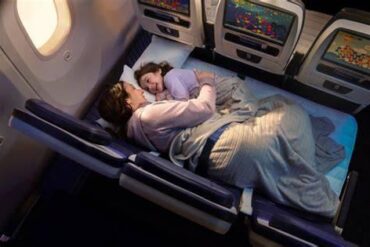
Premium economy cabins are adopting features that previously appeared only in higher classes. Larger screens, Bluetooth connectivity, improved charging options, and enhanced entertainment systems are becoming increasingly common.
This follows a familiar aviation pattern.
Innovations usually begin in first class, move into business class, and eventually reach premium economy and economy cabins as costs decrease.
The same process happened with personal screens, power outlets, and improved seating designs.
As business class becomes more technologically advanced, premium economy passengers will increasingly expect similar improvements at a lower price point.
Airlines must therefore consider not only their flagship products but also how technology spreads across the entire cabin hierarchy.
The Future of Airline Luxury Will Be Defined by Both Hardware and Experience
The rise of 4K screens, larger displays, and smartphone-style specifications in business class does not mean traditional hospitality has disappeared.
Service still matters.
A comfortable bed, thoughtful meal service, attentive crew, and a smooth journey remain essential parts of premium travel.
However, airlines have discovered that modern travelers evaluate products differently. Before experiencing service, passengers often judge a cabin through visible specifications.
The first impression now happens online.
A business traveler choosing between two airlines may see one offer a standard seat while another advertises a private suite with a 27-inch OLED screen, Bluetooth audio, and wireless charging. The numbers create an immediate perception of value.
That is why business class has entered a new era.
Airlines are no longer selling only a seat. They are selling a carefully engineered technology product designed for the sky.
The winners in this competition will not necessarily be the airlines with the largest screens or the most impressive specifications. They will be the carriers that understand when technology enhances luxury — and when true exclusivity requires something that cannot fit into a specification table.