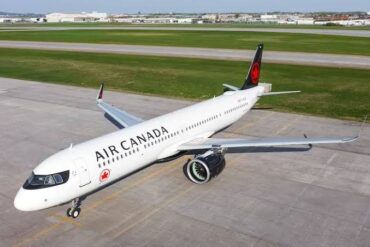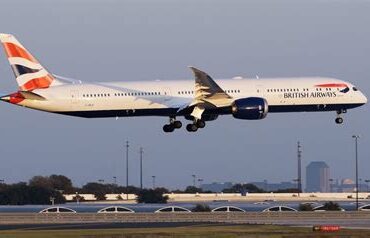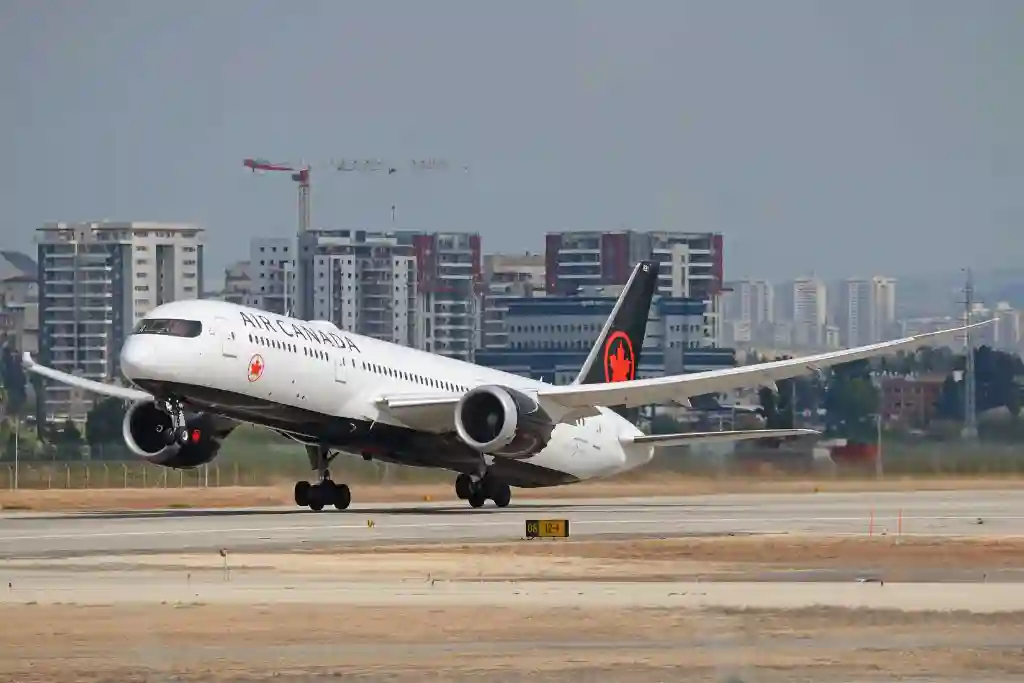
Air Canada is redrawing its long-haul map around the Boeing 787 Dreamliner. Between November 2026 and June 2027, the Canadian flag carrier will introduce or restore 11 city pairs to 787 operations, spanning three continents and touching all three of its principal hubs: Toronto Pearson (YYZ), Montréal-Trudeau (YUL) and Vancouver (YVR). The programme is neither a single seasonal reshuffle nor a routine equipment swap. It is a coordinated wave in which new destinations, returning services and aircraft upgrades on existing routes land in the same publication period, producing a network footprint of 13 airports and approximately 43,302 miles of connected Dreamliner flying. For travellers in Canada, Ecuador, Croatia, Japan and southern China, the practical consequence is immediate: nonstop access, lie-flat cabins and long-range comfort where connecting itineraries or narrowbody aircraft previously dominated.
Three New Cities and Two Returning Markets
Three cities enter Air Canada’s network for the very first time. Guangzhou (CAN) in southern China, Sapporo (CTS) on Japan’s Hokkaido island and Dubrovnik (DBV) on Croatia’s Adriatic coast each receive inaugural Dreamliner service. Alongside them, Quito (UIO) returns to the map after an absence stretching back to March 2020, when the pandemic cut the carrier’s seasonal Rouge Boeing 767-300 service from Toronto. Quito’s comeback is unusually generous: Air Canada will fly nonstop from both Montreal and Toronto until March 2027, making it the only airline linking Canada and Ecuador directly. Dubrovnik, meanwhile, restores Croatian access for the first time since summer 2019, with a seasonal schedule running through October 24 on the smaller 787-8.
The Winter 2026 Wave: Phoenix, Cancun, Quito and Barcelona
The roll-out opens with a deliberately modest move. A handful of 787-8 flights between Toronto and Phoenix (PHX) operate in November only, a temporary deployment that recalls the daily 787-9 the airline flew on the route during the 2023/24 winter. December is where the substance arrives. From December 1, Vancouver–Cancun (CUN) shifts from the Boeing 737 MAX 8 to the larger 787-9 on a daily basis, a notable capacity upgrade on a leisure corridor. Montreal–Quito launches December 4 with three weekly 787-8 rotations, followed by Toronto–Quito on December 5 with a weekly 787-8. Toronto–Barcelona (BCN) then begins December 16 with a mix of 787-8 and 787-9 aircraft, originally planned at three weekly but lifted to up to daily through the holiday period. Vancouver–Sapporo completes the winter set on December 17 with three weekly 787-9 flights.
Sapporo and Guangzhou: Asia’s Two Strategic Bets
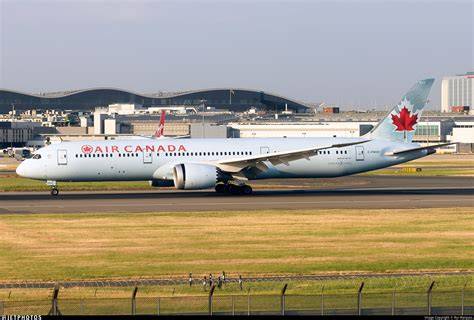
The Asian additions carry the clearest competitive logic. Vancouver–Guangzhou, at 6,340 miles (10,203 km), is the longest of the 11 routes and becomes Air Canada’s third mainland China destination after Beijing and Shanghai. Vancouver will be the only North American carrier serving Guangzhou, though China Southern Airlines already operates the same corridor. Sapporo is more contested than initially advertised. Air Canada presented the route as the sole nonstop link between North America and Hokkaido, but United Airlines has since scheduled a three-weekly 787-9 from San Francisco beginning December 11, six days ahead of Air Canada’s first flight. Air Canada also upgraded its planned equipment from the 787-8 to the 787-9 on every departure, a signal of confidence in demand.
The Summer 2027 Wave: Croatia, Israel, Czechia and Sweden
Five changes complete the programme in the 2027 summer season. Vancouver–Guangzhou launches May 4, three times weekly on the 787-9. Montreal–Dubrovnik follows May 11 with three weekly 787-8 services. Montreal–Tel Aviv (TLV) returns in May with three weekly 787-9 flights, restoring a high-value business and diaspora link. Toronto–Prague (PRG) and Toronto–Stockholm (ARN) convert to the 787-9 in May and June respectively, with Stockholm running up to five times weekly. These are equipment transitions rather than new markets, yet they matter commercially: widebody deployment on European trunk routes typically brings Signature Class capacity and premium revenue that narrowbody cabins cannot match.
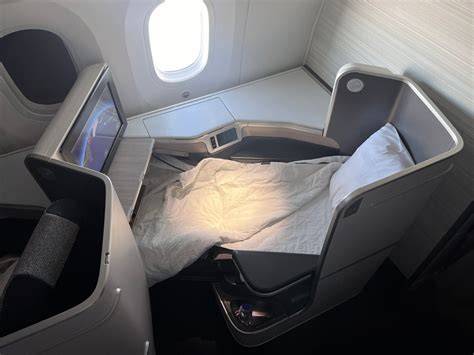
Cabin Configurations Across the 787-8 and 787-9
Both Dreamliner variants flying these routes carry three cabins. The 787-8 offers 20 Signature Class seats, 21 Premium Economy and 214 Economy seats, while the 787-9 expands to 30 Signature Class, 21 Premium Economy and 247 Economy. Signature Class delivers lie-flat seats in a 1-2-1 layout with direct aisle access for every passenger, Premium Economy uses a 2-3-2 arrangement and Economy a 3-3-3 configuration. Air Canada currently operates 40 Boeing 787s, split between eight 787-8s and 32 787-9s, with 14 787-10s on order and the first expected around the end of 2026.
Why the Programme Matters
The schedule reads as a single coordinated statement about where Air Canada believes long-haul demand is heading. Ecuador gains its only Canadian nonstop. Croatia returns after seven years. Hokkaido gets its first direct North American link, contested within a week by a US rival. Guangzhou extends a China strategy beyond the established Beijing and Shanghai gateways. The 787 becomes the instrument binding these markets together, and for passengers the calendar is now fixed: Phoenix in November, Cancun and both Quito routes in early December, Barcelona and Sapporo before the year ends, then Guangzhou, Dubrovnik, Tel Aviv, Prague and Stockholm through the following spring and summer.