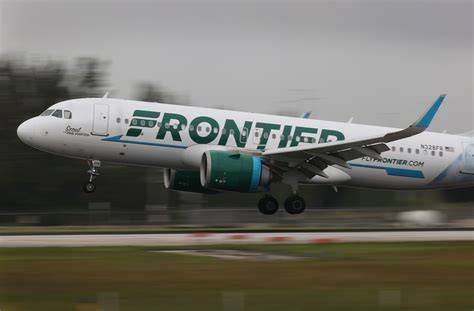
Frontier Airlines has quietly dismantled a sizable slice of its Chicago O’Hare International Airport (ORD) network, cutting seven routes across 2026 as the Denver-based ultra-low-cost carrier redirects aircraft toward markets it believes will generate stronger returns. Every one of those departures has already disappeared from the schedule, leaving O’Hare with a leaner Frontier footprint and travelers who once relied on cheap nonstop flights facing new one-stop itineraries or higher fares on legacy competitors.
The context matters. O’Hare is the world’s busiest airport by total flights, while Hartsfield-Jackson Atlanta International Airport (ATL) holds the passenger crown — two different measures, two different bragging rights. Frontier’s decision to retreat from the flight-volume champion says less about Chicago’s relevance than about the brutal economics of operating low-frequency, low-yield routes against entrenched hub carriers.
Three Routes Axed in the First Quarter of 2026
Between January and March, Frontier ended nonstop service to Minneapolis-St. Paul International Airport (MSP), Louis Armstrong New Orleans International Airport (MSY), and New York John F. Kennedy International Airport (JFK). The JFK cut is the most consequential: it marks Frontier’s complete withdrawal from New York’s busiest airport, with the airline consolidating its New York presence at Newark Liberty International Airport (EWR) and LaGuardia Airport (LGA) instead.
Each of those three markets was already saturated. American, Delta, Sun Country, and United fly ORD–MSP; American and United cover ORD–MSY; and American, Delta, and JetBlue serve ORD–JFK, though JetBlue itself exits that route on October 24. Against that wall of capacity, Frontier’s stripped-down fares — and the baggage, seat-selection, and onboard refreshment fees that underwrite them — simply could not sustain frequency.
Four More Routes Terminated in May
May delivered the heaviest blow, with Frontier suspending nonstop flights to Charlotte Douglas International Airport (CLT), Austin-Bergstrom International Airport (AUS), Miami International Airport (MIA), and Raleigh-Durham International Airport (RDU). All four competed directly with American and United, both of which operate deep hubs or major focus operations in those cities and can spread costs across far denser schedules.
This is the signature of a strategic network overhaul: Frontier is terminating unprofitable flying and pulling back from underperforming, low-frequency routes rather than subsidizing them indefinitely. The numbers explain the logic. Frontier remains O’Hare’s fourth-busiest operator with roughly 91 weekly departures — a rounding error beside United’s 4,509, American’s 3,530, and Delta’s 304. When your schedule is that thin, a single weak route drags on aircraft utilization and crew efficiency across the whole network.
O’Hare’s Standing in Frontier’s Network After the Cuts
The seven cancellations drop Frontier to 13 destinations from O’Hare: Atlanta, Dallas/Fort Worth, Orlando, Denver, Houston Intercontinental, Fort Lauderdale, Las Vegas, Los Angeles, Philadelphia, Cancún, San Juan, Baltimore/Washington, and Phoenix. By weekly departures, O’Hare now ranks as Frontier’s 14th-busiest airport, tied with Baltimore/Washington International Thurgood Marshall Airport (BWI) at 91 departures each.
Where Frontier Is Sending Its Aircraft Instead
Denver International Airport (DEN) leads Frontier’s network with 437 weekly departures, narrowly ahead of Orlando International Airport (MCO) at 429 and Atlanta at 412 — the only three airports above the 400-departure threshold. Las Vegas (328), Dallas/Fort Worth (288), Philadelphia (179), Phoenix (145), Los Angeles (135), Houston (133), Tampa (119), Fort Lauderdale (112), and Detroit (104) follow, with San Juan (97) and Baltimore (91) rounding out the list above O’Hare’s new total.
That redistribution is deliberate. Denver, Orlando, and Atlanta combine strong leisure demand with Frontier’s established operational depth, meaning crews, maintenance, and gate resources are already in place. Cleveland, San Francisco, Raleigh-Durham, Miami, Charlotte, Salt Lake City, and Cincinnati all still register more than 50 weekly Frontier departures — a reminder that a route cut from O’Hare does not necessarily mean a market abandoned entirely.
What the O’Hare Cuts Mean for Travelers
Chicago travelers booking Frontier should verify connection requirements before purchasing, because several former nonstops — notably Austin, Charlotte, and Raleigh-Durham — now demand backtracking through another Frontier hub. Legacy carriers still fly these routes nonstop, but the fare floor has risen for budget-conscious passengers who previously counted on Frontier’s presence to pressure prices downward.
The bigger takeaway is structural: Frontier is optimizing for margin per aircraft, not breadth of map. Seven routes out of the world’s busiest airport is a statement about where the airline believes its low-cost model actually works — and Chicago, at least for now, is not at the center of that vision.