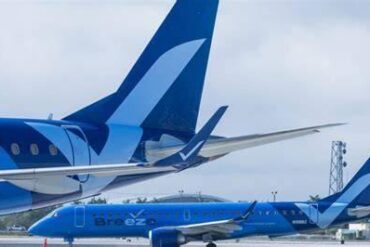
Breeze Airways has spent the past year selling itself as the airline that flies where everyone else won’t, stitching together a network of underserved airports that legacy carriers abandoned long ago. That pitch is now being tested by its own schedule. Since the start of 2026, the US low-cost carrier has quietly pulled at least 11 nonstop routes from its bookable inventory, most of them domestic links tying Florida, Colorado, New York, and the Carolinas to the airline’s focus cities. The removals span every month of the year, from a January Raleigh/Durham–Los Angeles exit to a November Washington Dulles–Tri-Cities cut, and together they tell a sharper story than the usual seasonal pruning: Breeze is discovering that ambition alone does not fill seats, and that its smallest markets carry the thinnest margin for error.
The headline casualty is international. In February 2026, Breeze introduced a weekly Saturday service from Rhode Island T.F. Green International Airport (PVD) in Providence to Cancún International Airport (CUN), the airport’s only international connection. The airport billed it at launch as an eight-week trial running through April, explicitly framed as a test of demand rather than a permanent commitment. The test failed decisively. Breeze had already loaded a resumption for December 19, 2026, timed to the Christmas holiday peak and running through March 20, 2027, but it has since erased every one of those flights from its schedule. The route is gone from the booking engine, and Providence is once again an airport without a single direct international flight.
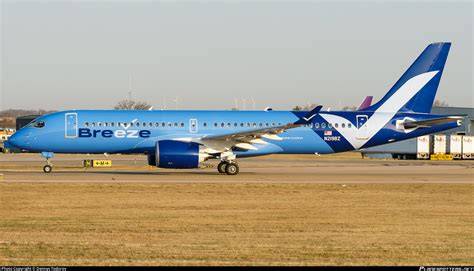
Why the Providence–Cancún Route Failed
The Department of Transportation data explains why Breeze walked away. Across the life of the trial, the carrier flew just 1,364 round-trip passengers and posted an average load factor of 49.8%, leaving more than half of the available seats empty. It also captured less than 11% of the overall Providence–Cancún market, which means travelers were not overwhelmingly choosing connecting itineraries or driving south to Boston Logan International Airport (BOS) for nonstop service instead; they simply were not choosing Providence–Cancún at all in meaningful numbers. The pattern is not a Breeze-specific fluke. Frontier Airlines flew the same city pair nonstop in 2022 and mustered a load factor of 50.2%, a figure so close to Breeze’s that it reads as a structural verdict on the market rather than a verdict on one carrier’s pricing or schedule.
The lesson generalizes across the international experiment. Breeze opened its first international service in January 2026, linking Norfolk International Airport (ORF) with Cancún, then added more Mexico routes through February and March. Providence was meant to be the proof of concept for a broader leisure network, but a single weekly Saturday rotation is a fragile vessel for a brand-new international market. One-way Saturday traffic skews heavily toward Rhode Island residents heading out, with far fewer inbound Mexican travelers filling the return leg, and a once-weekly frequency offers travelers no flexibility if a date shifts. Even a holiday-period relaunch demands enough year-round visibility to support marketing spend, and 49.8% loads never cleared that bar.
The Domestic Routes That Could Not Hold Their Seats
The domestic cuts are more revealing still, because several of them involve markets Breeze itself opened, sometimes less than a year before pulling the plug. Its Washington Dulles International Airport (IAD) to Ogdensburg International Airport (OGS) service, launched in September 2024 to serve an Upstate New York community near the Canadian border, logged an average load factor of just 28.2% through July 2026, the lowest figure anywhere in the airline’s network. The Dulles–Tri-Cities Airport (TRI) link is the most political of the bunch. Breeze began flying it in December 2025 after a regional economic development campaign led by BRIDGE raised more than $2 million in local funding to lure the carrier to the Johnson City, Kingsport, and Bristol market. The money produced 4,453 passengers through July and a 49.3% load factor, roughly 68 travelers per flight on a 137-seat Airbus A220-300, and the service now ends on November 30, 2026.

The full roster of confirmed exits is set out below, and the load factors make the pattern plain: routes above roughly 70% survived, routes in the low 30s or high 40s did not.
- Raleigh/Durham to Los Angeles — ended January 2026, 84.8% load factor
- Orange County to Montrose — ended April 2026, 32.3% load factor
- Orlando to Manchester — ended May 2026, 75.2% load factor
- Westchester to Daytona Beach — ended May 2026, 63.6% load factor
- Westchester to Jacksonville — ended May 2026, 70.0% load factor
- Orange County to Grand Junction — ended August 2026, 68.5% load factor
- Hartford to Louisville — ended September 2026, 65.1% load factor, launched only in May
- Myrtle Beach to New Orleans — ended September 2026, 57.2% load factor
- Washington Dulles to Ogdensburg — ended September 2026, 28.2% load factor
- Washington Dulles to Tri-Cities — ends November 30, 2026, 49.3% load factor
Two entries deserve closer scrutiny because they undercut any simple “weak loads caused these cuts” narrative. The Raleigh/Durham–Los Angeles route carried loads of 84.8%, comfortably above average, yet it disappeared in January alongside many carriers’ post-holiday trims. Hartford–Louisville was very young, opening in May and closing four months later, a lifespan too short for any market to mature and a signal that Breeze is willing to cut promotional routes before they have a chance to build a following. Meanwhile the Orange County–Montrose and Orange County–Grand Junction ski links, seasonal by design, were hurt by Colorado mountain demand that either shifted to competitors or proved unwilling to fly from a Southern California base that already offers abundant alternatives.
Where Breeze Is Redirecting the Capacity
Nothing about these cuts suggests retrenchment. Breeze continues to serve more than 90 destinations across the United States, built largely on markets other carriers skip, and its newest flying is aimed squarely at gaps left by Spirit Airlines’ collapse. Myrtle Beach International Airport (MYR) in South Carolina is the clearest example, where Breeze has become one of the largest carriers by destinations served. In February 2027 the airline plans to add Myrtle Beach flights to Boston Logan and to Arnold Palmer Regional Airport (LBE) in Latrobe, Pennsylvania, plus a Latrobe–Orlando International Airport (MCO) service. Latrobe lost all scheduled passenger service when Spirit withdrew, giving Breeze a rare uncontested market.
International ambitions are alive too, just relocated to a bigger stage. Tampa International Airport (TPA) now anchors the Mexico and Caribbean plan, with a Tampa–Cancún service scheduled to launch December 18, 2026, followed by Montego Bay, Jamaica, in December and Santo Domingo, Dominican Republic, in June 2027. The contrast with Providence is the whole story: Tampa has a vastly larger leisure catchment, multiple competing carriers that validate demand, and an airport willing to co-market aggressively. Breeze is not abandoning international flying after one costly trial; it is moving that flying to airports where a new route does not have to invent a market from scratch.
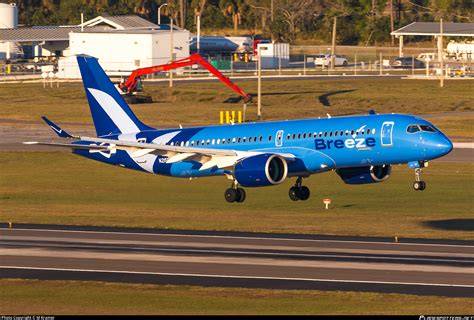
What the 11 Cancellations Mean for Travelers
The practical consequences for passengers are straightforward but unevenly felt. Providence travelers lose their only nonstop international option and will again route through Boston or connect on another airline for Caribbean and Mexico trips. Upstate New York travelers near Ogdensburg and the Tri-Cities communities in Tennessee and Virginia lose their Dulles links, the latter after having collectively financed the route’s launch through a local incentive package that will not be recouped in passenger service. Hartford and Louisville passengers lose a connection that existed for barely a season, while Orange County travelers lose two Colorado ski-season options that never found a stable following.
For Breeze, the strategic logic is emerging clearly. The airline is retaining high-frequency, high-load domestic flying on its A220 fleet and concentrating new international capacity at large leisure gateways like Tampa, rather than sprinkling weekly flights across small airports where brand awareness has to be built from near zero. That is a more disciplined network than the one that produced a 28.2% load factor at Ogdensburg, and it is a more honest one than the Providence trial that was marketed as an eight-week experiment and quietly extended into a holiday relaunch before being erased. Whether the next round of route announcements includes as many retreats as launches will depend on the same metric that doomed these 11 routes: whether enough people actually buy seats.