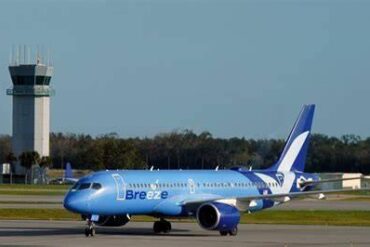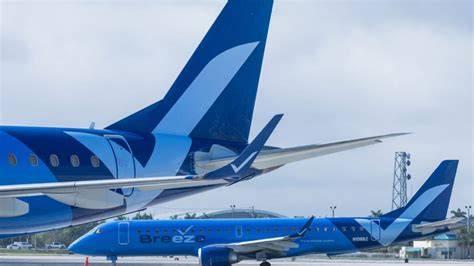
Breeze Airways has quietly closed the book on ten nonstop routes since the start of 2026, nine of them domestic and one international, according to a schedule analysis drawn from Cirium Diio data and the US Department of Transportation’s passenger figures. The cuts land in sharp relief against a network that has been expanding at breakneck speed. Between January and October 2026, the carrier opened roughly 60 new domestic markets and eight international links, and the ten closures look less like retreat and more like the pruning a fast-moving airline does when chasing the strongest demand. Still, each withdrawal tells its own story, and a few of them expose real weaknesses in the airline’s route planning.
The Domestic Routes Breeze Ended in 2026
The nine domestic cuts were spread across the calendar, with January claiming one, April another, May a cluster of three, August one and September three. Seven of the nine markets had been in service since somewhere between 2022 and 2024, giving them enough runway to prove themselves. Only two were recent experiments: Hartford to Louisville, which began in May 2026 and barely had time to breathe before being axed, and Washington Dulles to Ogdensburg, launched in September 2024.
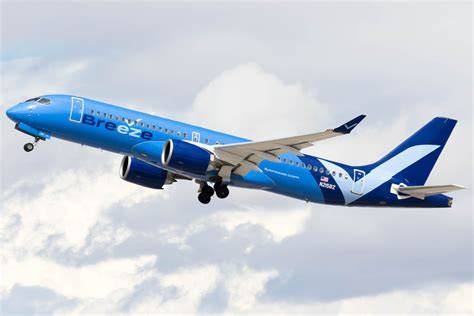
The strongest performer among the departed routes was Raleigh/Durham to Los Angeles, which flew 49,011 passengers through July 2026 at an 84.8% load factor. Those numbers would be the envy of many carriers, and its closure in January suggests the airline weighed margin and aircraft allocation rather than raw demand. Orange County to Grand Junction carried 48,865 passengers at 68.5% before ending in August, while Washington Dulles to Ogdensburg managed 39,882 passengers at a startlingly thin 28.2% load factor, a figure that made its removal almost inevitable. Westchester to Jacksonville (38,340 passengers, 70.0%) and Orlando to Manchester (33,537, 75.2%) sat in the middle of the pack, and Westchester to Daytona Beach’s 20,478 passengers at 63.6% hinted at a market that never quite matured.
The weakest of the lot were Myrtle Beach to New Orleans, at 12,460 passengers and 57.2%, Orange County to Montrose, at 7,974 and 32.3%, and Hartford to Louisville, which carried just 3,769 at 65.1%. Montrose, the Colorado ski market, lost its Orange County link in April and effectively disappeared from Breeze’s map entirely as the airline abandoned the airport.
Why the Ogdensburg Experiment Failed So Spectacularly
The Washington Dulles to Ogdensburg route deserves its own postmortem because it was unlike anything else in Breeze’s network. Ogdensburg sits in upstate New York on the Canadian border, roughly 61 miles from Ottawa, and the link was funded by the Essential Air Service program. That guaranteed revenue insulated the airline from passenger counts, and Breeze secured around $18 million through September 2026, when the flights stopped. Even so, the loads were so poor that the carrier cut frequency from daily to four times a week before pulling the plug. The 28.2% load factor is the clearest signal in the entire dataset that a route was running on subsidy, not demand.
Breeze’s Lone International Casualty: Providence to Cancun
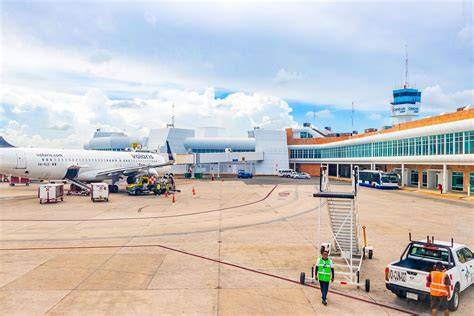
Breeze flew its first international flight on January 10, 2026, from Norfolk to Cancun International Airport, and quickly followed with Charleston on January 17 and New Orleans on February 7. Providence’s Rhode Island T. F. Green International Airport jumped in on February 14, a Valentine’s Day launch that turned out to be no love story. The route operated on Saturdays only through April 25, amounting to just 11 round-trip services. The DOT recorded 1,364 round-trip passengers, fewer than a tenth of what other Cancun links carried, with a load factor of 49.8%. Frontier Airlines flew the same pairing between February and April 2022 and posted a nearly identical 50.1%, which suggests the market itself, not Breeze’s execution, is the problem.
Ten Cuts Against a Wave of New Routes
The arithmetic of Breeze’s 2026 schedule is overwhelming. Ten closures against more than 60 domestic launches and eight international ones means the carrier’s map grew in every direction even as it shed weaker links. Six new international routes began within four days in early October alone, and in mid-October the airline unveiled 16 more routes for 2027, including a sixth international destination in Santo Domingo. Myrtle Beach, the South Carolina beach and golf hub, figures prominently with a dozen additions, and the reshuffling has produced a new number-one most-served airport. Denver, once feared lost after the Montrose pullout, has been confirmed to return next year, a reminder that route decisions are rarely permanent.
What the Cuts Reveal About Breeze’s Strategy
Load factors tell only part of the story. Raleigh/Durham to Los Angeles looks like a winner on paper, but a 49,011-passenger route can still lose money if yields are soft and a scarce A220 is needed elsewhere. Conversely, low-load routes like Montrose and Ogdensburg were never going to survive scrutiny. The pattern points to an airline that is willing to move fast, accept short-lived experiments and reallocate capacity toward markets with proven momentum, particularly Florida leisure and international sun destinations. That discipline is the same force driving the aggressive additions, and it explains why Breeze can cancel ten routes and still add nearly seventy in the same window without missing a step.