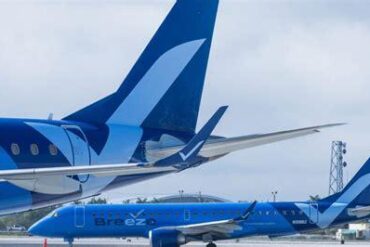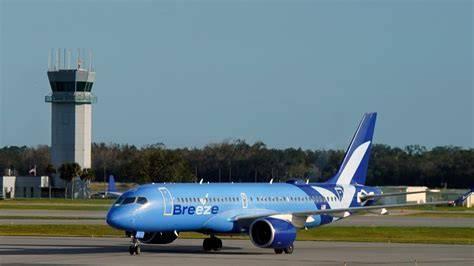
Breeze Airways Removes Its Second-Longest International Route From Schedule
Breeze Airways has abruptly removed its Providence (PVD) to Cancun (CUN) route, ending plans for the airline’s second-longest international service before it could return for the 2026–2027 winter travel season. The decision highlights the challenges faced by smaller airlines when attempting to compete in popular leisure markets dominated by larger carriers and established travel patterns.
The low-cost airline had originally announced the route in September 2025, targeting travelers from Rhode Island and southern New England seeking a nonstop connection to one of Mexico’s most popular vacation destinations. The first flight operated in February 2026 as a Saturday-only seasonal service, designed around leisure demand rather than business travel.
However, updated airline schedule data submitted to industry tracking platforms shows that Breeze has now removed all future flights from its booking system. The carrier had previously planned to restart the route on December 19, 2026, ahead of the Christmas holiday travel period, with additional Wednesday service before returning to weekly operations.
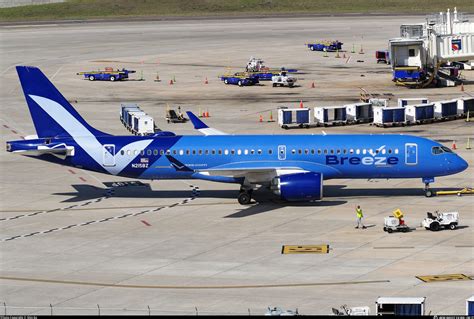
The cancellation comes as Breeze continues to maintain a very small international footprint. Compared with major US airlines that operate hundreds of international flights every day, Breeze’s overseas network remains limited. For much of the remainder of the year, the airline is expected to operate only a handful of international departures, meaning international flying represents just a tiny portion of its overall schedule.
Weak Passenger Numbers Made Providence–Cancun Difficult to Sustain
The main reason behind Breeze Airways’ decision appears to be disappointing passenger performance. According to data from the US Department of Transportation, Breeze carried only 1,364 round-trip passengers on the Providence–Cancun route during its initial operating period.
The route struggled to attract enough travelers despite Cancun being one of the strongest leisure destinations in North America. Breeze captured less than 11% of the market share among passengers traveling between the two airports, while many customers continued choosing alternative options.
Some travelers preferred connecting itineraries because of airline loyalty programs, higher flight frequencies, or broader schedules. Others simply drove to nearby Boston Logan International Airport, where nonstop Cancun flights have historically been available from larger airlines with stronger brand recognition and more frequent service.
The route’s load factor was another major warning sign. Breeze recorded a load factor of only 49.8%, meaning fewer than half of available seats were occupied. For a seasonal leisure route, especially one operated only once per week, consistently filling aircraft is essential to profitability.
Interestingly, Breeze was not the first airline to struggle on the airport pair. Frontier Airlines previously operated Providence–Cancun flights during the COVID-19 recovery period, achieving a nearly identical load factor of 50.2% before ending the service. The repeated difficulties suggest that the market itself may not generate enough demand for a sustainable nonstop route.
Providence Loses a Major Planned International Connection
The cancellation represents a setback for Rhode Island T. F. Green International Airport, which has been working to expand its international options and attract more travelers who might otherwise use Boston Logan.
Before Breeze’s cancellation, Providence was expected to see stronger international activity during the winter season. The removal of the Cancun route means the airport’s planned international operations will be approximately 34% lower than previously expected between December 2026 and March 2027.

Following Breeze’s exit, the airport’s international schedule will rely heavily on Cabo Verde Airlines, the small African carrier serving the local Cape Verdean community. The airline operates flights from Providence to Praia and Sal, reflecting the strong cultural connection between Rhode Island, Massachusetts, and Cape Verde.
Cabo Verde Airlines uses Boeing 737 MAX 8 aircraft on these routes, with flights typically operating during the day toward Africa and returning overnight. These services cover much longer distances than the canceled Cancun route, reaching nearly 3,000 nautical miles each way.
Breeze Airways Continues Expanding Select International Leisure Routes
Although Breeze has canceled Providence–Cancun, the airline is not abandoning international expansion entirely. The carrier continues developing a selective leisure-focused network connecting smaller US cities with popular vacation destinations.
Between August 2026 and March 2027, Breeze planned to operate 13 international routes, including services from cities such as Charleston, New Orleans, Norfolk, Pittsburgh, Richmond, Raleigh-Durham, Tampa, and Columbus.
Many of these routes focus on Caribbean and Mexican destinations, including Cancun, Punta Cana, Montego Bay, Nassau, and San José, Costa Rica. Several represent new additions to Breeze’s network as the airline searches for underserved markets where larger airlines may not provide nonstop service.
The airline’s strategy depends heavily on finding routes where passengers value convenience more than loyalty benefits. While this approach has allowed Breeze to grow rapidly across smaller US airports, international leisure routes can be particularly difficult because travelers often have many alternatives from nearby major airports.
The Providence–Cancun cancellation demonstrates the importance of demand forecasting in airline network planning. A destination may appear attractive on paper, but factors such as airport competition, passenger loyalty, seasonal timing, and local travel habits can determine whether a route succeeds or fails.
For Breeze Airways, removing the route before its planned winter restart allows the airline to redirect aircraft and resources toward markets with stronger potential. While the cancellation reduces Breeze’s international presence, it reflects the airline’s broader strategy of adjusting quickly when routes do not meet expectations.