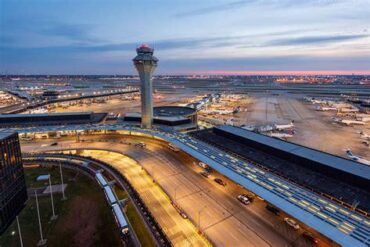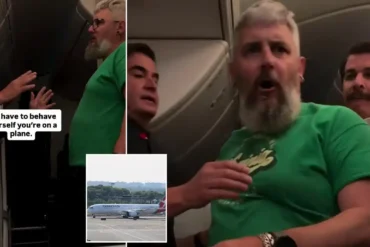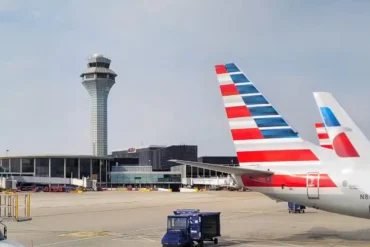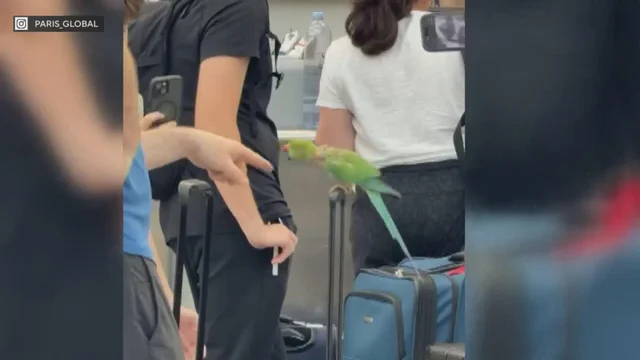
Passengers and workers at Chicago O’Hare International Airport (ORD) found themselves fleeing a feathered air traveler that made its way inside Terminal 5 on Tuesday, turning an ordinary travel day into an improvised wildlife rescue. The species has not been confirmed, but onlookers described the interloper as a green exotic bird resembling a parrot. Airport worker Paris Elbert filmed videos of the bird and posted them on social media, where the footage quickly drew attention from travelers and aviation observers alike.
Elbert told CBS News Chicago that the bird flew in from outside and fluttered around for hours, evading every attempt at capture. People tried to grab it, but the bird kept nipping at anyone who approached, fighting hard to remain free. The standoff ended only when the bird was eventually captured inside the shirt of another worker, who then took it to a veterinarian for a checkup. Airport staff now hope the bird’s owners can be found and reunited with their escaped pet.
“The Bird Chose Fight, Not Flight” Inside the Terminal
Many birds that make their way into airport buildings cause no direct harm and are treated as cute or charming curiosities. They slip in through automatic doors at the terminal, jetbridge doors, or any open entry and exit point, usually drifting through unnoticed. This particular bird was different. It was first seen riding on a passenger’s backpack before it began aggressively nipping at his neck and ears, escalating from a curious hitchhiker into a genuine nuisance.
Elbert captured the escalating chaos in her videos. “It was funny but it was crazy. Sad too,” she told CBS News Chicago. “Everybody’s just like oh, the bird is so cute and every time somebody got close, the bird just started attacking, going berserk. A lot of people wanted to get the bird, but every time they tried to either grab the bird or be nice to the bird, the bird chose fight, not flight.” The phrase captured the mood perfectly: this was no docile escapee but a small creature determined to defend its temporary territory against a terminal full of strangers.
Why Birds in Airport Terminals Pose Real Health and Safety Risks
Birds inside an airport terminal can be far more than a cute little nuisance. Common birds harbor parasites and more than 60 types of diseases, and their droppings can damage merchandise, contaminate surfaces, and alarm travelers. Their presence also raises health inspectors’ concerns and can complicate food-service operations inside busy concourses. For a hub like O’Hare, where millions of passengers pass through each year, an uninvited bird is a genuine facilities and public-health issue rather than a viral footnote.
Birds also disrupt terminal operations in less visible ways. They trigger evacuations of gates, distract cleaning and security staff, and can fly into signage, glass, or baggage carousels. In some cases, birds find their way into jetbridges and aircraft cabins during boarding, forcing crews to delay departures while they coax the animal out. The O’Hare incident may have ended with a veterinarian’s visit rather than a canceled flight, but it highlights how routinely wildlife intersects with the daily rhythm of air travel.
Bird Strikes Beyond the Terminal Doors at O’Hare and Denver
The bird strike threat extends well beyond terminal glass. The most famous aviation wildlife incident remains US Airways flight 1549 in 2009, when an Airbus A320 struck a flock of Canada geese and ingested at least four birds into its engines, causing a catastrophic loss of thrust. Captain Chesley “Sully” Sullenberger took command from First Officer Jeffrey Skiles and landed the disabled jet on the Hudson River in what became known as “The Miracle on the Hudson.” All passengers and crew aboard survived.
Most bird strikes never make the news, yet they happen daily. Denver International Airport (DEN) experiences the most bird strikes in the United States, recording collisions with 863 birds and other wildlife in 2025, according to Rocky Mountain PBS. The airfield sits on 53 square miles and borders a wildlife refuge, drawing hawks, owls, and coyotes onto the grounds. A United 737 ingested a white-tailed jackrabbit into one of its engines, causing $344,500 in damage and requiring replacement of the engine’s fan blades and oil cooler.
The Expensive Reality of Bird and Wildlife Impacts on Aircraft
In total, aircraft sustained over $1 million in damage from bird and wildlife impacts at DEN last year. DEN operates a Wildlife Hazard Management Plan (WHMP) with approval from the Federal Aviation Administration (FAA). Rabbits and prairie dogs attract predators that can cause significant damage to an aircraft, and the FAA has recorded a record 24,447 strikes in 2025 despite roughly $400 million spent on prevention.
Beyond damaging engines, bird strikes can shatter a cockpit windscreen, limiting pilot visibility and causing cuts, or damage the radome that houses sensitive radar equipment. Most strikes occur just 1,500 to 2,000 feet above ground, and birds can become wedged in wing flaps during takeoff or final approach, jamming ailerons, elevators, and rudders. At minimum, a strike delays the next flight while crews inspect and clean the aircraft; serious damage can ground a plane for days. The O’Hare parrot may have been a viral curiosity, but the fight it picked belongs to a much larger story about wildlife and aviation.