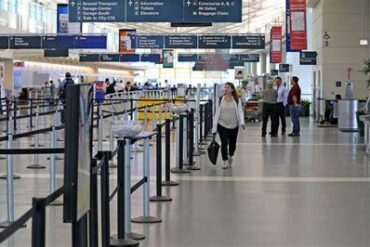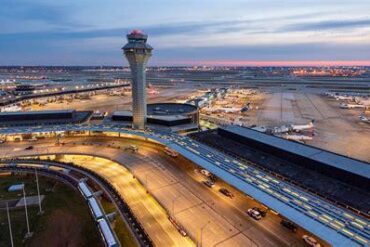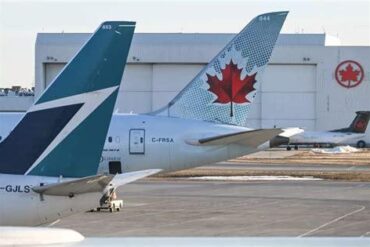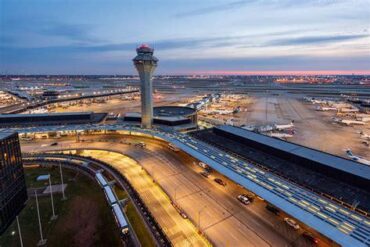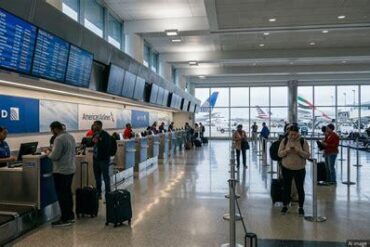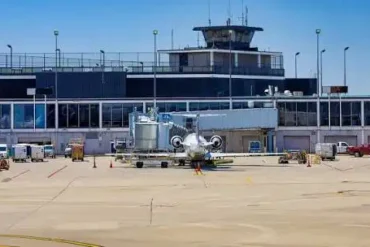
Chicago O’Hare International Airport has long been one of the most important aviation hubs in the world, but in 2026 it is once again facing a familiar challenge: too many flights chasing too little operational breathing room. In a significant pre-summer intervention, American Airlines and United Airlines have collectively removed nearly 2,700 scheduled roundtrip flights from their May operations at O’Hare after pressure from the Federal Aviation Administration.
The move is designed to reduce delays, improve punctuality, and prevent the kind of widespread disruption that damaged the airport’s reputation during previous peak travel seasons. For passengers, it means fewer available departures in the short term—but potentially a smoother travel experience when summer demand surges.
Chicago O’Hare remains one of the busiest airports on Earth, and by aircraft movements it often outranks every other airport globally. While Atlanta dominates passenger totals, O’Hare’s dense network of regional and domestic feeder flights gives it extraordinary daily traffic volume. That operational intensity is exactly what has placed the airport under renewed scrutiny.
By forcing schedule discipline now, regulators are trying to avoid a repeat of last year’s congestion spiral.
FAA Orders Capacity Cuts at O’Hare Before Summer Rush
The FAA made its position clear: airlines operating at O’Hare needed to trim schedules before the summer season ramps up. The concern is simple. When too many flights are packed into already-congested operating windows, even minor weather issues or staffing constraints can create a chain reaction of delays.
Last summer, fewer than 60% of arrivals and departures were on time at Chicago O’Hare. For an airport that serves as a connecting gateway for millions of travelers, that level of unreliability is costly for airlines and frustrating for passengers.
Transportation officials want a different outcome in 2026. Rather than waiting for operational collapse in June or July, regulators are acting early and demanding realistic schedules.
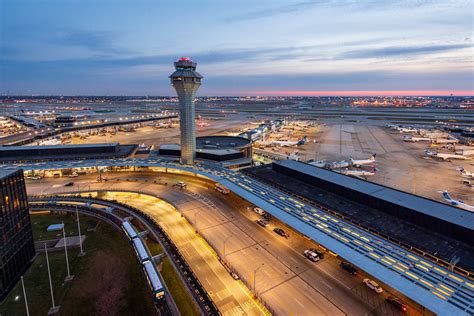
That approach reflects a broader shift in aviation oversight. Instead of allowing carriers to overschedule and then recover later, authorities increasingly want timetables aligned with runway capacity, staffing levels, and likely weather disruptions.
United Airlines Takes the Largest Hit
Among the two carriers, United Airlines absorbed the majority of the reductions. According to schedule data, United removed 1,909 roundtrip flights from its May Chicago O’Hare operation.
Its total monthly schedule fell from 43,271 flights to 41,362, making United the carrier most affected by the FAA-driven correction. This is not surprising. O’Hare is one of United’s most strategically valuable hubs, and the airline maintains a vast domestic connecting network through Chicago.
More than 50 routes reportedly saw at least ten departures removed during the month. Regional markets were hit hardest, with destinations such as Des Moines among the most heavily reduced.
Even major United hubs were not spared. Routes linking Chicago to Houston Intercontinental, Los Angeles, and San Francisco also saw cuts, proving that the airline prioritized operational reliability over network symbolism.
For United, fewer flights may reduce short-term capacity, but consistent operations matter more than publishing schedules that cannot be delivered.
American Airlines Makes Smaller but Meaningful Reductions
American Airlines cut fewer flights than United, but the changes are still substantial. The carrier removed 787 roundtrip flights from its May O’Hare schedule, reducing total operations from 32,410 to 31,623.
Percentage-wise, American’s reduction was lighter than United’s, indicating a more modest exposure to congestion risk at Chicago. Still, dozens of routes were affected, particularly domestic services to mid-sized cities.
Markets including Chattanooga, Green Bay, Memphis, Oklahoma City, Omaha, Richmond, and Rochester were among those seeing the sharpest trims.

Unlike United, American appears to have shielded many of its largest hub connections from the cuts. That suggests a more targeted strategy focused on lower-yield or thinner-frequency markets while protecting higher-priority routes.
Why Chicago O’Hare Is Especially Vulnerable
O’Hare’s challenge is structural. It combines huge demand, multiple hub carriers, frequent weather disruptions, heavy regional traffic, and tightly banked schedules. When all of those factors collide, punctuality can unravel quickly.
Regional jets are a major reason O’Hare ranks so high in aircraft movements. These smaller aircraft connect Midwestern cities to long-haul and mainline flights, but they also consume runway slots just like larger aircraft.
That means an airport can handle enormous movement totals without necessarily moving the same number of passengers as Atlanta or Dallas/Fort Worth. It is efficient for connectivity—but unforgiving when schedules become overambitious.
Even a brief thunderstorm, air traffic flow restriction, or gate shortage can ripple across the system.
What Travelers Should Expect This Summer
For passengers, fewer flights may initially sound negative. Less frequency can mean fewer booking options and potentially higher fares on some routes. But there is another side to the equation: a schedule that actually works.
Travelers generally prefer a slightly smaller timetable that departs on time over a bloated one filled with delays and cancellations. If the FAA’s intervention succeeds, passengers connecting through Chicago may experience shorter disruptions, fewer missed connections, and more predictable journeys.
Airlines also benefit when operations stabilize. Crews remain in position, aircraft utilization improves, and customer service pressure falls dramatically.
A Warning Shot for Overscheduled Hubs
The O’Hare cuts may also send a message to other congested U.S. airports. Regulators appear increasingly willing to step in when schedules exceed realistic airport capacity.
For American and United, this May reduction is more than a temporary trim—it is a reminder that network growth must match infrastructure reality.
Chicago O’Hare will remain one of the world’s busiest aviation centers. But in 2026, the path to smoother summer travel begins with one uncomfortable truth: sometimes the best way to run more efficiently is to fly less.