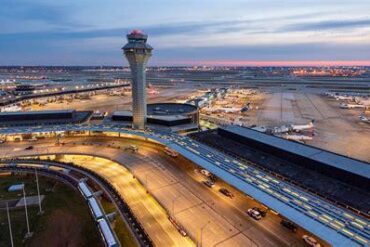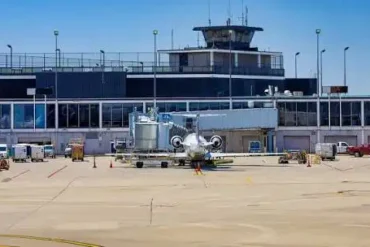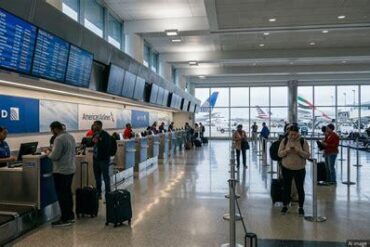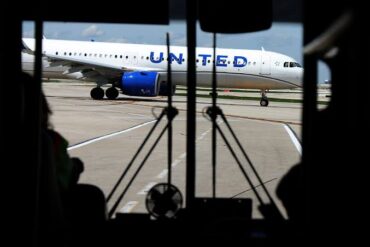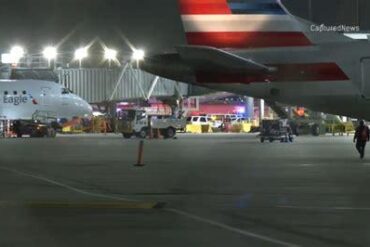
Chicago O’Hare International Airport has long been a proving ground for airline ambition. With its vast runway network and central geographic position, it functions as a beating heart of the US aviation system. Now, that heart is being asked to slow down. The Federal Aviation Administration (FAA) is moving to impose 10% flight cuts during peak summer periods, targeting what regulators describe as an unsustainable surge in scheduled operations by American Airlines and United Airlines. The message is clear: growth without capacity discipline risks operational chaos.
The proposed adjustment centers on peak-day activity that was projected to exceed 3,000 daily takeoffs and landings. FAA data indicates that on the busiest days, combined arrivals and departures were trending toward 3,080 movements, a sharp increase from roughly 2,680 during comparable periods the previous year. Regulators have determined that a more stable operational ceiling is closer to 2,800 total daily aircraft movements, given current staffing and infrastructure realities at O’Hare.
This roughly 280-flight daily gap represents the scale of reduction the FAA is seeking to implement throughout the Summer 2026 scheduling season. Rather than allowing aggressive banked scheduling to stretch the airspace and runway system beyond its reliable limits, the agency intends to cap activity at levels considered manageable under present conditions. The goal is not to suppress demand, but to prevent cascading system-wide delays that ripple far beyond Chicago.
Why The FAA Is Targeting American & United At Chicago O’Hare
O’Hare is a fortress hub for both United Airlines and American Airlines. Together, the two carriers account for the overwhelming majority of traffic at the airport. Their competitive expansions have intensified in recent months, with both airlines boosting frequencies across domestic routes and short-haul international markets. Chicago’s strategic position makes it an ideal connection point between the East Coast, West Coast, Midwest, and transatlantic corridors.
United has outlined plans for hundreds of daily departures from O’Hare, marking one of its most assertive growth phases at the airport in years. American, equally intent on defending market share, has expanded its own schedule significantly compared to 2025 levels. In isolation, each airline’s growth reflects robust passenger demand and post-pandemic recovery momentum. In combination, the cumulative effect pushes the airport’s operational envelope.
The FAA’s assessment concluded that projected peak-hour banks would exceed what air traffic controllers can consistently manage. Even with O’Hare’s eight-runway configuration, throughput is not infinite. Capacity depends not only on concrete and asphalt, but on air traffic control staffing, sequencing efficiency, and real-time weather conditions. When any of those variables tighten, reliability deteriorates quickly.
The Operational Math Behind The 10% Flight Cuts
At first glance, a 10% reduction may appear modest. In practical terms, however, trimming approximately 280 daily movements significantly alters peak congestion patterns. Concentrated departure and arrival banks create moments where taxiways fill, aircraft queue for runway slots, and inbound traffic stacks in surrounding airspace. Removing even a few dozen flights per hour during critical windows can introduce much-needed buffer capacity.
The FAA’s forthcoming notice in the Federal Register underscores that the proposed activity level is “manageable given the current infrastructure and staffing resources available at ORD.” That phrasing reflects a broader national challenge. Air traffic control facilities across the United States continue rebuilding staffing pipelines, and full certification of new controllers takes years. Until those personnel numbers stabilize, schedule management becomes one of the agency’s most immediate tools.
By moderating growth now, regulators aim to reduce the risk of systemic disruptions. Chicago functions as a major transfer hub; delays there can propagate through airline networks nationwide. A missed connection in O’Hare often means a missed aircraft rotation elsewhere, compounding disruptions across multiple cities within hours.
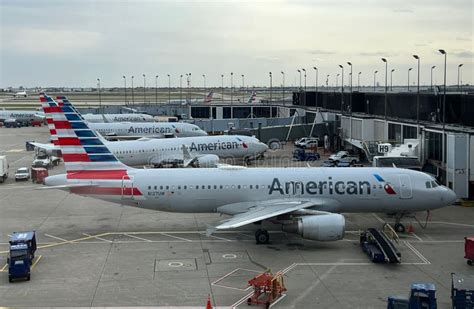
Weather, Staffing, And The Fragility Of Peak Scheduling
O’Hare’s operational complexity intensifies during summer. Thunderstorms sweeping across the Midwest can abruptly reduce arrival rates, forcing controllers to reroute or hold inbound flights. When schedules are tightly packed with minimal slack, even short weather delays cascade rapidly.
Recent performance data from several major US hubs demonstrates a consistent trend: higher scheduled flight volumes correlate with declining on-time metrics during peak months. At O’Hare, dense connection banks magnify the impact. Aircraft arriving late disrupt outbound departure waves, leading to gate conflicts, crew timing pressures, and missed slot sequences.
The FAA’s intervention reflects an acknowledgment that runway capacity is not the same as sustainable capacity. An airport may physically accommodate thousands of movements, but safe and reliable operations require margin. That margin has narrowed as airlines pursue competitive expansions.
Passenger Impact: Fewer Flights, Greater Predictability
For travelers, the immediate effect may be fewer departure options during high-demand time blocks. Airlines will need to recalibrate schedules, potentially consolidating frequencies or adjusting connection banks. Aircraft rotations and crew assignments must be reworked to align with federally imposed limits.
However, the intended outcome is improved reliability. A leaner schedule can enhance on-time performance, reduce gate congestion, and limit the domino effect of missed connections. In operational systems theory, introducing slack increases resilience. The aviation system is no exception.
Passengers may ultimately experience more predictable arrival times, even if that predictability comes with slightly reduced flexibility in flight choice. In an industry where minutes compound into hours across networks, stability carries tangible value.
Competitive Dynamics At Chicago O’Hare
The FAA’s move also underscores how competitive pressures can inadvertently strain shared infrastructure. American and United are not merely expanding; they are competing for dominance in one of the nation’s most strategically important hubs. Each additional frequency strengthens network connectivity and customer loyalty. Yet when both carriers escalate simultaneously, the airport’s equilibrium shifts.
O’Hare has historically balanced high throughput with operational complexity. Its parallel runway configuration allows simultaneous arrivals and departures under optimal conditions. But optimal conditions are not constant. Staffing gaps, equipment maintenance, and weather variability introduce constraints that cannot be ignored.
By capping operations near 2,800 daily movements, the FAA is effectively recalibrating the competitive playing field to align with present system capacity. Growth will not disappear; it will be moderated.
A Broader Signal About US Airspace Constraints
The decision to impose 10% flight cuts at Chicago O’Hare reflects a larger national reality. US air travel demand has surged to levels not seen in more than 15 years. The FAA oversaw more than 17 million flights in the past year alone. Yet the infrastructure and staffing framework supporting that demand has not expanded at the same pace.
Temporary caps and scheduling adjustments have emerged as pragmatic policy tools. Rather than waiting for systemic breakdowns, regulators are proactively managing throughput at congestion-prone airports. Chicago’s case may serve as a template for similar interventions elsewhere during peak seasons.
Balancing travel demand with operational capacity requires continuous recalibration. Airlines seek growth; regulators safeguard safety and reliability. The tension between those objectives defines much of modern aviation policy.
At O’Hare, the FAA has drawn a line designed to preserve system integrity. By tempering aggressive expansion with a calculated reduction, the agency aims to protect the broader network from strain. The coming summer will test whether a disciplined 10% cut delivers the reliability gains regulators anticipate. In an aviation system where minutes matter and margins are thin, even modest adjustments can shift the trajectory of an entire season.