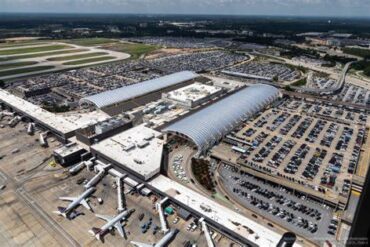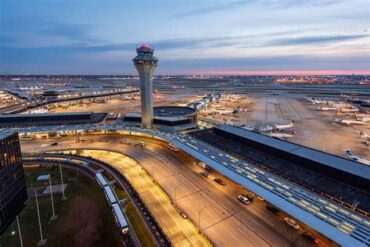
Chicago O’Hare International Airport is preparing for a transformative year. In 2026, the airport will add more than 16 new destinations, strengthening its position as the world’s busiest airport by aircraft movements and reinforcing its role as the Midwest’s most powerful global gateway. While other airports chase passenger totals, O’Hare dominates through sheer operational density, fueled by an intricate web of regional jets, mainline narrowbodies, and long-haul widebodies that connect America to the world.
A detailed comparison of 2025 and 2026 schedules reveals a decisive expansion across domestic and international markets. These additions are not cosmetic tweaks. They represent new city-pairs, revived markets absent for decades, and strategic long-haul growth designed to deepen Chicago’s global reach. Even more compelling, this is only February—meaning further announcements could follow, with Manila widely rumored should regulatory approval align with Philippine Airlines’ application.
This expansion signals more than numerical growth. It reveals how airlines are recalibrating their networks around O’Hare’s unrivaled connectivity, tapping both business corridors and underserved leisure markets while reinforcing Chicago’s geographic advantage at the center of the United States.

Domestic Network Revival Across Underserved Markets
The 2026 additions highlight a deliberate return to smaller and mid-sized cities that previously lost nonstop Chicago service. Markets such as Staunton, Paducah, Lynchburg, Clarksburg, and Kearney re-enter the O’Hare map, primarily operated by American Eagle and United Express using regional aircraft including the CRJ200, CRJ550, and CRJ700. These aircraft may not carry the glamour of widebodies, but they are the connective tissue of O’Hare’s dominance.
Several routes—like Eugene, Santa Barbara, and Erie—were last served in 2022 or 2023. Their return suggests improving yield performance and renewed demand. United’s deployment of mainline aircraft such as the Boeing 737-800 and 737 MAX 8 to select markets indicates confidence in sustained passenger volumes rather than seasonal experimentation.
Leisure-focused routes add texture to the network. Cody, Wyoming; Monterey, California; and St. George, Utah will receive weekly service, aligning with peak tourism windows. These are strategic, capacity-controlled deployments aimed at maximizing summer demand without oversaturating the market.
The pattern is unmistakable: O’Hare is not merely adding flights—it is restoring connectivity depth across the American heartland, reinforcing its function as the Midwest’s premier transfer hub.
Cairo Lands at O’Hare: EgyptAir’s Strategic A350 Entry
June 21, 2026 marks a milestone. EgyptAir will inaugurate nonstop Cairo–Chicago service, deploying its brand-new Airbus A350-900 three times weekly. This is the first time the Egyptian flag carrier has served Chicago, and its arrival gives O’Hare two African airlines simultaneously, joining Ethiopian Airlines.
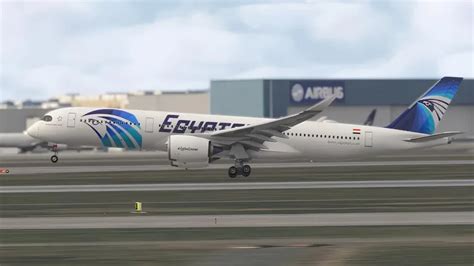
The scheduled 5:15 a.m. arrival is more than a curiosity. It becomes the earliest regularly scheduled transatlantic arrival by a foreign carrier at O’Hare in over two decades. Only United’s Tel Aviv flight lands earlier. Such timing is deliberate. Early arrivals maximize onward connectivity, allowing passengers to disperse across United’s vast domestic network within hours.
Cairo is not simply an origin-and-destination play. It functions as a strategic bridge to Africa and the Middle East. EgyptAir’s Star Alliance membership strengthens feed potential, while Chicago’s large diaspora communities add baseline demand. This route also underscores how O’Hare continues to diversify beyond traditional Western European strongholds.
Bucharest Returns After 31 Years
Equally notable is HiSky’s Bucharest–Chicago launch on June 4, marking the first nonstop link between the two cities since 1995. Operated twice weekly with an Airbus A330-200, the 4,533-nautical-mile route becomes O’Hare’s third-longest European service, behind Istanbul and Athens.
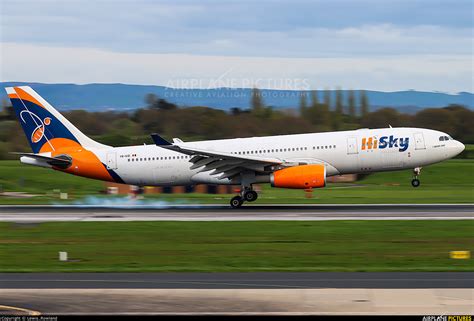
The Bucharest market historically generated only around 19,000 annual round-trip passengers. Yet low frequency and summer-focused scheduling allow HiSky to stimulate demand rather than oversupply it. Nonstop flights often reshape passenger behavior, especially when previous journeys required connections through Frankfurt, Paris, or Istanbul.
Chicago’s sizable Eastern European community provides additional resilience. Moreover, Bucharest offers onward access to regional destinations and strong links to Tel Aviv, one of the highest load-factor transatlantic markets due to constrained capacity. In aviation economics, sometimes a thin route is precisely where opportunity lives.
Toronto Billy Bishop: A Unique Cross-Border Play
On June 1, Toronto Billy Bishop Airport joins O’Hare’s network via Air Canada Jazz Q400 service, with Porter Airlines following in September. Unlike Toronto Pearson, Billy Bishop sits on an island minutes from downtown Toronto, appealing heavily to business travelers.
This short-haul addition deepens O’Hare’s connectivity to Canada’s financial capital while diversifying beyond the heavily trafficked Pearson corridor. The Q400 turboprop is optimized for efficiency on sub-500-mile sectors, offering high frequency and fast turnarounds—exactly what business markets demand.
The Manila Question and Ultra-Long-Haul Potential
While not yet confirmed, Manila remains a high-impact possibility. Should Philippine Airlines proceed, the route would surpass Hong Kong to become O’Hare’s longest-ever nonstop flight. Such ultra-long-haul operations typically require aircraft like the Airbus A350 or Boeing 777-300ER, capable of operating near the limits of commercial range.
Ultra-long-haul economics are complex. Fuel burn, crew duty limitations, and payload restrictions challenge profitability. Yet these routes also command premium yields, particularly in markets with strong visiting-friends-and-relatives traffic and limited nonstop competition. Chicago’s Filipino-American community and central U.S. geography make the business case plausible.
Why O’Hare’s 2026 Expansion Matters
O’Hare’s 2026 route surge reflects a broader industry recalibration. Airlines are doubling down on fortress hubs where connectivity multiplies revenue potential. Chicago’s central location reduces backtracking for domestic transfers, while its scale supports everything from regional jets to next-generation widebodies.
The addition of more than 16 destinations—ranging from small American cities to Cairo and Bucharest—demonstrates strategic layering. Regional routes feed mainline flights. International arrivals disperse passengers nationwide. Early-morning transatlantic banks synchronize with domestic departure waves. It is a choreography of aluminum and schedules measured in minutes.
As 2026 unfolds, further announcements may expand the list. Yet even at this stage, the message is unmistakable: Chicago O’Hare is not merely growing—it is consolidating its position as North America’s most operationally intense global gateway, redefining how a legacy hub evolves in the modern aviation era.