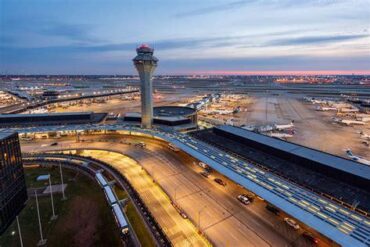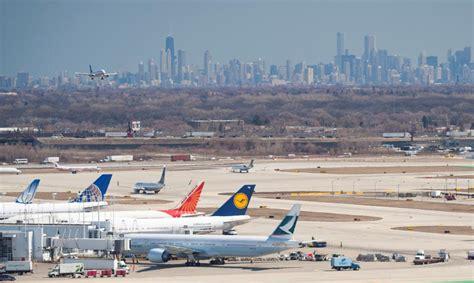
For nearly three decades, the global aviation hierarchy has had a familiar name at the top. Hartsfield-Jackson Atlanta International Airport has been the benchmark for scale, connectivity, and operational density since 1998, interrupted only briefly by the pandemic shock of 2020. That era of dominance is now facing its most credible challenge yet. In the first half of 2026, the balance of global airport activity is projected to tilt decisively toward the American Midwest.
Scheduled capacity data from aviation analytics firm Cirium shows Chicago O’Hare International Airport poised to overtake Atlanta as the world’s busiest airport by flight movements in H1 2026. This is not a symbolic shift driven by marginal growth. It reflects a structural transformation in airline networks, hub economics, and aircraft utilization that has been building steadily since international travel rebounded.
At the core of this change is volume. Chicago O’Hare is scheduled to handle approximately 218,700 one-way flights during the first half of 2026, translating to nearly 437,000 total aircraft movements. Atlanta, long untouchable by this metric, is expected to manage roughly 194,900 one-way flights over the same period. The gap is wide enough to mark a genuine reordering of global airport rankings rather than a statistical curiosity.
This surge places O’Hare not only ahead of Atlanta, but also above its own historical benchmarks. Compared with the first half of 2025, Chicago’s scheduled movements represent year-on-year growth of around 13%, making it the fastest-growing major airport in the United States by aircraft movements entering 2026.
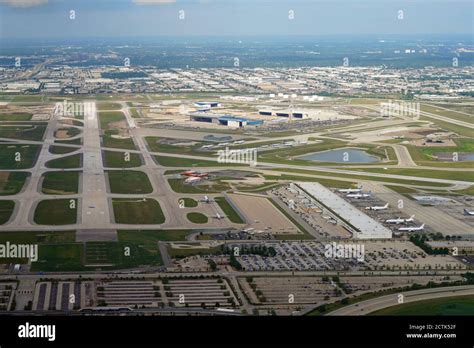
A Data-Driven Turning Point for Global Aviation Rankings
What makes this shift remarkable is its timing and durability. Chicago O’Hare is scheduled to operate more flights in H1 2026 than Atlanta handled during the same period in H1 2025, when Atlanta still firmly occupied the top position. In other words, this is not about Atlanta slipping; it is about Chicago accelerating.
The implications extend beyond bragging rights. Flight volume reflects how intensely an airport functions as a connecting hub, how frequently airlines deploy aircraft, and how resilient a network is to schedule fragmentation. O’Hare’s rise underscores its role as a high-frequency transfer engine for both domestic and international traffic, particularly across the continental United States.
While passenger volume remains a separate metric where Atlanta still leads, the sheer density of aircraft movements at Chicago points to a future where hub complexity, not just raw seat counts, defines global aviation leadership.
Chicago O’Hare Takes the Lead by Aircraft Movements
Measured strictly by scheduled flights, O’Hare sits comfortably at number one in the United States for H1 2026. Atlanta follows in second place, with Dallas/Fort Worth International Airport ranking third. Denver, Charlotte, and Los Angeles complete the upper tier, highlighting a broader trend of capacity concentration at large, geographically strategic hubs.
| Rank | Airport | Scheduled Flights (One-Way) | Scheduled Seats (One-Way) |
|---|---|---|---|
| 1 | Chicago O’Hare International Airport | 218,729 | 26,694,997 |
| 2 | Hartsfield-Jackson Atlanta International Airport | 194,854 | 31,134,246 |
| 3 | Dallas/Fort Worth International Airport | 177,051 | 25,442,151 |
| 4 | Denver International Airport | 165,234 | 23,834,263 |
| 5 | Charlotte Douglas International Airport | 127,550 | 15,888,061 |
The table reveals a subtle but critical insight. Chicago leads in flights, not seats. This distinction explains both the airport’s rapid ascent and the continued relevance of Atlanta in passenger terms.
Airline Strategy Fuels Chicago’s Expansion
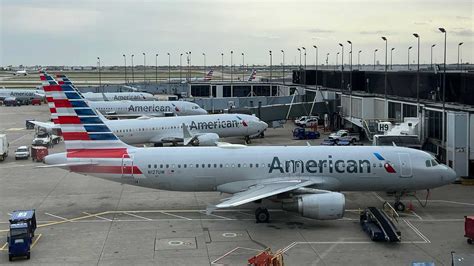
Chicago O’Hare’s rise is not the result of a single carrier reshuffle. It is the product of coordinated expansion by its two dominant hub airlines: American Airlines and United Airlines. Together, they have transformed O’Hare into one of the most aggressively scheduled airports in the world.
American Airlines alone is operating over 22% more flights from Chicago in H1 2026 compared with the same period last year. The airline’s relationship with Chicago dates back to 1926, and today O’Hare serves as one of its most versatile global hubs, connecting more than 180 destinations.
Route additions have been both strategic and diverse. In 2025, American launched 29 new routes from Chicago, including a transatlantic service to Naples. This momentum continues into 2026 with new year-round flights to Allentown and Columbia, alongside seasonal service to Kahului, Hawaii, reinforcing O’Hare’s dual role as a domestic connector and international gateway.
United Airlines and the Power of Hub Density
United Airlines has mirrored this growth with its own expansion strategy. In H1 2026, United is offering approximately 12% more flights year-on-year from Chicago O’Hare. The airline has announced new and returning services to Erie, Tri-Cities, Santa Barbara, and Monterey, while unveiling more than 13 new destinations overall from the airport.
A key enabler of this growth has been infrastructure. United secured five additional gates at O’Hare in 2025, allowing it to increase frequency, restore previously suspended routes, and reintroduce long-haul services such as Tel Aviv, which returned after a multi-year pause.
This combination of gate access, regional feed, and mainline connectivity has made Chicago one of the most operationally flexible hubs in North America, capable of absorbing growth without sacrificing schedule reliability.
Why Atlanta Still Leads in Passenger Seats
Despite losing the top spot in flight volume, Atlanta remains the busiest airport in the United States by passenger capacity. Cirium data shows Atlanta offering approximately 31.1 million seats in H1 2026, compared with 26.7 million seats at Chicago O’Hare.
The reason lies in aircraft mix. Nearly 49% of Chicago’s scheduled flights are operated by regional jets, reflecting its role as a connector-heavy hub. These aircraft increase movement counts while contributing fewer seats per flight.
Atlanta’s schedule is built differently. Only about 13% of its flights are operated by regional aircraft. The majority rely on mainline narrowbody jets, which deliver higher seat density per movement. In total, Atlanta schedules around 158,800 mainline narrowbody flights, accounting for roughly 26.5 million seats in H1 2026 alone.
This contrast highlights two competing models of hub dominance: Chicago’s frequency-driven network versus Atlanta’s capacity-driven efficiency.
What Chicago’s Rise Signals for the Aviation Industry
Chicago O’Hare becoming the world’s busiest airport by flight movements is more than a headline. It signals a broader shift toward high-frequency hub operations, optimized for flexibility, regional connectivity, and network resilience. Airlines are betting that more flights, even on smaller aircraft, create stronger competitive moats in an era where passengers value choice, timing, and seamless connections.
As H1 2026 approaches, O’Hare stands as a case study in how infrastructure investment, airline coordination, and strategic geography can quietly reshape global rankings. Atlanta may still move more people, but Chicago is now moving the sky itself.