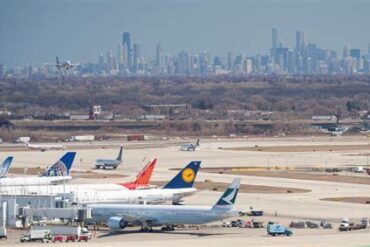
Air travel across the United States depends heavily on regional hubs that link cities to national and international destinations. In the American Midwest, no airport plays a bigger role than Chicago O’Hare International Airport. Located just northwest of downtown Chicago, O’Hare serves as the region’s most important aviation gateway, handling massive volumes of flights, passengers, and cargo every year. Its strategic location near the geographic center of the country allows airlines to connect travelers moving between the East Coast, West Coast, and global destinations with remarkable efficiency.
The Midwest itself spans a vast area that includes major economic centers such as Chicago, Detroit, Minneapolis, Indianapolis, and St. Louis. These cities rely on robust aviation networks to support business travel, tourism, and global commerce. Among all the airports serving this region, O’Hare consistently leads in both aircraft operations and connectivity, making it widely recognized as the busiest airport in the Midwest.
Over decades of expansion and modernization, O’Hare has evolved into one of the world’s most complex and active aviation hubs. Airlines operate hundreds of routes from the airport every day, and its terminals process millions of travelers annually. The scale of activity is immense: tens of millions of passengers pass through the airport each year, while aircraft arrive and depart almost continuously throughout the day and night.
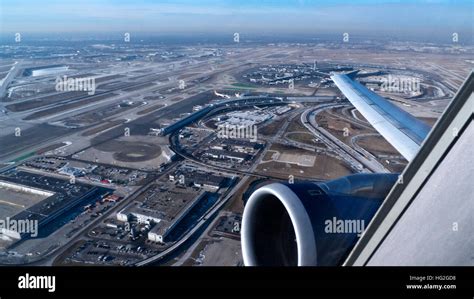
Why Chicago O’Hare Is the Midwest’s Busiest Airport
Chicago O’Hare International Airport stands out because of its unmatched combination of flight frequency, airline hubs, and geographic positioning. The airport sits roughly 17 miles northwest of downtown Chicago, a location that allows it to serve not only Illinois but the broader Midwestern region.
Chicago itself has long been one of America’s most important transportation crossroads. Railroads, highways, and air routes converge here, making the city a natural gateway between the eastern and western halves of the United States. This geographic advantage plays a crucial role in aviation. Airlines can schedule efficient connecting flights through Chicago, allowing passengers to travel between distant cities with minimal detours.
The scale of operations at O’Hare illustrates its dominance. In 2025, the airport recorded more than 857,000 aircraft movements, a figure that includes both takeoffs and landings. This staggering number made it the busiest airport in the United States by flight operations during that year. On an average day, thousands of aircraft use O’Hare’s runways, creating one of the most dynamic aviation environments in the world.
Passengers passing through the airport experience a vast network of connections. Flights depart for hundreds of cities across North America as well as major destinations in Europe, Asia, the Middle East, and Latin America. This constant movement of aircraft and travelers is what cements O’Hare’s reputation as the primary aviation hub of the Midwest.
A Global Airline Hub in the Heart of America
One of the biggest reasons for O’Hare’s immense traffic is its role as a hub for major airlines. A hub airport acts as a central transfer point where airlines route passengers between multiple destinations. Instead of operating direct flights between every possible city pair, airlines funnel travelers through hub airports where connections can be made efficiently.
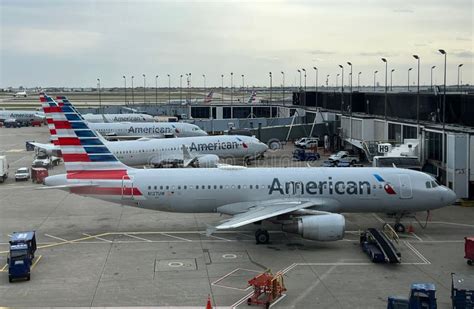
At Chicago O’Hare, two major carriers dominate operations: United Airlines and American Airlines. Both companies maintain large hub networks at the airport, and their presence dramatically increases the number of daily flights.
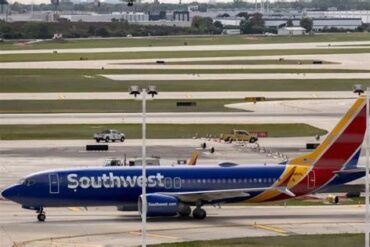
United Airlines operates one of its largest hubs at O’Hare, scheduling hundreds of departures every day. During peak travel periods, the airline can operate around 700 to 750 flights daily, linking Chicago with more than 200 destinations worldwide. These routes include domestic connections to cities across the United States as well as international flights to Europe, Asia, and Latin America.
American Airlines also maintains a powerful presence at O’Hare. Its hub operations complement United’s network, creating intense competition between the two airlines while simultaneously expanding travel options for passengers. The result is an airport where flights depart almost continuously throughout the day, feeding passengers into a vast global network.
Passenger Traffic That Reaches Tens of Millions
Beyond aircraft movements, passenger traffic provides another clear measure of O’Hare’s importance. The airport consistently ranks among the busiest airports in the world when measured by the number of travelers passing through its terminals.
In 2024, more than 80 million passengers traveled through Chicago O’Hare International Airport. That number represents a strong recovery in global aviation following the disruptions experienced earlier in the decade. The majority of these passengers were domestic travelers, accounting for roughly 82 percent of the total traffic. The remaining 18 percent were international passengers arriving from or departing to destinations across the globe.
Passenger activity continued to rise throughout 2025 as travel demand surged once again. During just the first half of the year, more than 40 million travelers passed through the airport’s terminals. These numbers demonstrate how essential O’Hare has become not only for Chicago but for the entire Midwestern region.
Peak travel periods can push the airport’s daily activity to extraordinary levels. During busy summer vacation weeks or major holidays such as Thanksgiving and Christmas, daily passenger totals can exceed 100,000 people moving through security checkpoints. Such surges require careful coordination between airlines, airport staff, and federal agencies to keep operations running smoothly.
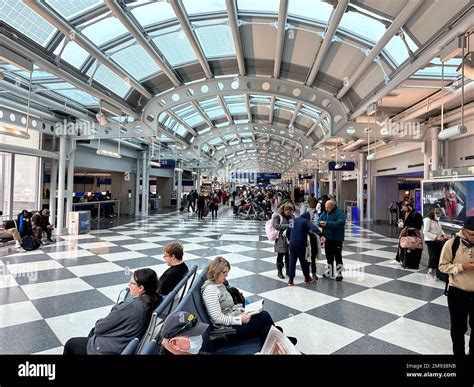
Massive Infrastructure Built for High Traffic
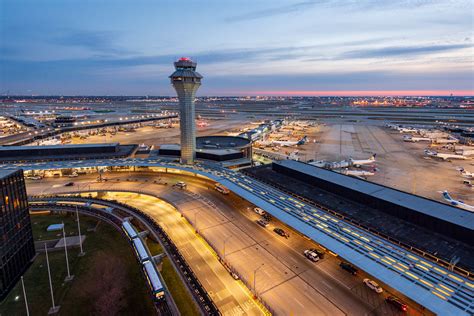
Handling such enormous volumes of passengers and aircraft requires infrastructure on an equally impressive scale. Chicago O’Hare’s layout reflects decades of expansion designed to accommodate rising air travel demand.
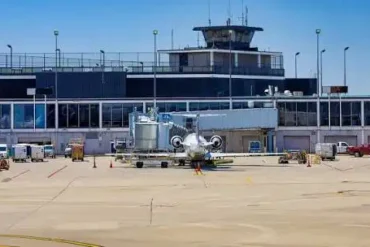
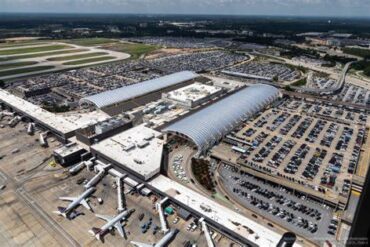
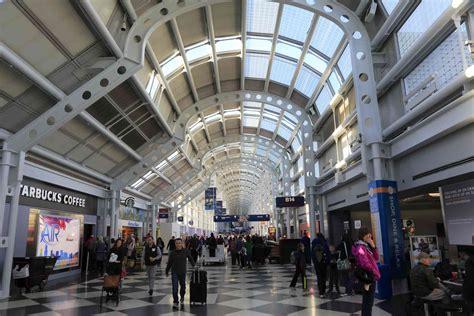
The airport currently features four major passenger terminals and more than 200 gates, allowing multiple airlines to operate simultaneously without overwhelming the facilities. Each terminal includes extensive passenger services such as restaurants, retail stores, lounges, and transportation connections that help move travelers efficiently between flights.
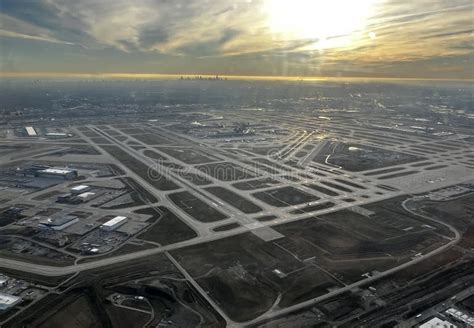
One of the most important elements of O’Hare’s infrastructure is its complex multi-runway system. The airport operates several runways that allow aircraft to land and depart simultaneously in different directions. This design dramatically increases operational capacity while helping reduce delays caused by congestion.
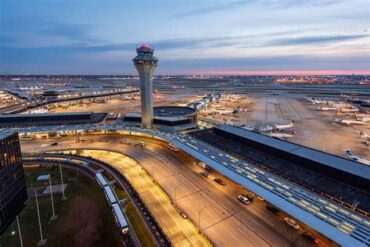
Air traffic controllers coordinate hundreds of aircraft movements each day, ensuring safe spacing between flights and guiding planes through one of the busiest airspaces in the world. The ability to handle so many operations safely and efficiently is a major reason why airlines continue to rely heavily on O’Hare.
Beyond passenger travel, the airport also functions as a critical cargo transportation hub. Freight shipments moving through O’Hare support manufacturing, retail distribution, technology industries, and international trade throughout the Midwest. Cargo aircraft and belly freight carried on passenger flights connect American businesses with markets across the globe.
How O’Hare Compares With Other Major U.S. Airports
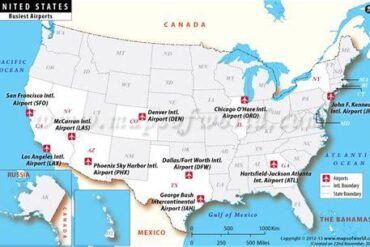
Although Chicago O’Hare dominates the Midwest, the competition among America’s busiest airports varies depending on how aviation activity is measured. Some rankings focus on passenger traffic, while others emphasize aircraft operations or seat capacity.
O’Hare frequently leads the United States when measured by aircraft movements. However, other airports sometimes claim the title of “busiest” based on different metrics.
Hartsfield–Jackson Atlanta International Airport, for example, typically ranks first in the United States for passenger numbers. The airport handled more than 104 million passengers in 2023 and remained close to that level in 2024. Atlanta’s dominance stems largely from its massive connecting network centered around Delta Air Lines.
Denver International Airport has also experienced rapid growth in recent years. Passenger traffic there surpassed 82 million travelers in 2025, making it one of the fastest-growing major airports in North America. Meanwhile, Dallas/Fort Worth International Airport continues to rank among the world’s largest aviation hubs, serving nearly 88 million passengers annually.
Despite this competition, Chicago O’Hare remains uniquely important because it combines high passenger numbers with extremely heavy flight operations. Few airports in the world handle such a dense schedule of takeoffs and landings.
The O’Hare 21 Expansion and the Future of the Airport
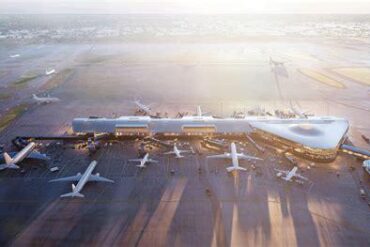
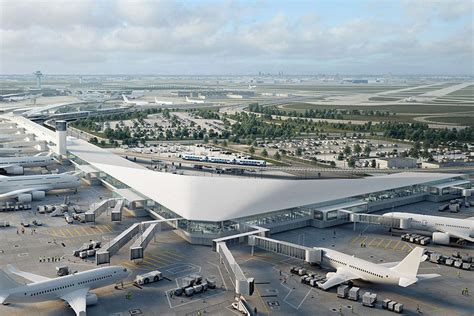
To keep pace with rising global travel demand, Chicago O’Hare is undergoing one of the largest airport redevelopment programs in North America. Known as O’Hare 21, this ambitious initiative aims to expand capacity, modernize terminals, and improve the overall passenger experience.
Early estimates placed the cost of the project at approximately $8.5 billion, but the scope of the redevelopment has since expanded significantly. Current projections suggest the program could reach around $12.1 billion, reflecting the massive scale of infrastructure upgrades planned for the airport.
One major component of the expansion is the construction of Concourse D, a new satellite concourse that will add roughly 19 additional gates. This facility will help airlines increase flight schedules while reducing congestion at existing terminals.
Another transformative project is the creation of a new Global Terminal, which will replace the current Terminal 2. The new terminal is expected to cost approximately $2.2 billion and will feature modern architecture, expanded security areas, and improved passenger flow.
Additional improvements include a $300 million renovation of Terminal 3 and a $1 billion expansion of Terminal 5, which primarily handles international flights. These upgrades aim to enhance baggage systems, expand security checkpoints, and introduce new restaurants, shops, and airline lounges.
Why O’Hare Will Remain the Midwest’s Aviation Leader
The factors that made Chicago O’Hare the busiest airport in the Midwest are unlikely to change anytime soon. Its central geographic location, massive airline hub operations, and ongoing infrastructure investments ensure that the airport will continue to dominate regional air travel.
Airlines depend on O’Hare to efficiently connect passengers traveling between different parts of the United States and the rest of the world. Businesses across the Midwest rely on its cargo network to move goods internationally. Millions of travelers use its terminals each year as the starting point or connecting point for journeys across the globe.
As global aviation continues to expand in the coming decades, Chicago O’Hare International Airport will almost certainly remain the Midwest’s most important aviation gateway. Its immense scale, constant activity, and ongoing modernization efforts ensure that it will continue to rank among the busiest and most influential airports anywhere in the world.