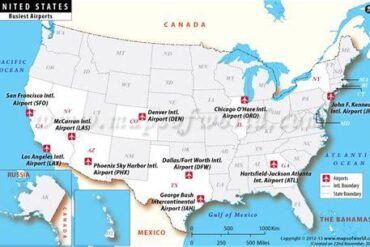
For decades, Hartsfield-Jackson Atlanta International Airport (ATL) has worn the crown as not only the busiest airport in the United States, but the busiest in the world. That status has been so consistent that it almost felt permanent, like gravity or airport coffee being overpriced. Yet a wave of recent headlines insists that Chicago O’Hare International Airport (ORD) has finally overtaken Atlanta. The claim sounds dramatic, even historic. The reality, however, is more nuanced, and far more interesting.
At the heart of this debate is a deceptively simple question: what does “busiest airport” actually mean? Depending on which metric you choose, the answer changes entirely. This is where Chicago’s victory lap deserves both recognition and a careful footnote.
Chicago O’Hare’s Aircraft Movement Surge Tells a Real Story
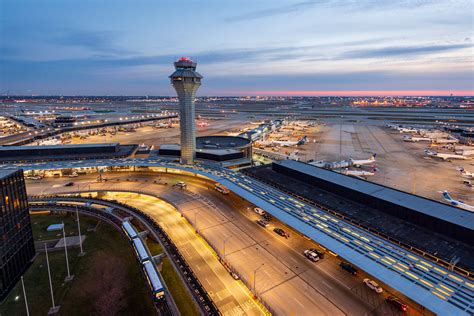
In 2025, Chicago O’Hare recorded 857,392 aircraft movements, meaning combined takeoffs and landings. That figure represents roughly 10% year-over-year growth, a striking rebound that reflects restored airline schedules, aggressive hub competition, and a return of high-frequency domestic flying. By comparison, O’Hare logged 776,036 movements in 2024, making the jump impossible to ignore.
Atlanta, meanwhile, posted 807,625 aircraft movements in 2025, up only marginally from 796,224 movements in 2024, a growth rate barely above 1%. By the narrow but legitimate definition of raw airfield activity, O’Hare did indeed surpass ATL by roughly 6%. On a purely operational level, Chicago’s runways were busier.
This is the statistic Chicago’s leadership has seized on, and it is not misleading in isolation. An airfield packed with constant arrivals and departures strains infrastructure, air traffic control, taxiways, and scheduling margins. Anyone who has spent time inching along O’Hare’s famously congested taxiways understands how real that operational pressure can be.
Why Passenger Volume Still Favors Atlanta by a Wide Margin
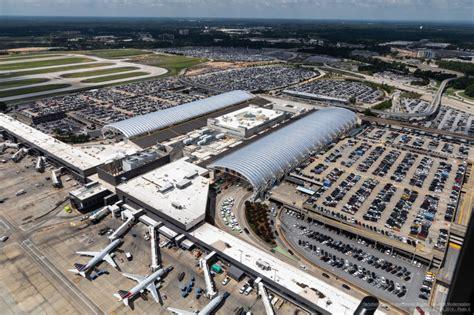
The moment the conversation shifts from aircraft movements to passenger capacity, the picture flips decisively. According to OAG seat capacity data, Atlanta handled 63.1 million departing seats in 2025, while Chicago O’Hare managed 50.6 million. That difference is not subtle. Atlanta moved roughly 25% more passengers than Chicago, preserving its long-held dominance by the metric most travelers intuitively associate with “busy.”
This gap explains why aviation analysts are pushing back against headlines declaring a full-scale takeover. Passenger volume reflects terminal crowding, security throughput, baggage systems, concessions, and ground transportation pressure. By those standards, Atlanta remains in a different league.
The distinction matters because airports are not just runways. They are ecosystems. A terminal processing widebody jets packed with hundreds of passengers creates very different stress points than an airfield cycling smaller aircraft every few minutes.
Aircraft Size Is the Quiet Variable Distorting the Rankings
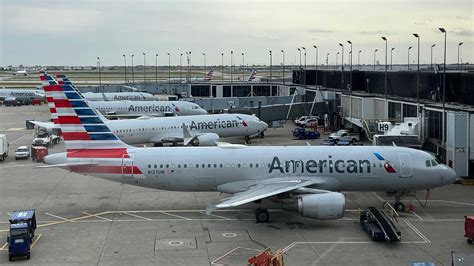
The reason these rankings diverge comes down to a single, often overlooked factor: average aircraft size. Chicago O’Hare is one of the largest regional jet markets in the world. With both American Airlines and United Airlines fiercely defending their hub positions, O’Hare sees an extraordinary number of short-haul, high-frequency flights operated by smaller aircraft.
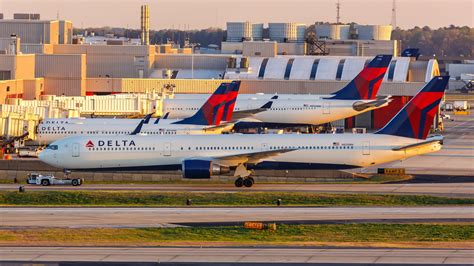
Atlanta, by contrast, functions as a fortress hub for Delta Air Lines. Delta’s strategy favors larger mainline aircraft, including Boeing 737s, Airbus A321s, and widebodies on key domestic and international routes. Fewer flights can still move vastly more people.
In simple terms, Chicago counts planes; Atlanta counts people. Neither approach is wrong, but they measure fundamentally different things.
What “Busiest” Means Depends on Who’s Asking
From an operational standpoint, aircraft movements matter deeply. High movement counts increase runway wear, amplify taxi delays, and complicate air traffic flow. In this sense, O’Hare’s claim carries genuine weight. If the question is which airfield works hardest minute to minute, Chicago has a strong case.
From a passenger experience perspective, however, seat capacity and passenger throughput matter more. Long security lines, crowded concourses, packed trains, and overwhelmed baggage systems are driven by people, not planes. By that standard, Atlanta’s lead remains commanding.
This is why global comparisons can become misleading. Airports like Dubai International (DXB) handle enormous passenger volumes with relatively fewer aircraft movements because widebody jets dominate operations. Judged by movement count alone, such airports might appear quiet, despite being among the world’s busiest in lived reality.
Chicago’s Competitive Airline Landscape Fuels the Numbers
One reason O’Hare’s movement count surged is its uniquely competitive airline environment. American and United both deploy dense schedules to defend market share, often opting for frequency over gauge. Add in cargo flights, corporate aviation, and repositioning activity, and the movement tally climbs quickly.
This strategy does bring consequences. Taxiway congestion at O’Hare has long been a pain point, and higher movement counts risk worsening delays unless infrastructure keeps pace. In contrast, Atlanta’s centralized airline control allows for smoother schedule coordination, even at massive scale.
Why Atlanta’s Crown Isn’t Slipping Anytime Soon
Looking ahead to 2026, Chicago may continue narrowing the gap in movements, especially if airline competition intensifies further. What is far less likely is a reversal in passenger dominance. Atlanta’s hub structure, geographic positioning, and reliance on larger aircraft make it exceptionally efficient at moving people.
That efficiency is precisely why ATL has remained the world’s busiest airport for so long. High volume, fewer flights, bigger planes is a model that scales extraordinarily well.
The Verdict: Two Airports, Two Definitions of “Busy”
Chicago O’Hare has legitimately become America’s busiest airfield by aircraft movements, and that achievement reflects real growth and strategic airline behavior. What it has not done is displace Atlanta as the nation’s, or the world’s, busiest airport by passenger volume.
The difference is not semantic. It is structural, mathematical, and rooted in how modern airline networks function. Chicago moves more planes. Atlanta moves more people. Both statements can be true at the same time, and the aviation world is richer for the distinction.