Breeze Airways has spent the past few years quietly transforming from a startup airline into one of the most intriguing disruptors in the American aviation landscape. Founded by aviation entrepreneur David Neeleman, the airline launched with a bold idea: connect underserved cities with nonstop routes that larger airlines often ignore. Instead of building a traditional hub-and-spoke system, Breeze focused on point-to-point flying between secondary markets.
That strategy is now entering a new phase. While the airline continues to add new destinations across the United States, a clear pattern is emerging within its network. Some airports are beginning to accumulate more flights, more routes, and more strategic importance than others.
One airport, in particular, has surged ahead of the rest.
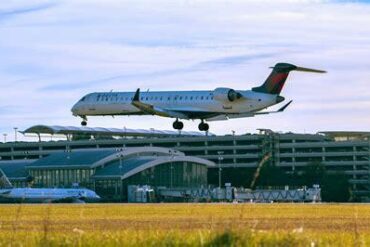
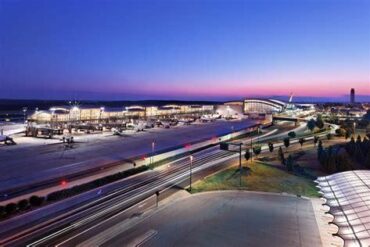
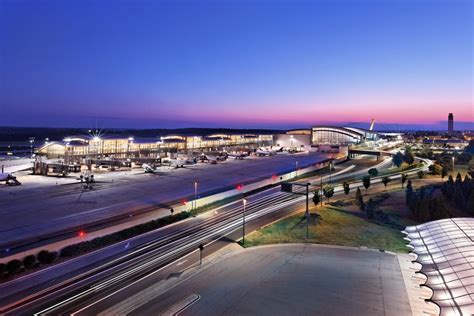
For most of Breeze Airways’ brief history, Orlando International Airport (MCO) held the title of the airline’s busiest base. Orlando’s powerful leisure demand made it an ideal home for an airline focused on vacation travelers and visiting-friends-and-relatives traffic. But recent network data reveals a significant shift. Raleigh–Durham International Airport (RDU) has now overtaken Orlando as Breeze’s busiest airport, signaling an important evolution in the carrier’s strategy.
Raleigh–Durham Emerges as Breeze Airways’ Busiest Airport
Fresh data comparing Q2 2026 flight schedules with Q2 2025 shows just how dramatically the airline’s footprint has grown at Raleigh–Durham. Over the course of a single year, Breeze dramatically increased the number of flights operating from the North Carolina airport.
In Q2 2025, Breeze operated 1,802 flights from RDU. By Q2 2026, that number had surged to 3,282 flights, representing a remarkable 82% increase year over year.
That expansion allowed Raleigh–Durham to edge past Orlando as Breeze’s busiest airport. The margin is narrow—Orlando recorded 3,268 flights during the same quarter—but the symbolic significance is enormous. For the first time, Breeze’s operational center of gravity has shifted away from Florida.
Other key airports in the network also experienced strong growth:
- Tampa International Airport (TPA) grew by 51%.
- Charleston International Airport (CHS) increased by 15%.
- Bradley International Airport (BDL) posted a smaller but steady 7% increase.
None of these airports, however, matched the explosive growth seen in Raleigh–Durham.
The shift illustrates how Breeze is evolving from a scattershot startup airline into a network that is beginning to develop depth in specific markets.
Why Raleigh–Durham Fits Breeze’s Business Model Perfectly
Airline strategy is often shaped by geography and market structure. Some airports are dominated by a single airline that controls most flights, gates, and customer loyalty programs. Others are more balanced, allowing new entrants to grow without triggering intense competitive responses.
Raleigh–Durham falls firmly into the second category.
The airport serves one of the fastest-growing metropolitan regions in the United States, driven by technology, research, and education. The Research Triangle—anchored by Raleigh, Durham, and Chapel Hill—hosts major institutions such as Duke University, North Carolina State University, and the University of North Carolina. The region’s expanding population generates a steady stream of origin-and-destination travelers.
For Breeze Airways, that kind of market is ideal.
Instead of competing head-to-head with legacy airlines on dense trunk routes like New York–Los Angeles, Breeze thrives on thinner nonstop routes that major carriers often ignore. Raleigh–Durham offers plenty of those opportunities.
The airport is large enough to support dozens of routes but not dominated by a single fortress hub airline. This creates a rare strategic opening: Breeze can add flights, test new markets, and expand gradually without facing overwhelming competitive pressure.
Twelve New Routes Driving Rapid Expansion
The most immediate reason for Breeze’s dramatic growth at Raleigh–Durham is simple: the airline has launched twelve new routes from the airport within roughly a year.
These routes span a wide range of markets, reflecting the airline’s flexible strategy. Some destinations target leisure travelers, others connect smaller cities that rarely receive nonstop service, and a few stretch the airline’s aircraft range across the country.
The newly added routes include destinations such as:
- Atlantic City
- Bangor
- Key West
- Manchester (New Hampshire)
- Madison
- Ogdensburg
- Portsmouth
- Punta Cana
- San Antonio
- Santa Ana
- Stewart / Newburgh
- Vero Beach
Taken together, these additions dramatically expanded Breeze’s network footprint at RDU.
Several of these destinations highlight the airline’s core philosophy of connecting underserved secondary markets. Cities like Ogdensburg, Portsmouth, and Stewart rarely receive nonstop service from large network airlines, making them ideal opportunities for Breeze.
Others represent classic leisure routes. Flights to Key West, Vero Beach, and Punta Cana tap directly into vacation demand, particularly among travelers who prefer nonstop service rather than connecting through crowded hub airports.
The Significance of Breeze’s First Caribbean Routes
One of the most intriguing additions to the Raleigh–Durham network is the Punta Cana route, which represents a major milestone for the airline.
In 2026, Breeze began launching its first international flights to the Caribbean, opening an entirely new chapter in its growth strategy. These routes allow the airline to tap into lucrative vacation markets while extending the reach of its Airbus A220 fleet.
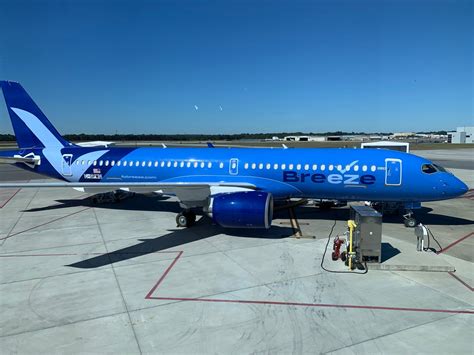
The Airbus A220-300, Breeze’s primary aircraft, plays a crucial role here. The jet combines impressive fuel efficiency with a range of more than 3,300 nautical miles, allowing Breeze to operate longer routes that would have been difficult with smaller regional aircraft.
This capability enables flights such as Raleigh–Durham to Santa Ana, California, a transcontinental route that demonstrates the growing flexibility of Breeze’s network.

Orlando Still Plays a Major Role in the Network
Even though Raleigh–Durham has overtaken Orlando in flight numbers, Orlando International Airport remains enormously important to Breeze Airways.
Florida fits the airline’s model perfectly. The state attracts millions of vacation travelers each year while also hosting large communities of seasonal residents and visiting-friends-and-relatives traffic.
Between Q2 2025 and Q2 2026, Breeze increased its Orlando schedule by 49%, expanding from 2,188 flights to 3,268 flights. That level of growth would normally be enough to secure the top position in the network.
The difference this time is that Raleigh–Durham simply grew faster.
Orlando also faces heavier competition than RDU. Nearly every major U.S. airline maintains a substantial presence at the airport, creating overlapping routes and intense pricing pressure. Raleigh–Durham, by contrast, offers more opportunities for unique nonstop services.
How Breeze Is Changing the Competitive Balance at RDU
Despite its rapid expansion, Breeze Airways is not the largest airline at Raleigh–Durham. The airport remains dominated by major carriers that have served the region for decades.
Delta Air Lines currently holds the largest market share, operating around 28% of all flights at the airport. American Airlines follows closely with about 26%, while Southwest Airlines and United Airlines each maintain double-digit shares.
However, Breeze’s rise has been striking.
In Q2 2025, the airline accounted for just 5% of flights at RDU. Within a year, that share nearly doubled to 9%, pushing Breeze into fifth place among all airlines at the airport and allowing it to surpass Frontier Airlines.
Growth at major airports is usually slow and incremental. Airlines tend to adjust schedules cautiously, especially in competitive markets. The speed of Breeze’s expansion therefore stands out as a significant development in the airport’s evolving airline hierarchy.
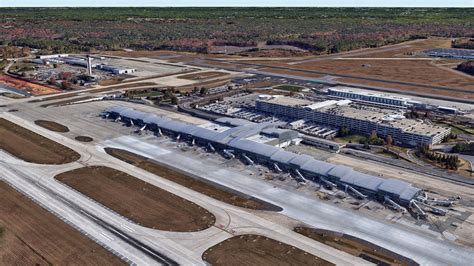
Forty Destinations and Counting
Perhaps the clearest sign of Breeze’s commitment to Raleigh–Durham is the sheer number of destinations it now serves from the airport.
The airline currently operates flights to 40 different cities from RDU, more than any other carrier at the airport. That network breadth allows Breeze to attract a wide variety of travelers, from vacationers heading to beach destinations to business travelers connecting regional markets.
Each new route strengthens the airport’s role as a focal point in Breeze’s growing network. Instead of relying solely on seasonal leisure routes, the airline is building a diversified portfolio of destinations that generate year-round demand.
Additional expansion is already planned. Breeze has announced upcoming flights from Raleigh–Durham to Birmingham, Alabama, and Tallahassee, Florida, further reinforcing the airport’s importance within its system.
The Future of Breeze Airways’ Network
The emergence of Raleigh–Durham as Breeze Airways’ busiest airport marks a turning point in the airline’s evolution. In its early years, the carrier focused primarily on launching new routes and establishing brand recognition across the United States.
Now the network is beginning to develop regional anchors—airports where Breeze operates enough flights to achieve real scale.
Raleigh–Durham appears to be the first location where that strategy is truly taking shape. The combination of strong local demand, manageable competition, and geographic flexibility makes it an ideal environment for the airline’s unique operating model.
Orlando will likely remain a cornerstone of Breeze’s leisure network. Yet the rapid growth at RDU suggests something larger is happening behind the scenes. Breeze is no longer just experimenting with routes. It is building sustainable network hubs that support long-term expansion.
If current trends continue, Raleigh–Durham may become the proving ground where Breeze Airways transforms from a niche startup into a fully mature national airline.