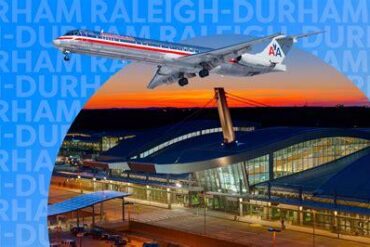
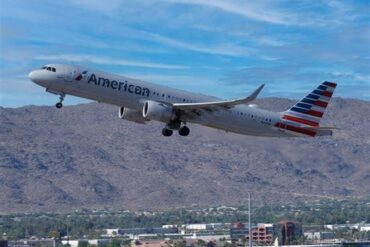
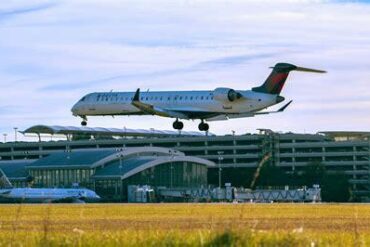
Raleigh-Durham International Airport (RDU) once held great promise as a strategic hub for American Airlines. Positioned ideally between the Northeast and Southeast U.S. corridors, the airport briefly flourished under the wings of one of the largest carriers in the world. But within a decade, American Airlines’ ambitious hub operation in Raleigh was dismantled. What happened to this once-hopeful venture?
American Airlines’ Expansion Strategy After Deregulation
The 1980s reshaped the U.S. airline industry dramatically. Following the Airline Deregulation Act of 1978, carriers were no longer shackled by stringent federal controls over routes, pricing, and service levels. For American Airlines, this deregulation offered both opportunity and peril. The airline responded with a bold strategy: build a series of new hubs to solidify market dominance.
One of those experiments materialized in Raleigh-Durham, North Carolina. Although American’s flagship hub at Dallas/Fort Worth (DFW) was growing at a blistering pace, the company looked eastward to RDU to improve its connectivity along the Atlantic Seaboard.
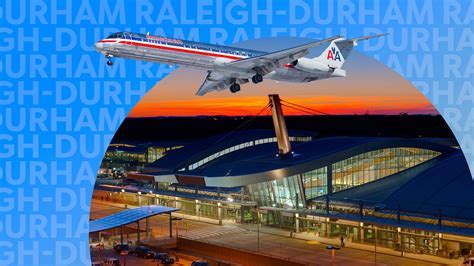
From Modest Entry to Major Investment
In 1985, American Airlines made a quiet entry into RDU with just 11 daily flights. But the airline had grander ambitions. Within months, American announced plans to turn RDU into a full-fledged hub. Thanks to its ideal location, Raleigh became a conduit for connecting north-south traffic between cities like New York, Miami, Boston, and Atlanta. RDU’s new hub status rapidly elevated its importance within American’s network.
American quickly ramped up its operations to over 200 daily flights. By the early 1990s, the number peaked at 261 flights, which included both mainline and regional services. Some of these routes ventured beyond domestic shores, with long-haul offerings to London and Paris, and international short-hauls to Cancún and Cozumel. It was an audacious attempt to position RDU as a global gateway.
Strategic Importance Meets Structural Vulnerability
Despite the rapid growth, the Raleigh hub always had a fragile foundation. Compared to American’s primary operations in Dallas, Chicago, or Miami, the RDU hub was modest. While DFW saw nearly 600 daily flights by 1993, RDU was handling less than half of that.
The early 1990s brought turbulence to the airline industry. Economic downturns, increased competition, and ballooning operational costs forced carriers to scrutinize their networks. For American Airlines, RDU became an expendable outpost.
Rumors of closure began circulating in the early 1990s. North Carolina state leaders, alarmed at the potential loss, traveled to Dallas to negotiate with American’s executives, hoping to salvage the hub. Their efforts were ultimately in vain. The economics simply didn’t justify maintaining RDU as a hub in the face of declining margins.
Infrastructure Boom — Then Bust
Ironically, one of the lasting legacies of American’s short-lived hub at RDU is the significant infrastructure investment the airline inspired. Preparing to accommodate the growing wave of travelers, RDU underwent a substantial transformation during American’s tenure.
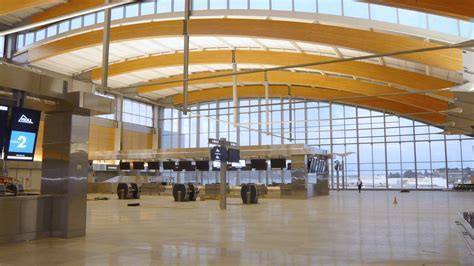
Key additions included:
- Terminal C, designed with American’s needs in mind
- New parking structures across from Terminal 2
- A 10,000-foot runway, suitable for long-haul widebody jets
- Modern fuel farms and flight kitchens
- Additional cargo facilities to support international expansion
Though the hub closed shortly after these projects were completed, the infrastructure remained — enabling RDU to continue its growth trajectory as a vital regional airport.
Raleigh Was Not Alone in Losing Its Hub
American Airlines’ experiment in Raleigh was part of a broader expansionist mindset during the 1980s. Alongside RDU, American also opened hubs in:
- Nashville International Airport
- Luis Muñoz Marín International Airport (San Juan, Puerto Rico)
- San Jose International Airport
None of these hubs survived the cost-cutting waves of the 1990s and early 2000s. The dot-com bust hit San Jose hard, while increased competition and inefficiencies made Nashville and San Juan less attractive for long-term investment.
In the case of Nashville, the hub peaked with 265 daily flights by 1995 but was steadily scaled back afterward. Today, Southwest Airlines dominates Nashville and San Jose, holding over 50% market share in both cities. Their lower-cost structure and point-to-point model proved more sustainable in these mid-sized cities than American’s hub-and-spoke approach.
The Aftermath and Today’s Network Priorities
The closure of the Raleigh hub didn’t mark a complete retreat by American Airlines. The carrier still serves RDU today, albeit as a standard destination within its network. What changed was the airline’s long-term strategy, pivoting toward fewer, more powerful hubs that maximize profitability and passenger flow.
Currently, American operates hubs in cities like:
- Dallas/Fort Worth (DFW) – The crown jewel of its network
- Charlotte Douglas International Airport (CLT) – Now the primary North Carolina hub
- Miami (MIA), Phoenix (PHX), Philadelphia (PHL) – Major transatlantic and Latin American gateways
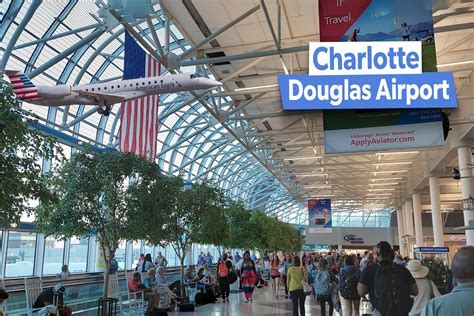
The Charlotte hub, in particular, has become indispensable. Inherited through the 2013 merger with US Airways, Charlotte offers American tremendous connectivity along the East Coast, with ample premium business travel demand and strong feeder traffic to Europe. It’s everything RDU was supposed to be — only better supported by passenger volumes and local economy.
Raleigh’s Airport Still Benefits from Its Brief Glory Days
Even though American left RDU behind as a hub, the airport has not languished. In fact, RDU has emerged as a success story, leveraging the very infrastructure American helped create. Over the last two decades, new entrants, ultra-low-cost carriers, and international airlines have identified RDU as a growth market.
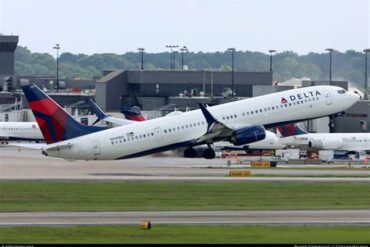
In 2023, Avelo Airlines opened a base at RDU, and other carriers like Delta and Southwest have steadily expanded their services. International routes to Europe and Latin America have returned, albeit on different carriers. The airport’s investment in modern terminals and runway infrastructure continues to pay dividends.
Conclusion: A Case of Misaligned Ambition and Market Realities
The story of American Airlines’ failed hub in Raleigh-Durham is not one of mismanagement or lack of foresight. Instead, it’s a textbook case of market mismatch — where the ambition of a national carrier collided with the limitations of local demand and industry volatility. While the RDU hub never reached the heights American envisioned, its legacy lives on through the airport’s enduring growth, infrastructure, and evolving role in U.S. aviation.
Though American Airlines turned its attention to Charlotte, the shadow of its Raleigh ambitions remains a fascinating chapter in the airline’s storied history — a reminder that even giants can miscalculate, and that not every promising hub can fly high forever.