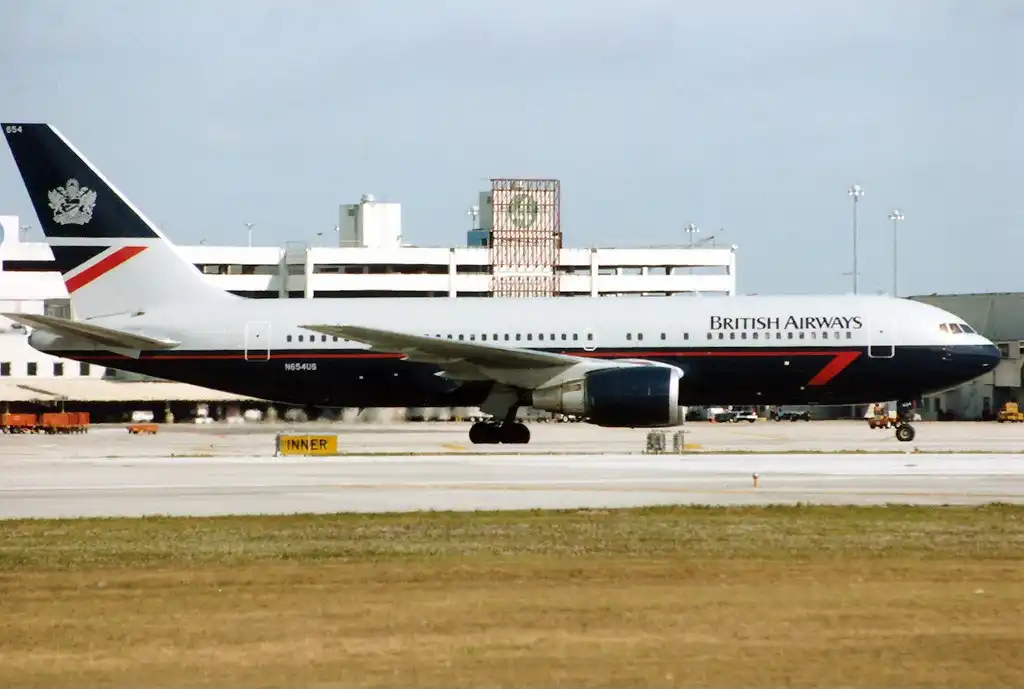
British Airways once envisioned Manchester Airport as a critical pillar of its domestic and international strategy — a northern counterpart to the congested sprawl of London Heathrow. With a rapidly growing catchment area, strong regional business demand, and a local authority willing to invest in infrastructure, Manchester in the late 1980s and 1990s presented an opportunity too promising to ignore. Yet, by the close of the 2000s, the airline had all but vanished from its once-thriving outpost. What happened to British Airways’ Manchester hub is not just a tale of shifting strategy, but a case study in how brutal competitive pressure and logistical misalignment can unravel even the best-laid aviation plans.
The Strategic Foundation Behind Manchester’s Selection
When British Airways (BA) pursued the expansion of its network in the late 1980s, its dominance at London Heathrow (LHR) had begun to show diminishing returns. Capacity constraints, slot scarcity, and London-centric bottlenecks prompted the airline’s leadership to look northwards. Manchester Airport (MAN), situated in the industrial and commercial heart of Northern England, appeared ideal.
The Manchester region had a burgeoning business travel base, particularly from corporations seeking same-day access to European financial centers. As BA transitioned out of government ownership following privatization, decentralization became not just desirable — but essential. Manchester was also scaling fast. Passenger traffic ballooned from 6 million in 1984 to almost 10 million in 1988. British Airways wasted no time.
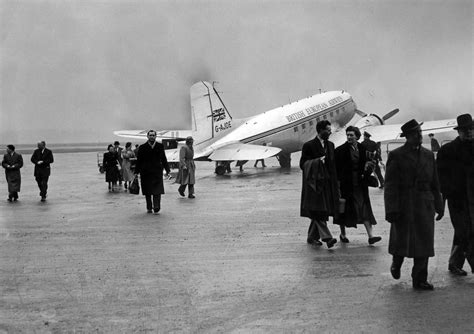
BA designated Manchester a “focus city,” though its operations soon mirrored those of a full-scale hub. Flights departed hourly to Heathrow and Gatwick, while connections to Belfast and Glasgow complemented the growing network. Aircraft such as the BAC 1-11 and Boeing 737-200 were based overnight for swift early morning departures, and baggage systems enabled through-checking across domestic and European destinations.
Terminal 3: A New Home for the Hub
In 1998, the transformation of British Airways’ Manchester operations gained architectural legitimacy. Terminal 3 — formerly the domestic pier — was overhauled at a cost exceeding $100 million and reopened by Princess Diana. Designed by Grimshaw Architects, the structure symbolized BA’s commitment: 20 jetbridges, multiple lounges, premium self-service facilities, and airside crew centers enabled pilots to get from briefing to cockpit in under five minutes.
The hub operated on a three-wave banking system, with morning, afternoon, and evening clusters. Passengers from Inverness, Aberdeen, Jersey, and Newcastle could connect seamlessly to flights bound for Paris, Copenhagen, Madrid, and Milan. This orchestrated connectivity model emulated leading European airports like Frankfurt and Amsterdam Schiphol — with one crucial difference: the majority of connecting flights targeted same-day return for business travelers.
Transatlantic Ambitions Take Flight
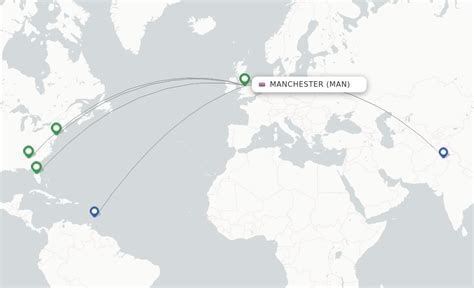
British Airways didn’t stop at Europe. On June 1, 1999, BA launched a Boeing 757 flight from Manchester to New York JFK, marking its first non-stop transatlantic route from the hub. By 2001, the route had been upgraded to a Boeing 767-300ER, reflecting rising demand. Seasonal long-haul destinations like Orlando and Tampa followed.
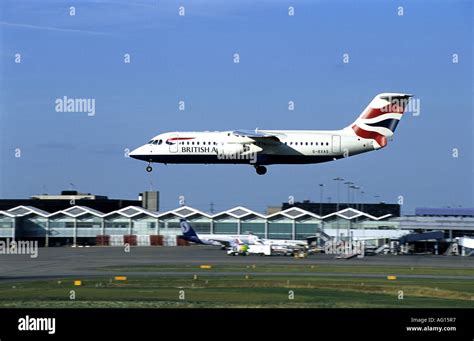
To consolidate regional feeder traffic, BA merged its domestic brands into BA CitiExpress, which eventually became BA Connect. This subsidiary maintained a significant presence, operating:
- 18 Avro RJ100s
- 12 Embraer ERJ-145s
- 6 Boeing 737-300s
BA Connect flew to 22 European cities from Manchester and handled 3.5 million passengers annually — 12% of the airport’s total volume. With more than 2,700 local employees in place, BA’s Manchester operation was no longer a speculative side venture. It was a full-fledged regional gateway.
Low-Cost Carriers Enter the Fray
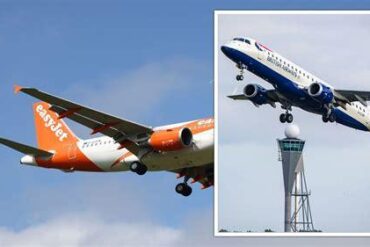
The tide turned swiftly with the advent of low-cost competition. In 2000, easyJet began offering £19 fares to Amsterdam. Ryanair soon followed, undercutting BA’s pricing and capturing cost-sensitive travelers. The scale and flexibility of these carriers were simply unmatched.
At the same time, UK rail improvements — particularly on the West Coast Main Line — began siphoning off short-haul domestic traffic. Faster train connections to London made BA’s hourly flights to Heathrow and Gatwick redundant and unprofitable. Manchester was no longer functioning as a standalone hub — it was being cannibalized by its own parent network and facing death by a thousand economic cuts.
Adding insult to injury, BA’s operational costs were among the highest in Europe, with internal studies indicating a 28% premium over its rivals. Fuel prices, maintenance contracts, and legacy pilot agreements made scaling down inevitable.
The Gradual Dismantling of a Regional Fortress
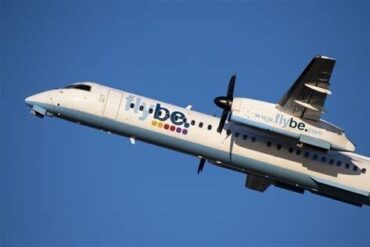
The unraveling was slow but decisive. In 2007, BA sold BA Connect to Flybe for a symbolic £1, transferring 1,400 staff and 53 routes. The New York JFK flight was suspended in 2008, effectively ending BA’s long-haul ambitions from Manchester.
By 2009, Heathrow flights from Manchester were slashed from 15 daily to just eight, all served by smaller Airbus A319s. BA’s Club Europe lounge and crew center in Terminal 3 were shuttered. Nearly 800 jobs were cut or relocated to Heathrow, while third-party suppliers — from catering to ground handling — lost lucrative contracts overnight.
As BA retreated, Virgin Atlantic, American Airlines, and later Aer Lingus swooped in to fill the transatlantic vacuum. Middle Eastern carriers such as Emirates and Qatar Airways also expanded aggressively, targeting the long-haul connectivity Manchester had begun to forfeit.
Manchester’s Rebirth Without British Airways
In the aftermath of BA’s exit, Manchester Airport did not wither. Instead, it adapted. Ryanair, easyJet, and TUI Airways now dominate short-haul services, while Virgin Atlantic, Aer Lingus, and Etihad have turned Manchester into a viable secondary hub.
Today, British Airways maintains only one route from Manchester — a shuttle to Heathrow — a faint echo of its once expansive operation. For a hub that once handled over 3 million BA passengers annually, the drawdown is stark.
The closure of the Manchester hub underscores a critical lesson in airline strategy: hub development must be flexible, cost-efficient, and resilient to external pressures. BA’s fixed-cost structure, coupled with underestimation of low-cost competitors and evolving ground transport alternatives, made the Manchester model unsustainable.
Conclusion: A Hub Lost, A Market Transformed
The fate of British Airways’ Manchester hub serves as a cautionary tale. It was born of vision — decentralizing operations to alleviate Heathrow congestion and tap into Northern England’s growing market. It matured into a complex, well-structured hub, connecting the UK’s regions to Europe and North America. But it ultimately fell victim to cost rigidity, market shifts, and a failure to adapt to the low-cost carrier revolution.
Manchester Airport has thrived in the wake of BA’s retreat, proving that demand was never the issue — the model was. As the skies over Manchester fill with long-haul and budget alternatives, one thing is clear: BA’s absence is no longer a void. It is an opportunity others have already seized.