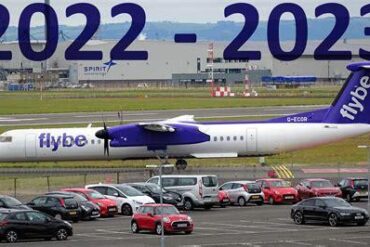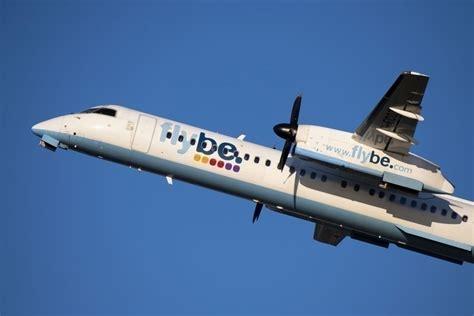
From its humble origins in 1979 to its turbulent final descent into administration in 2020, Flybe served as both a pioneering force and a cautionary tale in regional aviation. It played a crucial role in connecting underserved communities across the United Kingdom and Europe, yet its trajectory was marred by market volatility, operational missteps, and the unforgiving economics of short-haul travel. As we dissect the full arc of Flybe’s four-decade history, we find a complex portrait of ambition, innovation, and ultimately, fragility.
Birth of a Regional Carrier: Jersey European Airways
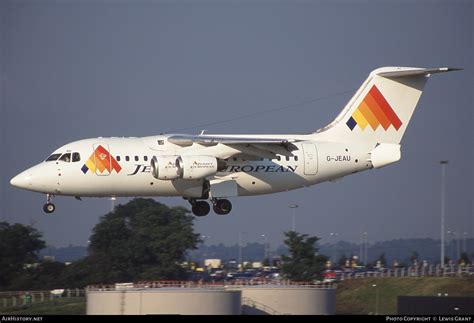
Flybe’s story began in 1979, when Intra Airways and Express Air Services merged to form Jersey European Airways, headquartered in Jersey, Channel Islands. In its early years, the airline focused on regional connectivity within the British Isles, operating a modest fleet of turboprop aircraft. The 1980s saw the airline expanding under the ownership of Walker Aviation Group, with strategic bases at Exeter Airport and Bristol.
During this period, it acquired other regional players like Spacegrand Aviation, a move that expanded its route network and fleet. Yet the carrier maintained a narrow focus: servicing business travelers, providing feeder traffic for major carriers, and sustaining essential air links between peripheral communities and larger hubs.
The British European Era and Rebranding
In 2000, Jersey European Airways rebranded as British European to reflect a broader market strategy. The new name aimed to shed the parochial image and signal pan-European ambitions. Yet the early 2000s were challenging for regional airlines. Rising fuel prices, post-9/11 demand shock, and the low-cost revolution introduced by Ryanair and easyJet reshaped the competitive landscape.
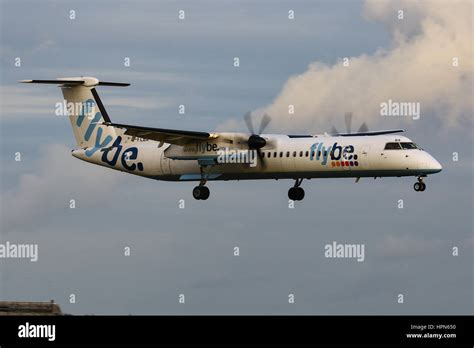
British European pivoted by gradually phasing out older aircraft like the BAe 146 and replacing them with newer, more efficient Bombardier Dash 8 Q400 turboprops. Despite these efforts, the rebranding did little to arrest financial pressure. By 2002, the company rebranded again—this time with a more memorable and modern identity: Flybe.
Flybe Takes Flight: Strategic Expansion and Risk
The launch of Flybe in 2002 marked a significant transformation. Backed by a bold visual identity and a simplified fare structure, the carrier positioned itself as a low-cost, high-frequency operator focused on regional routes that were often too thin for major carriers. Its fleet modernization plan centered around the Bombardier Q400, which was ideal for short sectors with high yield potential.
Flybe’s strategy hinged on two pillars: capturing business travelers on underutilized city pairs and forming codeshare partnerships with larger airlines like British Airways and Air France. These alliances extended Flybe’s reach without requiring a full-service network. At its peak, Flybe was the largest regional airline in Europe by number of flights.
IPO and the Pursuit of Scale
In 2010, Flybe listed on the London Stock Exchange, raising capital to support further expansion. At the time, the airline operated more than 180 routes to over 60 destinations across Europe. The IPO was marketed as a gateway to scale, enabling Flybe to compete with larger rivals and weather industry shocks.
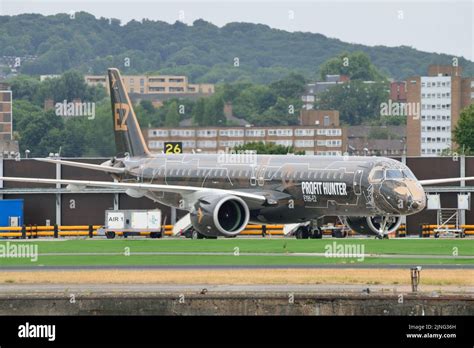
Yet the public offering brought new pressures. Investors demanded growth, profitability, and efficient capital use—demands Flybe struggled to meet. The carrier expanded aggressively into European markets like Germany and the Netherlands, often entering low-margin routes already served by more established operators. The acquisition of BA Connect in 2007 further complicated operations, adding cost burdens and a suboptimal fleet of Embraer 195 jets.
While BA Connect gave Flybe a significant foothold at London City Airport and other premium hubs, the move came with legacy labor contracts and operational challenges that clashed with Flybe’s lean regional model.
Operational Complexity and Overextension
Flybe’s model, though strategic on paper, became operationally cumbersome. The fleet diversity—including Q400s, Embraers, and at times, wet-leased aircraft—created inefficiencies. Ground crews and pilots needed varied training, spares inventory swelled, and scheduling grew more complex.
Compounding this were seasonal revenue swings, especially on leisure-heavy routes, and regional economic dependencies. Flybe’s route structure included vital but unprofitable public service obligation (PSO) flights, especially in Scotland and Northern Ireland, where air travel was essential but subsidies often insufficient.
The Financial Downturn: 2014–2018
By the mid-2010s, Flybe began shedding routes, closing bases (including Cardiff and Doncaster Sheffield), and reducing fleet size. Despite cost-cutting, results remained uneven. In 2014, the airline posted a loss of £35.6 million, leading to management shake-ups and further restructuring.
A brief return to profitability in 2016 was overshadowed by Brexit-related uncertainty, currency devaluation, and rising fuel costs. These macroeconomic headwinds eroded yields and hurt consumer confidence, particularly on discretionary travel routes.
Virgin Connect and the Final Descent
In 2019, Flybe was acquired by Connect Airways, a consortium including Virgin Atlantic, Stobart Group, and Cyrus Capital. The plan was ambitious: rebrand Flybe as Virgin Connect, integrate operations, and build a feed network for long-haul Virgin flights.
However, execution faltered. The rebranding was delayed, and COVID-19 disrupted aviation before plans could materialize. Business travel collapsed. Government support was sought but not granted. Flybe entered administration on March 5, 2020, cancelling all flights and grounding its 70-aircraft fleet.
The collapse left over 2,400 employees jobless and disrupted regional connectivity for millions. Airports like Southampton, Exeter, and Belfast City lost critical traffic, straining local economies.
A Brief Resurrection and Final Closure
In 2021, Thyme Opco, a Cyrus Capital entity, bought Flybe’s remaining assets. The new Flybe Ltd launched in 2022 with a scaled-down fleet and a revised business plan. Yet legacy reputational baggage, high fuel prices, and continued market fragmentation hindered success.
In January 2023, the revived Flybe also entered administration, marking the second and final demise of the brand.

The Legacy of Flybe: Lessons in Regional Aviation
Flybe’s legacy is multifaceted. It proved that regional connectivity can be both vital and viable under the right conditions. It also exposed the structural weaknesses of thin-margin, high-frequency aviation models in fragmented markets. Key lessons emerge:
- Fleet simplification is crucial to operational efficiency.
- Overexpansion without strong revenue foundations leads to cash flow crises.
- Codeshare strategies offer network synergy, but only if brand coherence is maintained.
- Government engagement is vital when airlines serve critical regional roles.
Ultimately, Flybe was a pioneer of regional air travel in Britain. Its success was rooted in understanding community needs and providing consistent, time-sensitive travel options. Its failure lay in diverging from this core mission in pursuit of scale without structural resilience.
Conclusion: A Turbulent But Defining Chapter
The story of Flybe from 1979 to 2020 remains a defining chapter in British aviation history. It encapsulated the promise and peril of regional airlines—how they can uplift communities, connect economies, and yet unravel under market and internal pressures. Though no longer flying, Flybe’s decades-long service continues to influence debates about transport equity, infrastructure, and the future of short-haul travel in a post-carbon, digitally connected world.