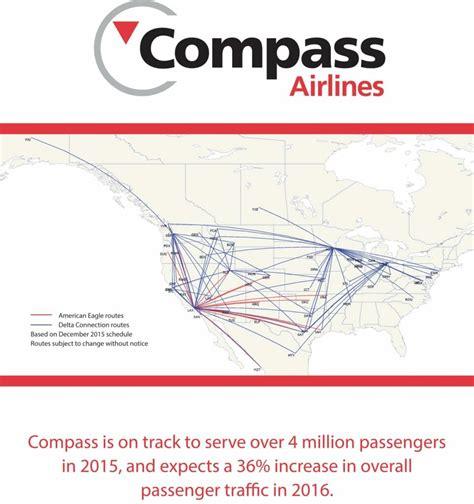
Compass Airlines, LLC was more than just a regional air carrier—it was a strategic solution to scope clause tensions, a linchpin in the complex web of U.S. feeder airlines, and a casualty of a global crisis. Operating from May 2, 2007, to April 5, 2020, Compass filled a vital niche for major U.S. carriers, including Northwest Airlines, Delta Air Lines, and American Airlines. It flew over 1.5 million flights during its existence and boasted a peak fleet of 62 aircraft, making it one of the most significant regional players in North America until its abrupt collapse.
Formation Amidst Industry Tension
The story of Compass Airlines begins in the turbulence of 2006 labor disputes. Northwest Airlines, embroiled in a scope clause disagreement with its pilot union, sought an innovative workaround. Rather than renegotiate scope restrictions, Northwest purchased Independence Air’s operating certificate on March 10, 2006—a strategic move that allowed them to establish Compass Airlines as a wholly owned subsidiary.
Federal regulatory approval came swiftly. The U.S. Department of Transportation (DOT) granted approval on September 28, 2006, and the FAA issued Compass its Air Carrier Certificate on April 5, 2007. Just weeks later, on May 2, 2007, Compass launched its inaugural flight from Minneapolis/St. Paul to Washington, D.C. using a Bombardier CRJ200. It soon transitioned to an Embraer 175 fleet, with the first E175 service launching on August 21, 2007. By December 2008, Compass had scaled up to 36 aircraft.
Transition to Delta and Ownership Changes
With the merger of Northwest and Delta Air Lines in 2008, Compass briefly became a Delta subsidiary. However, Delta soon decided to divest. On July 1, 2010, Trans States Holdings acquired Compass Airlines for $20.5 million, marking a significant shift in the carrier’s trajectory. Interestingly, even after the sale, Compass remained housed in the Delta Air Lines Building C in Minneapolis, a symbolic reminder of its origins. It also retained a modified version of the Northwest logo, subtly nodding to its legacy.
Despite the ownership change, Compass continued to thrive. Under Trans States Holdings, it diversified its operations and clients, ultimately operating under the brands Delta Connection and American Eagle.
Fleet Growth and Strategic Capabilities
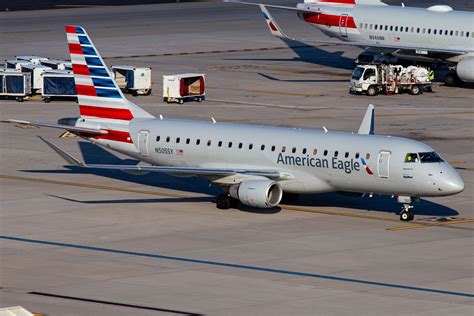
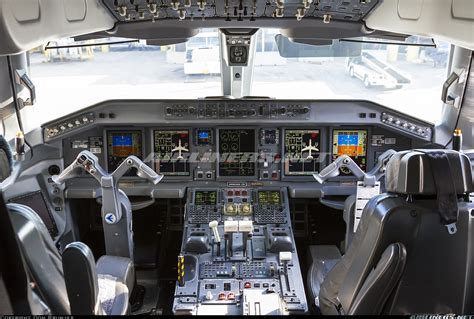
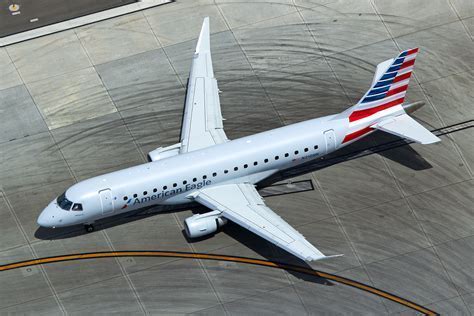
At its peak, Compass Airlines operated an impressive fleet of 56 Embraer 175 aircraft, known for their fuel efficiency, cabin comfort, and flexibility. Of these, 44 were initially under Northwest/Delta scope agreements, and 12 were introduced for service under the American Eagle brand beginning March 27, 2015.
Each Embraer 175 was equipped with GoGo Inflight Wi-Fi streaming, catering to evolving passenger expectations for connectivity. Aircraft assigned to Delta featured structural enhancements, including:
- Advanced Range modifications
- Additional galley storage and jumpseats
- Increased Maximum Gross Takeoff Weight (MGTOW) of 89,000 lbs
Earlier in its history, Compass also operated six Embraer 170s (originating from Virgin Blue) and a single CRJ200 (leased from Mesaba Airlines), reflecting its gradual scale-up during the 2007–2010 period.
Union Representation and Workforce Culture
Compass Airlines maintained union representation for both its pilots and flight attendants. Pilots were part of the Air Line Pilots Association (ALPA), while flight attendants were represented by the Association of Flight Attendants (AFA). Labor relations were a mixed bag—while management and unions achieved long-term agreements, tensions occasionally surfaced.
In May 2013, Compass flight attendants ratified a five-year collective bargaining agreement, securing:
- Increased base pay
- Improved 401(k) matching
- Signing bonuses
- Enhanced work rules and conditions
However, controversy erupted in 2010 when a Compass flight attendant revealed in an interview that she qualified for food stamps, highlighting income disparities in the regional airline sector. She was subsequently terminated, leading to public debate about worker rights and employer retaliation.
Operational Incidents and Safety Record
Though Compass Airlines maintained a strong safety reputation overall, it did experience a handful of notable incidents:
Restroom Fire – Flight 2040 (2008)
On May 8, 2008, Compass Airlines Flight 2040 en route from Minneapolis to Regina was forced to divert to Fargo after a restroom fire broke out mid-flight. No injuries occurred, but the incident escalated when it was discovered that a flight attendant had started the fire. She was later extradited and sentenced to seven years in prison in December 2011.
Bird Strike – Flight 5887 (2010)
On November 15, 2010, Flight 5887 from Minneapolis to Missoula suffered a severe bird strike, causing significant damage to the aircraft. The flight returned safely to Minneapolis with no injuries, showcasing the crew’s composure and the aircraft’s resilience.
Brand Diversification and Contract Losses
In August 2019, Delta Air Lines terminated its Delta Connection agreement with Compass, a move that proved fatal for the carrier’s future. Delta’s decision to remove all 36 Compass-operated E175s accelerated the airline’s demise. By April 1, 2020, all Delta-assigned aircraft had been withdrawn from service.
Despite this, Compass had been actively operating American Eagle routes, particularly from Los Angeles (LAX) to major destinations like Houston (IAH). This diversification strategy provided a temporary lifeline but could not fully compensate for the loss of the Delta contract.
Collapse Amid COVID-19 and Breeze Acquisition Fallout
In early 2020, Compass Airlines began winding down operations. The Phoenix and Seattle/Tacoma crew bases were closed, signaling that the end was near. On March 2020, Compass publicly announced that it would cease operations, citing a “perfect storm” created by the COVID-19 pandemic and the loss of key flying contracts.
Compass Airlines’ final flight—American Eagle 6047 from Tulsa to Los Angeles—landed on April 5, 2020, marking the end of a 13-year run. A proposed acquisition by Breeze Airways, a startup led by JetBlue founder David Neeleman, was ultimately canceled, sealing Compass’s fate.
Legacy and Impact on Regional Aviation
Though Compass Airlines is now defunct, its legacy is woven into the evolution of regional aviation in the U.S. The airline’s innovative origin, unionization efforts, and fleet adaptability made it a standout in a highly competitive and often turbulent sector.
Compass was a case study in how labor disputes, major airline mergers, and strategic outsourcing converge to shape an airline’s fate. Its rise demonstrated how a regional carrier could operate at high capacity while serving multiple legacy brands. Its fall was a reminder of the sector’s fragility in the face of contractual instability and global disruption.
The Embraer 175s once operated by Compass have since been reassigned, primarily to Envoy Air, continuing to serve under the American Eagle banner. Yet, for aviation historians and regional airline enthusiasts, Compass remains an example of how quickly success can pivot to shutdown in the volatile world of commercial air travel.
Conclusion
Compass Airlines exemplified the strengths and vulnerabilities of the U.S. regional airline model. It was born out of a labor workaround, flourished through flexibility and brand adaptability, and collapsed under the pressure of contractual upheaval and a global health crisis. Its story is one of rapid ascent, steady execution, and sudden dissolution—reflecting the unforgiving nature of modern aviation economics.