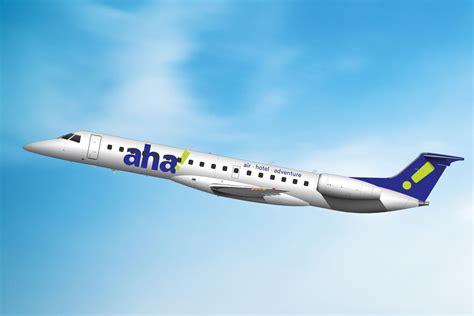
Aha! Airlines, a bold and short-lived regional airline brand operated by ExpressJet Airlines LLC, emerged in late 2021 with a clear mission: to connect Reno–Tahoe to smaller, underserved markets across the western United States. The name “aha!”—an acronym for air-hotel-adventure—reflected its strategy of bundling flights with vacation packages, aiming to become a one-stop solution for leisure travelers seeking affordable getaways. Despite its ambitious approach, the airline’s journey from launch to liquidation lasted less than a year, culminating in a swift descent into bankruptcy and an abrupt cessation of service in August 2022.
A Strategic Vision: Reno as a Regional Gateway
The vision behind Aha! was simple yet daring. Operating from Reno–Tahoe International Airport as its exclusive hub, Aha! focused on funneling traffic from small cities into a vibrant leisure destination. Backed by ExpressJet, a well-established regional carrier with a long operational history, Aha! was structured as a lean, point-to-point airline. Its use of 50-seat Embraer ERJ 145 regional jets allowed it to access smaller markets while maintaining high frequency and low costs. Each destination was served three times weekly, optimizing aircraft utilization and staffing.
What made Aha! distinctive wasn’t just its compact fleet or strategic hub—it was the vacation package model. The airline intended to partner with resorts, casinos, and entertainment venues in Reno and Tahoe, selling bundled offers that would entice travelers with value-priced adventures. This differentiated model aimed to capture a segment of the leisure travel market that prioritized convenience and affordability.
Inaugural Routes and Ambitions
Aha!’s first flight launched on October 24, 2021, connecting Reno to Pasco, Washington. From there, the network rapidly expanded to 13 destinations across California, Idaho, Oregon, Nevada, and Washington. Cities like Boise, Spokane, Fresno, and Santa Rosa were added to the schedule, with promises of expanding to 20 destinations as demand allowed. Many of these routes were unserved or underserved by larger carriers, allowing Aha! to position itself as a lifeline for air access to Reno’s entertainment and tourism economy.
By offering nonstop service where only circuitous connections existed before, Aha! gained initial traction among regional travelers. Early promotions featured fares as low as $39 and emphasized flexibility, convenience, and fast boarding processes. The airline’s marketing leaned into its name, urging customers to have their “aha!” moment by discovering how effortless travel could be.
Challenges Behind the Curtain
Despite the optimism surrounding its launch, Aha! faced structural headwinds from the outset. The airline entered a highly competitive and volatile market during a turbulent recovery period following the COVID-19 pandemic. Leisure demand was inconsistent, fuel prices were rising, and operational costs soared.
Moreover, ExpressJet’s financial underpinnings—strained from years of contract flying for major airlines—were not strong enough to support an independent brand without robust capital. While ExpressJet had operated under giants like United Airlines for decades, its attempt to pivot into a direct-to-consumer model through Aha! exposed significant operational inefficiencies.
Aha!’s limited fleet—just five ERJ 145 aircraft—left it with little room for error. Aircraft downtime, maintenance scheduling, or crew availability often impacted reliability. Without the scale or brand recognition to compete with ultra-low-cost carriers like Allegiant or Spirit, or the loyalty programs of legacy carriers like Delta and American, Aha! struggled to fill planes consistently.
Bankruptcy and the Abrupt Shutdown
The writing was on the wall by mid-2022. Despite aggressive expansion and marketing, load factors remained insufficient to achieve profitability. On August 22, 2022, Aha! and its parent company ExpressJet filed for Chapter 11 bankruptcy, a legal move often intended to allow reorganization. However, in this case, ExpressJet announced a complete halt to operations, effectively marking the end of Aha! as an airline brand.
This marked the second major downfall for ExpressJet, which had previously ceased operations in 2020 before relaunching with Aha! The final filing included plans to liquidate assets, rather than restructure. Thousands of tickets were voided, and customers were left scrambling for alternative travel arrangements. Employees faced sudden layoffs, and partner airports saw the disappearance of a service they had only recently celebrated.
Fleet Overview and Operational Style
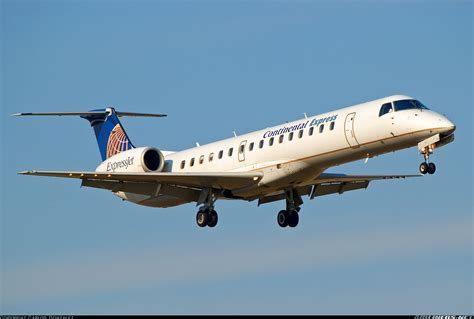
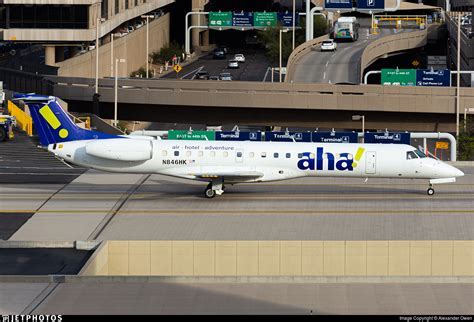
Aha!’s entire operation relied on a single aircraft type: the Embraer ERJ 145, a 50-seat regional jet known for its agility and short-runway capability. Operating such a uniform fleet simplified maintenance and training, but also concentrated risk. With only five aircraft in service, any delays or mechanical issues had a cascading effect on the route schedule.
The aircraft were painted in a minimalist livery featuring bold lowercase “aha!” branding, underscoring its effort to stand out in a cluttered market. The onboard experience was efficient but spartan, in line with the carrier’s low-cost, high-frequency model.
Destination Network: A Regional Patchwork
Aha!’s network was narrowly tailored, prioritizing quick hops from secondary cities to Reno. The airline did not attempt to serve major hubs or long-haul destinations. Instead, it focused on cities where travelers were otherwise underserved.
Among the more prominent destinations were:
- Santa Rosa (California) – Linking wine country to gambling and skiing.
- Boise (Idaho) – A tech-friendly, fast-growing metro with limited direct flights to Reno.
- Eugene (Oregon) and Medford (Oregon) – Tapping into outdoors-focused markets.
- Idaho Falls (Idaho) – Providing a rare direct option to Reno’s resort areas.
While Aha!’s reach was regional, its strategy was designed to capture niche demand from city pairs that were otherwise underserved. However, this also limited passenger volume and made scalability difficult.
Why Aha! Failed: Lessons from a Short Flight
Aha!’s failure was not due to lack of vision, but rather a convergence of timing, scale, and strategy flaws. The airline entered the market during a transitional moment in aviation—when travel patterns were shifting, consumer preferences were evolving, and operational costs were anything but stable.
Additionally, its unique value proposition—bundled vacation packages—was never fully realized. Most travelers still booked flights and accommodations separately, and the partnerships with resorts and casinos that Aha! relied on never scaled quickly enough to become central revenue drivers.
From a branding standpoint, “aha!” was catchy but vague. Without strong national marketing, many consumers failed to understand what the brand stood for. Its limited presence in major booking systems also hampered discoverability.
Legacy and What Comes Next
While Aha! is now a defunct chapter in aviation history, its story reflects the larger challenges that face startup regional airlines in today’s travel environment. The brand sought to revitalize regional connectivity in a time when major carriers were pulling back from non-hub cities. That mission remains valuable, and other airlines may yet adopt some of Aha!’s strategies—particularly the bundling of experiential travel packages with flights.

For now, the Reno–Tahoe market continues to seek improved connectivity, but without Aha!, passengers once again face limited direct options from smaller western cities. Meanwhile, aviation professionals and analysts will study Aha!’s trajectory for insights into market timing, niche targeting, and the crucial balance between ambition and operational capability.
Ultimately, Aha! Airlines serves as a case study in the volatile nature of regional aviation. Its rise was brief, its fall swift—but the lessons it leaves behind may yet shape the next generation of regional air travel.