Regent Air, a now-defunct airline with its headquarters in Westchester, Los Angeles, California, left an indelible mark on the aviation industry during its short-lived but ambitious existence. Founded in October 1982 under the name ‘Firstair,’ the airline quickly rebranded to Regent Air as it transitioned to scheduled flights. Although it operated for only a few years, Regent Air made waves in the luxury aviation market with its high-end services and bold ambitions. Let’s take a closer look at this unique airline and what it represented in the broader context of U.S. aviation during the 1980s.
The Rise of Regent Air: Luxury Meets the Skies
Regent Air’s entrance into the competitive skies of 1980s America was marked by a commitment to luxury and exclusivity. Originally offering charter services, the airline quickly attracted attention for its upscale approach to air travel. The fleet consisted of Boeing 727-100 aircraft, which were notably configured to carry just 30 passengers in an all-first-class cabin. This configuration set the airline apart from competitors, promising a level of comfort and luxury that was rare for commercial airliners at the time.
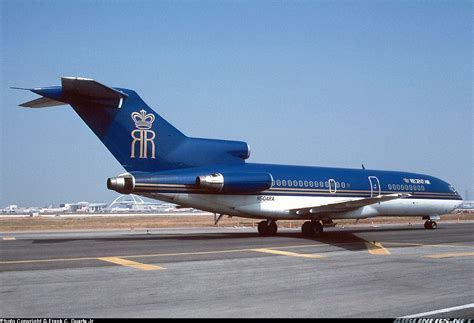
In 1985, Regent Air’s schedules were published in the Official Airline Guide (OAG), and they offered one round-trip flight daily between Newark Airport (EWR) in New York City and Los Angeles (LAX). What truly set Regent Air apart, however, were the exclusive services it provided for its passengers. The airline offered complimentary limousine transfers and even helicopter services to connect passengers with their flights. Despite the high cost of these services—fares were 50% higher than those of competing airlines—Regent Air’s customers were willing to pay for the luxury experience.
Ambitious Goals and Regulatory Challenges
Despite its innovative approach to luxury travel, Regent Air faced significant hurdles. From 1982 to 1985, the airline operated exclusively as a charter service, due to delays in obtaining regulatory approval to operate as a scheduled carrier. The U.S. Department of Transportation withheld its approval for scheduled operations because of concerns over the airline’s ownership ties, which were alleged to have connections with organized crime. This regulatory scrutiny delayed the airline’s expansion plans and limited its growth.
However, in 1985, Regent Air received the necessary approvals to operate as a scheduled carrier, allowing it to offer consistent services between major U.S. cities. At this point, the airline’s focus shifted from merely being a charter service to providing regular flights with a premium twist. The introduction of scheduled services was a significant milestone, one that marked the beginning of Regent Air’s brief journey into the competitive mainstream market.
Fleet and Operations: The Boeing 727-100
During its peak in 1985, Regent Air operated a fleet of three Boeing 727-100 aircraft. These aircraft were specially configured to serve the airline’s elite clientele, with just 30 seats arranged in a single-class, all-first-class cabin. The decision to limit seating capacity allowed for more personal space, a hallmark of the airline’s commitment to luxury travel.
The Boeing 727-100, a popular aircraft during the era, was known for its reliability and performance. Regent Air’s fleet was specifically tailored for long-haul flights between New York and Los Angeles, and its 727s were seen as a perfect fit for the airline’s luxury-oriented strategy. However, despite their high-class design, these aircraft were also versatile and could be used for charter operations, further enhancing Regent Air’s business model.
Regent Air’s Brief and Tumultuous Lifespan
Despite its early successes, Regent Air’s lifespan was short-lived. The airline, which was acquired by Regent Tours International in January 1986, had big plans to expand its operations. At one point, it even announced plans to initiate flights to Honolulu, Hawaii, using the iconic Boeing 747. However, despite the ambitions, this new route never materialized. Flight schedules published in the OAG at the time failed to reflect the promised Boeing 747 service to Hawaii, and it appears that this expansion never got off the ground.
After its acquisition by Regent Tours International, the airline’s fate was sealed. By the mid-1980s, the competitive landscape of U.S. aviation was changing rapidly. Airlines like American, Delta, and United were increasing their focus on service quality, and new low-cost carriers were emerging. Regent Air, with its niche focus on luxury travel, was no longer able to compete in a market that was increasingly dominated by larger, more established carriers.
The End of Regent Air: A Legacy of Luxury Aviation
Regent Air ceased operations in 1986, marking the end of its ambitious journey in the U.S. aviation industry. Despite its relatively short existence, the airline left a significant legacy. It was one of the first carriers to truly focus on offering a luxurious air travel experience for a select few, offering services that were ahead of its time. The combination of luxury, exclusivity, and high costs may have limited its market, but it also set a standard for future luxury airlines.
Today, the airline remains a fascinating footnote in the history of U.S. aviation. Its commitment to offering a premium experience on par with the best in the world foreshadowed trends that would eventually be embraced by more prominent carriers in the years that followed. Although Regent Air’s time in the skies was brief, its vision for luxury air travel was clear and ahead of its time.
Final Thoughts: Regent Air’s Place in History
In retrospect, Regent Air may not have had the staying power of some of its competitors, but its efforts to offer a luxurious travel experience remain noteworthy. By focusing on premium services and a high-end travel experience, the airline set the stage for future developments in the luxury aviation sector. Although its ambitious expansion plans ultimately fell short, Regent Air played a significant role in shaping the landscape of U.S. air travel during the 1980s. For those who had the privilege to fly with Regent Air, it was undoubtedly an unforgettable experience—one that proved that luxury and comfort could indeed be part of the aviation industry.