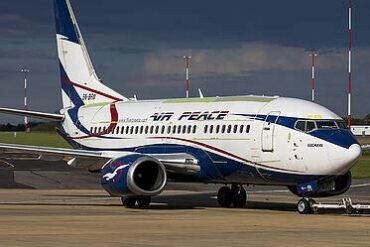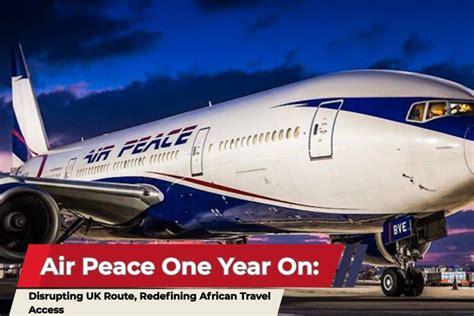
In an industry where most route launches are tightly tied to demand, infrastructure, and profitability, Air Peace—Nigeria’s largest airline—has thrown the playbook out the window. For a short window in December, the carrier is operating a mind-bending multi-stop route from West Africa to the Caribbean, using a Boeing 777, the largest aircraft in its fleet. This isn’t a one-stop hop between continents. It’s a sprawling transatlantic trek—Accra to Lagos to Antigua to Barbados to Port of Spain to Kingston—with no intra-Caribbean traffic rights, making the journey as confusing as it is compelling.
Why This Route Exists At All
At first glance, this itinerary defies economic logic. Five stops over 10,600 km with questionable demand? Any seasoned analyst might write this off as another ill-fated, ego-driven adventure in African aviation. But this time, Air Peace has an ace up its sleeve—strategic partnerships with tour operators in Nigeria and Ghana. These companies are tasked with filling seats, minimizing the risk traditionally associated with such speculative routes.
The flights are specifically targeted for the Christmas season, running on December 20 and 29, theoretically when diaspora demand and leisure travel peak. However, the current market between West Africa and the Caribbean is, in all honesty, negligible. There’s little to no natural flow of travelers across these regions, and Air Peace is effectively trying to create a market from scratch.
A Schedule That Defies Reason
Looking into Air Peace’s booking engine, schedule aggregators like Cirium Diio and OAG, and even its own website, yields a tangle of contradictions. Timings vary across platforms. Days of operation are inconsistent. The precise routing itself is difficult to pin down with confidence. Such discrepancies raise serious questions about operational transparency and readiness—hallmarks of long-haul reliability.
What is certain is that the proposed routing will link Accra, Lagos, Antigua, Barbados, Port of Spain, and Kingston. However, without fifth-freedom rights, passengers can’t be picked up or dropped off between the Caribbean stops, meaning the aircraft will make multiple landings with no commercial benefit in those segments.
The Aircraft Behind the Ambition
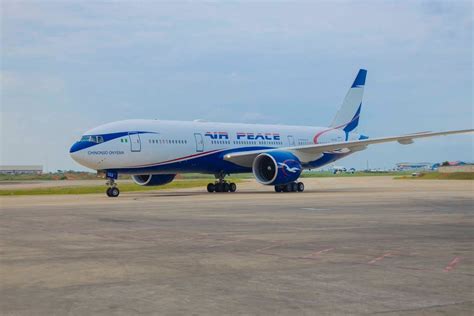
For this ambitious venture, Air Peace lists its 319-seat Boeing 777 as the aircraft of choice. The specific tail number likely in use is 5N-BWI, a 20.8-year-old 777-300 originally delivered to Singapore Airlines in 2005. It’s not even the extended range variant, making this route push the operational ceiling of the aircraft.
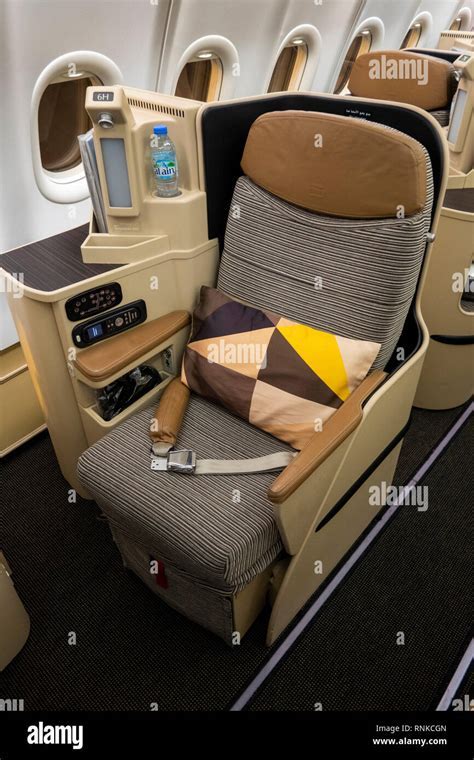
All of Air Peace’s four Boeing 777s feature different configurations, a logistical nightmare for crew scheduling, maintenance, and passenger experience. Only 5N-BWI fits the 319-seat configuration mentioned. It has mostly operated between Lagos and Gatwick, a more conventional long-haul route.
While theoretical range allows for the longest leg—Lagos to Antigua—to be completed non-stop, operational margins like alternate airport fuel reserves, winds, and payload limitations might strain the aircraft.
Is This Just an Experiment?
According to AviaDev, the current round-trip flights are described as an “experiment”, with the potential to grow into a monthly service. African aviation analyst Sean Mendis doesn’t mince words, stating bluntly:
“Perhaps two flights at Christmas will help to see if they can develop the market. But all of those [Caribbean] places combined are not enough to fill two flights in a year, based on the current traffic levels.”
That remark cuts to the core of the challenge: there is no pre-existing market here. Air Peace must generate demand from scratch, using holiday travel and diaspora engagement as catalysts. Even with bundled holiday packages and discount pricing, the long-term viability is tenuous at best.
A Mix of Creativity and Desperation?
Some observers interpret this Caribbean venture not as visionary expansion but as a symptom of network exhaustion. Despite being West Africa’s biggest airline, Air Peace has struggled to make many of its 777 routes stick. Attempts at Dubai, Johannesburg, and Mumbai have been either short-lived or plagued with operational hiccups.
Launching an exotic, headline-grabbing route like this could be seen as repositioning the airline’s brand. Or, more cynically, it might be a last-ditch effort to justify the continued operation of expensive widebody assets that otherwise lack profitable deployment options.
Strategic Gamble or Route to Nowhere?
There’s no question that Air Peace’s transatlantic multi-stop route is unique. It challenges traditional route planning logic, embraces uncertainty, and banks on third-party partners to fill seats. But the challenges are immense: logistical complexity, lack of traffic rights, fleet inconsistency, and unproven market demand.
If the flights succeed, Air Peace may open a new chapter for West African long-haul tourism and diaspora travel. If they fail, the operation will serve as another cautionary tale of ambition overtaking feasibility in African aviation.
Either way, it’s a bold experiment. And in an industry bound by safety, profitability, and routine, boldness—however fleeting—deserves attention.