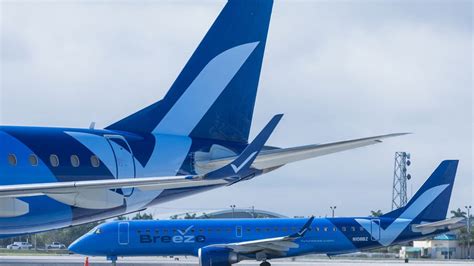
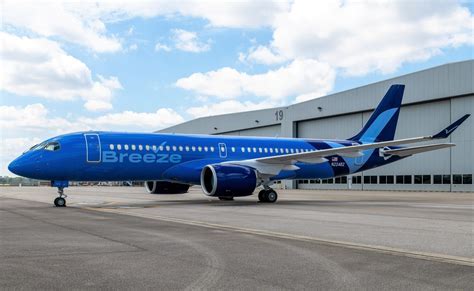
Celebrating its fourth anniversary in June 2025, Breeze Airways has announced the launch of new routes to Key West, Albany, and Greensboro, solidifying its aggressive growth trajectory in the U.S. domestic air travel market. The announcement marks another milestone in the airline’s rapid rise—now ranked 15th in U.S. flight operations and 11th in seat capacity—powered by a growing fleet of 54 Airbus A220-300s and Embraer E190/195 aircraft.
The airline’s latest route expansion represents more than just a network update. It’s a calculated move to penetrate underserved regional markets, capitalize on vacated routes, and bolster its presence in critical states like Florida, where Breeze now operates in 11 airports.
Strategic Additions: Why Key West, Albany, and Greensboro Matter
Each of the new cities added to Breeze’s route map has been chosen with precision, reflecting the carrier’s vision of offering affordable, nonstop connections between underserved markets.
Albany, New York: Bridging the Northeast and Southeast
Breeze Airways has commenced flights from Albany International Airport (ALB) to Charleston, SC, and Raleigh/Durham, NC. The route to Charleston, which started on June 13, is entirely new to the market, previously unserved by any airline. The Albany to Raleigh/Durham connection, launched on June 5, comes with strong historical demand—over 21,000 round-trip passengers flew this route in 2024, according to the U.S. Department of Transportation.
The entry into Albany highlights Breeze’s focus on mid-sized northeastern cities that lack sufficient direct connections to the southeastern U.S. By filling these gaps, Breeze is creating a web of efficient travel options without the complexity and cost of hub-and-spoke transfers.
Greensboro, North Carolina: Tapping Into Piedmont Triad Potential
Greensboro’s Piedmont Triad International Airport (GSO) welcomed Breeze flights to Hartford, CT, and Orlando International Airport starting June 6. The Hartford route is particularly notable because it has never been serviced before, presenting Breeze with a first-mover advantage.
Meanwhile, the new twice-weekly service to Orlando reinstates a previously discontinued route, offering passengers a low-cost, nonstop option to one of the country’s busiest leisure destinations. These routes not only enhance connectivity for the region but also reinforce Breeze’s strategy to revive valuable markets abandoned by other carriers.
Key West, Florida: Low-Cost Entry to a High-Demand Destination
Key West is the jewel in Breeze’s latest route additions, connecting the island city with Orlando and Tampa. Flights began on June 12, stepping in for a previous operator and capitalizing on pent-up demand. Tampa to Key West, in particular, is a robust market—nearly 49,000 round-trip passengers were recorded in 2024 alone.
Although Breeze will initially operate six weekly flights on this route—lower than the former carrier’s 17—the airline is entering a market that’s already proven lucrative. With fewer competitors and a strong brand appeal for leisure travelers, Breeze is poised to capture a significant share.
Operational Model: Minimal Frequency, Maximum Efficiency
Breeze’s routes typically operate with a twice-weekly frequency, a model that balances cost efficiency with market entry. This frequency allows Breeze to test demand without overcommitting resources, especially when entering markets with limited historical data or replacing defunct competitors.
Key West is an exception to this model due to its high volume of leisure traffic. The six weekly flights from Tampa offer more flexibility for travelers and signal Breeze’s confidence in the route’s profitability.
This approach demonstrates the carrier’s commitment to low-risk, high-reward expansion, often focusing on markets that lack direct service or have only been sporadically served by other airlines.
Network Optimization: Strategic Withdrawals from Mobile and Plattsburgh
While expanding into promising markets, Breeze has also executed calculated withdrawals. Flights to Mobile International Airport (BFM) and Plattsburgh International Airport (PBG) have been discontinued.
Breeze had briefly operated Orlando-Mobile flights from April 2024 to January 2025, stepping in after another airline’s exit. However, the market failed to reach sustainable volume, and with no current commercial services, Mobile’s future in Breeze’s network remains uncertain.
Similarly, Plattsburgh—serviced seasonally from Orlando and Tampa between November 2023 and April 2025—showed seat fill rates of only 70%, well below the airline’s target. Allegiant now services the airport from multiple Florida cities, and Breeze has chosen to reallocate its capacity elsewhere.
These moves reflect Breeze’s nimble strategy: it enters markets with cautious optimism but isn’t afraid to pivot quickly when results fall short of expectations.
Florida Focus: A Growing Foothold in the Sunshine State
Breeze’s addition of Key West cements its growing dominance in Florida. With service now extended to 11 Florida airports, the state plays a central role in the airline’s growth narrative. Florida’s combination of high leisure demand, strong population growth, and seasonal traffic makes it a fertile ground for Breeze’s low-cost, point-to-point business model.
This strategy allows Breeze to operate without the traditional hub constraints of legacy airlines, enabling more nonstop travel opportunities between secondary markets that are often ignored by larger carriers.
Fleet Utilization and Market Positioning
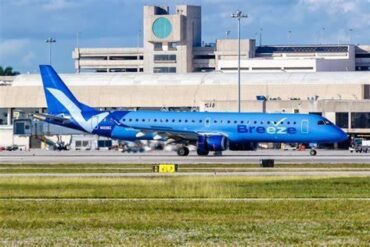
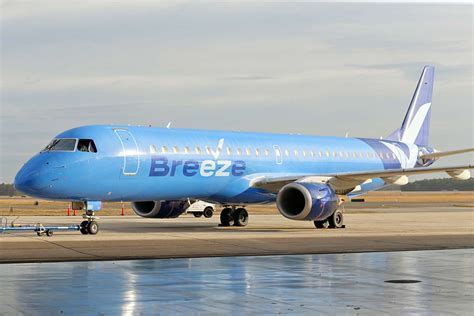
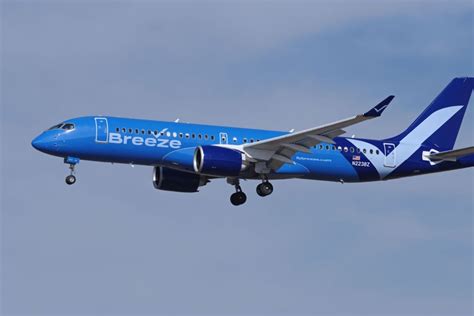
Much of Breeze’s expansion success can be attributed to its modern, fuel-efficient fleet. The airline now operates 54 aircraft, primarily composed of Airbus A220-300s and Embraer E190/E195s. These aircraft are ideal for thin routes, offering a balance of range, passenger comfort, and operational efficiency.
Their relatively low operating costs allow Breeze to enter and sustain routes that major carriers deem unprofitable, enabling them to build a niche network that emphasizes nonstop connectivity over volume.
As of June 2025, Breeze ranks 15th among U.S. airlines in total flight operations and 11th in available seat capacity, remarkable for a carrier that launched in 2021. These rankings underscore Breeze’s swift rise and continued disruption of traditional network models.
Replacing the Past, Building the Future
Breeze’s recent route announcements also showcase its strategic replacement strategy. Rather than compete head-to-head in saturated markets, the airline often targets previously abandoned routes where passenger demand still exists.
In many of the new routes—Greensboro to Hartford, Albany to Charleston, Tampa to Key West—Breeze has taken over markets vacated by other airlines. This minimizes competition, leverages existing demand, and positions the airline as a reliable successor where others have failed.
This nimble, opportunistic expansion model not only reduces market risk, but also appeals to local airports eager to restore lost connectivity.
Conclusion: A Calculated Climb in the Competitive U.S. Skies
Breeze Airways continues to redefine regional air travel in the United States. With its calculated entrance into Key West, Albany, and Greensboro, the airline is not just expanding its network—it is strategically repositioning itself in markets where it can thrive.
By combining fleet efficiency, market agility, and a laser-focused route strategy, Breeze is rapidly carving out a sustainable niche in the U.S. aviation landscape. As the airline eyes additional growth and evaluates more underserved routes, passengers can expect even more affordable, direct flights that bypass the headaches of traditional hub travel.
The future of Breeze Airways looks as dynamic as its present—with every new destination marking another step toward its goal of democratizing air travel for America’s forgotten flyers.