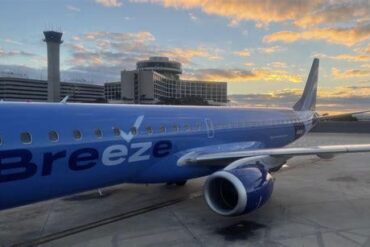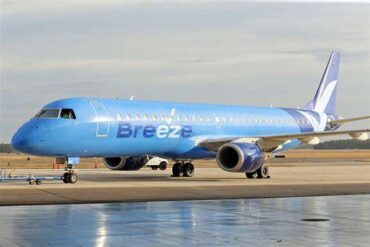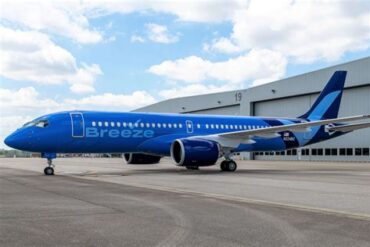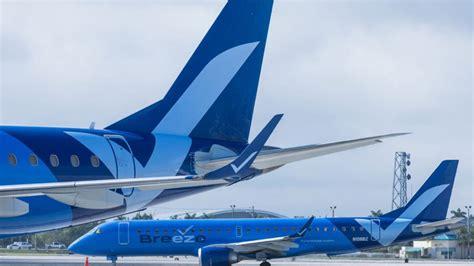
Breeze Airways is accelerating its national footprint with the unveiling of 17 new routes and two new cities, a move that significantly reshapes its route map ahead of the 2026 travel season. The carrier’s latest schedule submission reveals a deliberate strategy: strengthen underserved markets, reclaim abandoned routes, and double down on Florida as a cornerstone of its operation.
This expansion introduces Birmingham, Alabama, and Tallahassee, Florida as brand-new cities in Breeze’s growing network. Tallahassee’s addition is especially notable, bringing the airline’s Florida presence to 12 airports statewide. With more than one in four Breeze flights projected to touch Florida in 2026, the Sunshine State is no longer a secondary focus—it is the backbone of Breeze’s growth trajectory.
The announcement follows ongoing weekly schedule updates filed with aviation data platforms such as Cirium Diio and OAG, offering analysts a granular look into where airlines see opportunity. In Breeze’s case, the pattern is clear: identify vacuums left by retreating competitors and move swiftly.
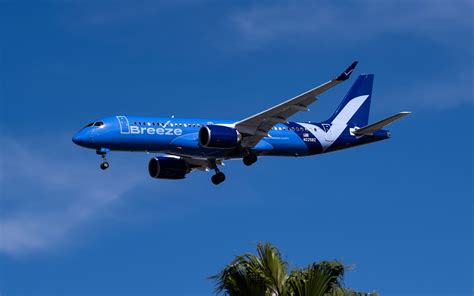
Fort Lauderdale Emerges as a Strategic Growth Engine
The most dramatic shift centers on Fort Lauderdale-Hollywood International Airport (FLL). Until recently, Fort Lauderdale ranked as Breeze’s 34th most-served airport out of 83 destinations. Within a single week, that changed dramatically. Eight newly added routes have driven a 147% surge in planned departures, elevating FLL to the airline’s 18th most-served airport in a now 85-city network.
The eight new routes from Fort Lauderdale include:
- Jacksonville (daily service starting July 1)
- Salisbury (twice weekly, brand-new market)
- Tampa (twice daily service)
- Wilkes-Barre/Scranton (twice weekly, brand-new market)
- Charleston (three weekly flights)
- Greenville/Spartanburg (four weekly flights)
- Tallahassee (three weekly flights)
- Birmingham (twice weekly flights)
Several of these markets share a common thread: they were recently abandoned by other carriers. JetBlue exited Fort Lauderdale–Jacksonville earlier this year. Silver Airways, now defunct, previously operated Tampa and Tallahassee services. Spirit withdrew from Birmingham and will leave Charleston in April. Breeze is not experimenting blindly—it is stepping into markets with proven historical demand.
Take Fort Lauderdale to Birmingham as a case study. When Spirit last operated the nonstop route between July 2024 and June 2025, it carried 64,256 round-trip passengers. That equates to roughly 88 passengers daily each way. The demand did not evaporate when Spirit pulled out; it simply became unserved. Breeze appears confident it can capture that stranded traffic with competitive fares and point-to-point convenience.
The Tampa route stands out as particularly bold. Twice-daily service between Fort Lauderdale and Tampa makes it one of Breeze’s joint second-most-served city pairs, underscoring its confidence in intrastate Florida traffic.
Nine Additional Routes Reinforce Underserved Corridors
Beyond Fort Lauderdale, Breeze’s expansion spreads across the East Coast and Midwest, linking secondary cities with limited or no nonstop connectivity. The additional nine routes include:
- Savannah to Columbus (Glenn Columbus)
- Tampa to Atlantic City
- Portland (Maine) to Akron/Canton
- Raleigh/Durham to Tallahassee
- Tampa to Columbus
- Cincinnati to Greenville/Spartanburg
- Cincinnati to Portland (Maine)
- Pittsburgh to Myrtle Beach
- Raleigh/Durham to Birmingham
Among these, Portland, Maine to Akron/Canton may appear unconventional at first glance. Department of Transportation data indicates that only one passenger per day historically flew between the two cities nonstop. Yet Akron/Canton functions as an alternative gateway to the broader Cleveland market, located roughly an hour away. When Cleveland traffic is included, the market swells to approximately 14,700 annual round-trip passengers, or about 20 passengers daily each way.
For Breeze, that is not insignificant. The airline’s model thrives on connecting smaller markets with moderate but steady demand, stimulating traffic through low fares and nonstop convenience. A route that appears weak in isolation may prove viable when viewed within a broader regional context.
Florida: The Pillar of Breeze’s Network Strategy
Florida’s dominance in this announcement cannot be overstated. With Tallahassee joining the network and expanded service at Fort Lauderdale and Tampa, Breeze is cementing its position as a key low-cost connector across the state.
By 2026, more than 25% of Breeze’s flights will either originate, terminate, or pass through Florida airports. That level of concentration reflects both demographic reality and travel patterns. Florida continues to generate strong leisure demand, steady business traffic, and year-round population growth. For a carrier built on point-to-point efficiency, that environment is fertile ground.
Competition, however, remains intense. Tampa to Atlantic City directly challenges Spirit. Tampa to Columbus brings Breeze head-to-head with Southwest. Greenville/Spartanburg from Fort Lauderdale pits it against Allegiant. Breeze is not avoiding competitive arenas; it is selecting markets where prior performance suggests underlying resilience.
Ready-Made Demand and Tactical Opportunism
A consistent theme across the 17 new routes is the targeting of ready-made markets. Many were served until recently by airlines that withdrew for strategic or financial reasons rather than due to weak demand. Breeze’s lean cost structure allows it to revisit these corridors with smaller aircraft and lower operating expenses.
This opportunistic timing reflects a broader industry dynamic. Airlines routinely recalibrate capacity based on fleet constraints, staffing challenges, and shifting corporate priorities. When one carrier exits, a window opens. Breeze’s network planning appears increasingly adept at spotting those openings quickly.
The return of routes such as Cincinnati to Greenville/Spartanburg, last operated by Delta in 2013, and Raleigh/Durham to Birmingham, last flown by ExpressJet in 2008, illustrates how historical markets can be revived under a new cost model.
A Network Built on Calculated Risk
The unveiling of 17 routes in a single update is not incremental growth; it is assertive expansion. Yet it is far from reckless. Each addition reflects data-driven targeting, competitor analysis, and geographic clustering that strengthens Breeze’s core regions.
By deepening its Florida presence, reactivating suspended markets, and stitching together overlooked city pairs, Breeze Airways is steadily carving out a distinctive niche in the U.S. aviation landscape. The strategy hinges on stimulating demand where nonstop service has disappeared and offering travelers a direct alternative to legacy hubs.
As 2026 approaches, the airline’s evolving map suggests a clear ambition: dominate underserved corridors before competitors return, and transform secondary airports into thriving spokes of a rapidly expanding network.