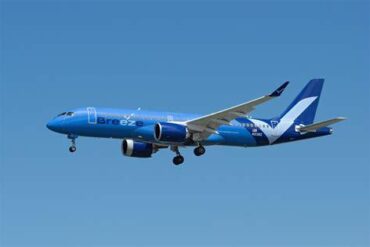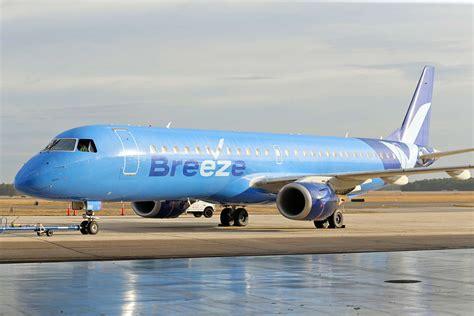
Breeze Airways is accelerating its expansion across the United States with the launch of six new routes and service to two additional cities, reinforcing the airline’s strategy of connecting underserved markets with affordable and convenient nonstop flights. The Utah-based carrier has scheduled these new routes to roll out between March 6 and March 13, with introductory fares starting as low as $39 one-way, a pricing move designed to stimulate demand in regions often overlooked by larger airlines.
Founded in 2021 by aviation entrepreneur David Neeleman, Breeze Airways has steadily built a reputation as a “premium low-cost carrier” that blends budget pricing with passenger-friendly policies. The airline avoids traditional hub congestion by linking smaller and mid-size cities directly, allowing travelers to bypass lengthy connections while still accessing competitive fares.
The newest routes continue that philosophy. Breeze is adding five routes in the western United States along with a new intra-Florida connection, strengthening its footprint in leisure-focused destinations while opening new travel options for regional passengers.
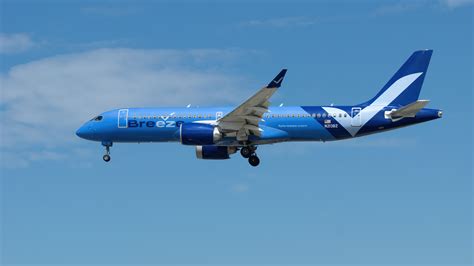
Breeze Airways Strengthens Florida Network With Orlando–Pensacola Service
One of the most notable additions is Breeze’s new nonstop route between Orlando International Airport (MCO) and Pensacola International Airport (PNS). Beginning March 12, the service will operate twice weekly on Thursdays and Sundays, connecting two popular Florida destinations in roughly one hour and thirty minutes.
The route spans approximately 380 miles (620 kilometers) across the Florida Panhandle and central Florida, offering travelers a fast alternative to a lengthy drive that can exceed six hours depending on traffic conditions.
Breeze will enter a competitive environment on this corridor. Frontier Airlines and Spirit Airlines already operate flights between Orlando and Pensacola, both known for their ultra-low-cost models. Breeze, however, aims to differentiate itself through several passenger-friendly features that have become central to its brand identity. Travelers benefit from no change fees, no cancellation penalties, and a more spacious cabin layout, particularly on its modern Airbus A220-300 aircraft.
The airline already maintains a growing presence in Pensacola, which has become an emerging regional hub within its network. Current year-round Breeze destinations from Pensacola include:
- Fayetteville / Bentonville
- Memphis
- Tampa
Additional seasonal or upcoming routes are also strengthening the airport’s connectivity. Flights to Fort Lauderdale will begin on May 7, while San Antonio service is scheduled to launch on June 10, further cementing Pensacola’s role in Breeze’s expanding route map.
Western Expansion Introduces New Routes in California and Nevada
Beyond Florida, Breeze Airways is making significant moves in the western United States. The airline is launching new service to California Redwood Coast Humboldt County Airport (ACV), bringing additional connectivity to Northern California communities including Arcata and Eureka.
This marks the first time Breeze has served the airport, introducing two new nonstop routes:
- Arcata / Eureka – Las Vegas, beginning March 11
- Arcata / Eureka – Burbank, launching March 12
Both routes will operate three times per week, providing residents of California’s remote northern coastline with convenient links to major travel hubs and leisure destinations.

Until recently, United Airlines (via United Express) was the only airline serving ACV. Breeze’s arrival adds a new competitive dynamic and expands travel options for passengers in the region. Additional growth is already on the horizon, as Alaska Airlines plans to introduce flights to Seattle-Tacoma International Airport beginning April 8, further strengthening the airport’s connectivity.
Breeze’s network strategy often focuses on precisely these types of markets—regions with limited airline competition but strong underlying travel demand.
Las Vegas Emerges as a Key Breeze Airways Hub
Another centerpiece of the airline’s expansion strategy is Las Vegas Harry Reid International Airport (LAS). Breeze continues to build a meaningful presence there, using the city as a launchpad for several new routes.
One of the most competitive additions is the daily service between Las Vegas and Santa Ana’s John Wayne Airport (SNA) in Southern California. The route began operating March 6, placing Breeze alongside a crowded field of competitors that includes:
- Delta Air Lines
- Frontier Airlines
- JSX
- Southwest Airlines
- Spirit Airlines
Despite the competition, Breeze’s use of smaller aircraft and its streamlined fare structure may appeal to travelers seeking flexibility and a simplified travel experience.
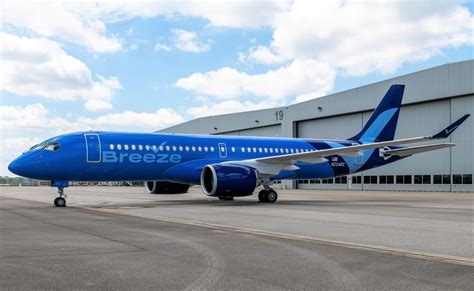
Las Vegas also plays a role in connecting several of the airline’s newest destinations. By linking these routes through a high-demand leisure hub, Breeze can maintain strong passenger loads while still serving smaller communities.
Twin Falls Gains New Air Service With Breeze Launch
Among the most impactful additions is Breeze’s entry into Magic Valley Regional Airport (TWF) in Twin Falls, Idaho. The airline launched nonstop service to Las Vegas on March 6, creating a new air link for a region that historically has had very limited airline connectivity.
The route operates twice weekly on Mondays and Fridays and is flown using Breeze’s Airbus A220-300, an aircraft known for its quiet cabin, fuel efficiency, and passenger comfort.
For Twin Falls, the arrival of Breeze is significant. The airport previously relied primarily on Delta Connection flights to Salt Lake City, meaning most travelers had to connect through that hub to reach other destinations. The new Las Vegas link opens direct access to a major tourism and entertainment city while also providing onward connections through Breeze’s expanding network.
Interestingly, the Twin Falls route is structured as a continuation of the Santa Ana–Las Vegas service, a scheduling technique that allows Breeze to efficiently utilize aircraft while maximizing network reach.
Provo Gains Additional Flights to Las Vegas
The airline is also strengthening its operations at Provo Municipal Airport (PVU) in Utah. Beginning March 13, Breeze will introduce twice-weekly service between Provo and Las Vegas, adding another connection from the rapidly growing airport.
Provo has become one of Breeze’s most active bases, already offering flights to several destinations, including:
- Burbank
- Dallas/Fort Worth
- Orange County
- Orlando
- Phoenix–Sky Harbor
- San Bernardino
- San Francisco
- Washington–Dulles
This expanding network highlights Breeze’s long-term commitment to secondary airports that are often overlooked by larger carriers.
The Breeze Airways Business Model: Premium Low-Cost Travel
Breeze Airways positions itself differently from traditional ultra-low-cost airlines. While fares remain highly competitive, the airline offers a range of features designed to improve the passenger experience without significantly raising costs.
Passengers flying with Breeze can expect:
- No change or cancellation fees
- Optional onboard food and beverage purchases
- Available Wi-Fi connectivity
- Flexible baggage options depending on fare type
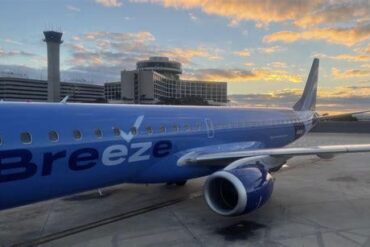
The airline operates a mixed fleet that currently includes Embraer 190 aircraft and Airbus A220-300 jets, the latter becoming the backbone of its long-term fleet strategy.
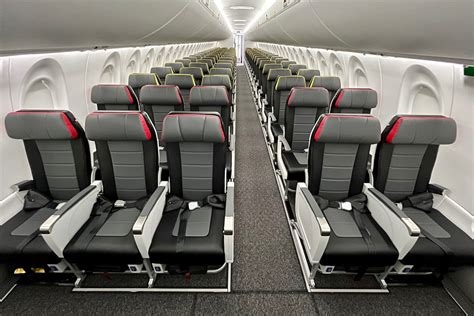
The Airbus A220 is particularly important to Breeze’s growth. With its efficient fuel consumption and range capabilities, the aircraft allows the airline to profitably operate routes that might be too small for larger narrow-body jets.
Rapid Growth Signals a Bold Future for Breeze Airways
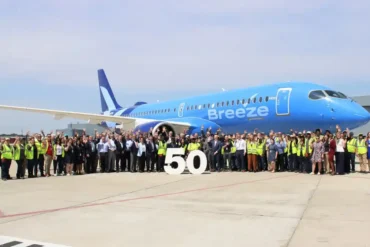
Since launching operations in May 2021 with its first flight between Tampa and Charleston, Breeze Airways has quickly become one of the fastest-growing airlines in the United States. The company already operates more than 50 Airbus A220 aircraft, with dozens more on order, signaling continued expansion across domestic and international markets.
The airline has also begun extending its reach beyond the United States, gradually adding routes to Mexico and the Caribbean to capture growing leisure travel demand.
With its latest batch of route launches, Breeze continues to demonstrate a clear strategy: connect underserved city pairs, maintain low fares, and build loyalty through flexible policies and modern aircraft.
For travelers seeking affordable flights between cities that previously required inconvenient connections, Breeze Airways is steadily transforming the map of American air travel—one $39 ticket at a time.