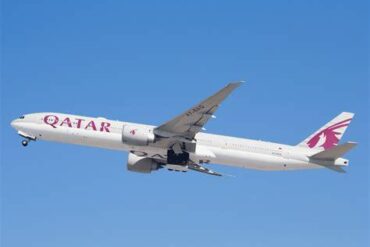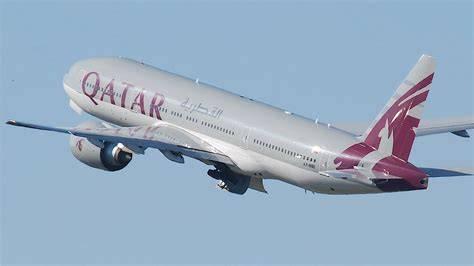
A mid-air altercation aboard Qatar Airways flight QR725 ended not in the cabin where it began, but on the ground at Chicago O’Hare International Airport, where local police and FBI agents were waiting at the gate for the aircraft. The long-haul service from Doha (DOH) to Chicago (ORD), operated by a Boeing 777-300ER, became the scene of a passenger-on-passenger attack that required crew and fellow travelers to physically intervene before the jet had even begun its descent into Illinois.
The Midair Altercation That Triggered an FBI Response at O’Hare
The confrontation flared between two travelers seated in adjacent rows, with the passenger in row 32 allegedly attacking the passenger seated in row 31, according to accounts reported by AirLive. Multiple witnesses on board saw the altercation unfold, and the sheer number of observers proved decisive in the response that followed, because their testimony allowed flight attendants to reconstruct the sequence of events while the aircraft was still at cruising altitude.
Crew members moved quickly to break up the fight, and several passengers joined them in restraining the individuals involved. The pilot then contacted air traffic control in Chicago before landing, formally requesting that law enforcement officers be present at the arrival gate. That decision effectively converted a routine arrival into a security operation coordinated on the ground hours in advance, and it also signaled to controllers that the aircraft’s landing should be treated with heightened awareness even though the situation had been contained.
Flight QR725’s 14-Hour Journey from Doha to Chicago
The aircraft, a Boeing 777-300ER, departed Doha on Monday, November 16 at 8:08 AM, running 28 minutes behind its scheduled 7:40 AM departure. The service was expected to reach Chicago at 2:30 PM that same afternoon, a frame that reflects the punishing 14-hour block time typically flown on this ultra-long-haul route. It remains unclear precisely when the two passengers clashed, but the incident was clearly not treated as life-threatening, which spared the captain from ordering an emergency diversion.
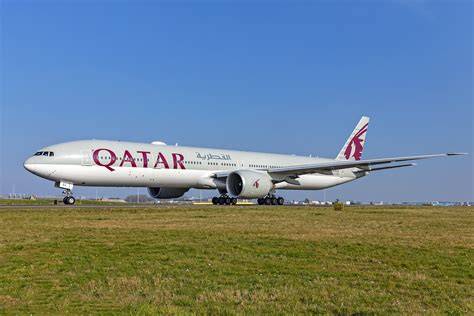
That distinction matters. A fight severe enough to threaten the aircraft or crew would have obliged the commander to divert to the nearest available airport and hand the matter to authorities far earlier. Instead, the crew contained the situation, and the jet continued toward its destination, touching down at 1:46 PM after a 14-hour and 38-minute flight. The widebody belonging to the oneworld alliance carrier landed on runway 28C and then made its way promptly to Terminal 5, where police and FBI personnel met the aircraft at the gate.
Suspect Taken Into Custody as Witness Statements Are Collected
Upon arrival, the suspect was taken into custody for further questioning, and investigators also collected witness statements from the passengers and crew who had direct knowledge of the attack. The FBI’s presence at an international arrival gate is not automatically suggestive of a terror-related matter; federal agents frequently respond to incidents on inbound international flights because of jurisdictional rules governing crimes committed aboard aircraft entering the United States.
A Qatar Airways spokesperson confirmed the basic facts, stating that “two male passengers were involved in an altercation on board flight QR725 from Doha to Chicago on Monday,” and that “the incident did not affect the operation of the flight, which landed safely in Chicago as scheduled.” The airline added that “upon arrival, both passengers were handed over to local authorities,” and reiterated that “the safety and wellbeing of our crew and passengers remain our highest priority.” Whether either passenger will face permanent restrictions or criminal exposure remains unconfirmed.
Inside the Aircraft: A7-BAC, an 18-Year-Old 777-300ER
The jet involved carried registration A7-BAC, serial number MSN 30610, line number 731, and is officially typed as a Boeing 777-3DZER. It first flew on July 9, 2008, and was delivered to Qatar Airways on August 30, 2008, making it approximately 18.4 years of age and a veteran of the carrier’s long-haul fleet. The aircraft is configured with 42 Business Class seats and 312 Economy Class seats, and it operates under a lease arrangement with Fariha Leasing.
Critically, the incident does not appear to have caused any onboard damage, and no passengers had publicly shared footage of the attack on social media at the time of reporting. That absence of viral evidence is unusual in an era when cabin confrontations are frequently livestreamed, and it underscores how quickly the crew appears to have regained control of the situation.
Would a Plane Divert for a Fight Onboard?
Whether a plane turns around mid-flight is left to the captain’s discretion, who must weigh whether unruly or fighting passengers pose an immediate threat to the crew, other passengers, or the aircraft itself. Depending on severity, the commander can order a diversion to the nearest suitable airport so that local law enforcement can board and remove the disruptive individuals.
The financial consequences of such a decision are substantial, with airlines absorbing diversion landing fees, the cost of additional fuel, and rebooking expenses for every passenger on board. Carriers also retain the power to permanently ban passengers who engage in physical violence. This year alone, a fight broke out on a flight from Bogotá (BOG) after one passenger attempted to move another’s hand luggage in the overhead bin, forcing crew to separate the pair for the remainder of the journey. Separately, on a Qantas domestic service from Perth (PER) to Melbourne (MEL), a passenger turned aggressive when asked to relocate from an exit row, shoving a flight attendant with both hands before being restrained and arrested by federal police.
The Qatar Airways case is likely to shape how carriers and federal agencies coordinate on inbound international flights, particularly as the FBI’s early involvement suggests investigators are scrutinizing the incident as a potentially prosecutable offense rather than a simple disruption.