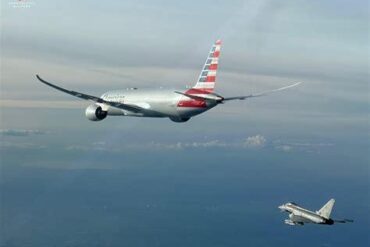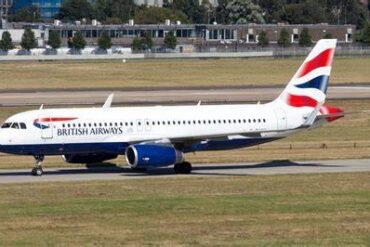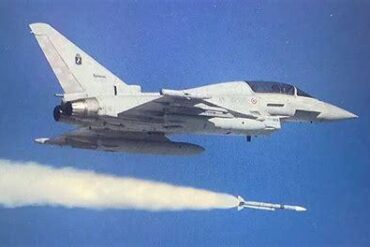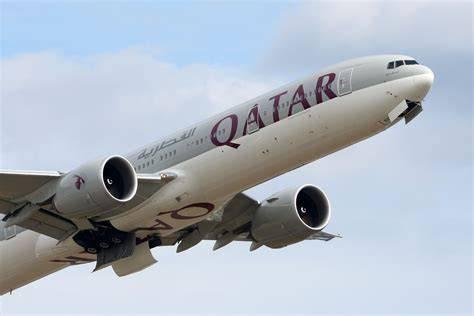
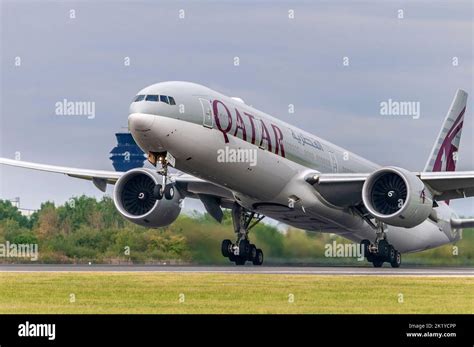
A Qatar Airways Boeing 777-300ER was intercepted by two Royal Air Force (RAF) Eurofighter Typhoons after the aircraft temporarily stopped responding to air traffic control while approaching Manchester Airport. The incident involved Qatar Airways Flight QR23, operating from Doha Hamad International Airport to Manchester, and triggered a Quick Reaction Alert (QRA) response from the UK military.
The widebody aircraft was in the final stage of its journey across the United Kingdom when concerns were raised by civil authorities. According to the UK’s Ministry of Defence (MoD), RAF fighters were launched after the aircraft was considered a situation requiring military attention. The incident was later resolved, with the Boeing 777 landing safely at Manchester Airport without disruption to passengers or airport operations.
RAF Typhoons Scrambled to Intercept Qatar Airways Boeing 777
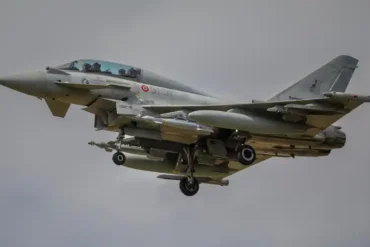
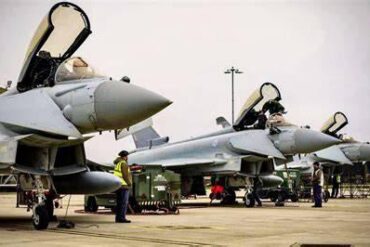
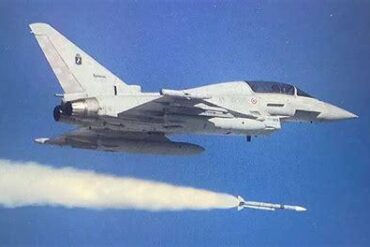
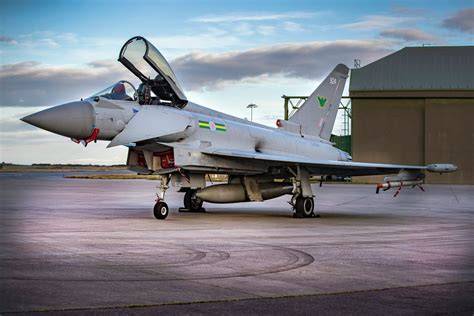
The two RAF Typhoon FGR4 fighter jets were launched from RAF Coningsby in Lincolnshire as part of the UK’s permanent Quick Reaction Alert capability. The aircraft, operating under the callsigns RIGID 11 and RIGID 12, intercepted the Qatar Airways Boeing 777 over the Nottingham area before accompanying it across the Midlands and Yorkshire toward Manchester.
The RAF maintains fighter aircraft at high readiness around the clock to respond to potential threats involving UK airspace. These missions are designed to address a range of situations, including unidentified aircraft, aircraft experiencing communication failures, or situations where authorities require immediate airborne assistance.
An RAF spokesperson confirmed that a QRA mission had been launched for a Qatar Airways flight that was “causing concern to civil authorities.” The statement added that the situation was resolved and the aircraft landed safely at Manchester Airport.
Qatar Airways also confirmed that the aircraft had been escorted following a security notification from UK authorities. However, the airline did not provide further details about the exact reason behind the fighter escort.
Boeing 777 Communication Failure Triggered Security Response
Although the precise circumstances surrounding the incident have not been fully disclosed, several reports indicate that the most likely cause was a temporary loss of communication between the aircraft and air traffic controllers.
For commercial aircraft operating in controlled airspace, maintaining contact with ATC is a fundamental safety requirement. When an aircraft stops responding, authorities must treat the situation seriously because it can create uncertainty about the aircraft’s condition, intentions, or possible security risks.
The Qatar Airways Boeing 777 reportedly continued flying normally, but tracking information suggested that the aircraft was not responding to controllers and had not begun its expected descent toward Manchester at the anticipated point. This prompted authorities to investigate and deploy the RAF fighters.
A commercial aircraft failing to communicate does not automatically indicate a security threat. Technical malfunctions, radio failures, incorrect frequencies, or cockpit workload issues can all contribute to temporary communication problems. However, because aviation security procedures prioritize caution, military interception remains an important safeguard.
Possible Security Concern Raised During Investigation
While most reports have focused on the communication issue, some sources suggested that a possible onboard threat may also have been considered. The UK Defence Journal reported that the interception may have been connected to an incident involving a threat, although the nature of that threat and whether it was considered credible remain unclear.
Neither the UK authorities nor Qatar Airways confirmed that an actual security threat existed onboard the aircraft. The Boeing 777 continued its approach into Manchester, landed shortly before 20:00 BST, and arrived at Terminal 2 without requiring emergency service intervention.
The response highlights how aviation authorities combine information from airlines, air traffic controllers, and security agencies when assessing unusual situations. Even a temporary communication problem can lead to a rapid military response when a large passenger aircraft is involved.
RAF Quick Reaction Alerts Protect UK Airspace
The UK’s Quick Reaction Alert system is designed to provide immediate military support when unusual aircraft activity occurs. RAF Typhoons assigned to QRA duties can launch within minutes and are capable of operating at supersonic speeds if a situation requires rapid interception.
Although RAF fighter intercepts involving scheduled passenger aircraft are uncommon, they are not unprecedented. The majority of QRA missions involve smaller aircraft, including business jets and general aviation aircraft, but commercial airliners can also become part of these operations when communication or security concerns arise.
The RAF Typhoons involved in the Qatar Airways incident were tracked using NATO air policing transponder codes. Despite their capability, the aircraft apparently did not need to travel at supersonic speeds, as no sonic boom was reported during the escort.
A similar situation occurred in 2023 when an RAF Typhoon intercepted a Kenya Airways Boeing 787 after concerns developed during a flight approaching London Heathrow. That aircraft was later diverted to London Stansted Airport as authorities investigated the situation.
Qatar Airways Flight QR23 Has Previous RAF Escort History
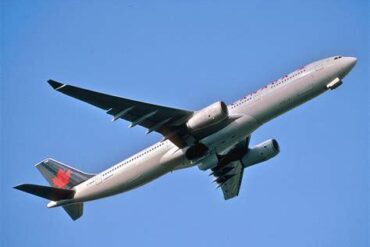
This was not the first time Qatar Airways Flight QR23 has been involved in a high-profile security response. In August 2014, the same route was escorted by RAF Typhoons after a passenger reportedly made a hoax bomb threat onboard an Airbus A330 operating the service.
During that earlier incident, the aircraft was diverted to Manchester Airport, where police arrested the individual involved. Flights at the airport were temporarily suspended while authorities handled the situation.
The latest incident involving the Boeing 777 once again demonstrates the strict security procedures surrounding international aviation. While the aircraft landed safely and no further action was required, the rapid RAF response showed the importance of maintaining constant readiness to protect commercial flights and national airspace.