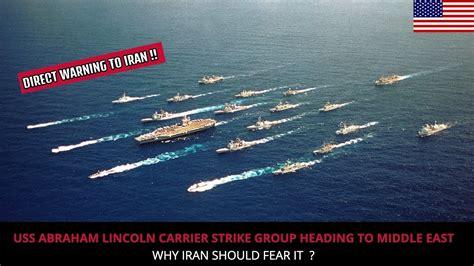
The sudden redirection of the USS Abraham Lincoln Carrier Strike Group (CSG) from the Indo-Pacific to the Middle East marks one of the most consequential U.S. naval movements in recent years. This is not a routine redeployment or a symbolic port call. It is a deliberate, force-heavy signal aimed squarely at Iran, delivered through the unmistakable language of steel, stealth, and sustained combat power. As protests shake Iranian cities and Tehran’s rhetoric hardens, Washington has chosen deterrence at full throttle rather than quiet diplomacy alone.
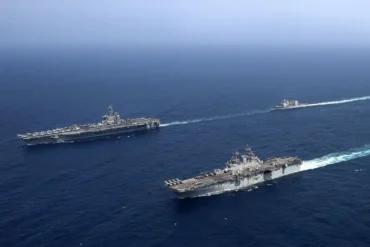
At the center of this deployment is a Nimitz-class nuclear-powered aircraft carrier, escorted by guided-missile destroyers, cruisers, and almost certainly a Virginia-class nuclear attack submarine, though its presence remains officially unconfirmed. Above the waves, F-35C stealth fighters extend the carrier’s reach deep into contested airspace, while beneath the surface, silent submarines reshape the battlespace in ways no radar can see. The message is calculated: escalation is unwanted, but preparedness is absolute.
This move unfolds against a backdrop of intensifying unrest inside Iran. Thousands have reportedly been killed during a sweeping crackdown on demonstrations, with sharply conflicting casualty figures and a nationwide internet blackout obscuring independent verification. Washington views the situation not only as a human rights catastrophe but also as a potential trigger for broader regional instability. The arrival of the Abraham Lincoln CSG injects a powerful stabilizing—or destabilizing—variable, depending on perspective.
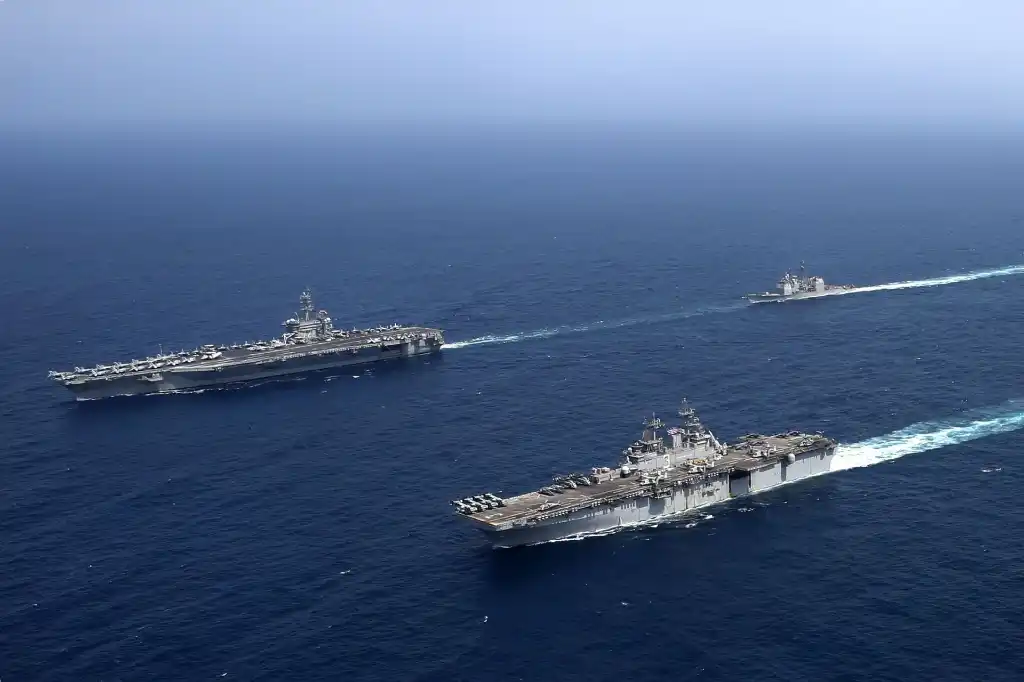
A Carrier Strike Group Built for Deterrence, Not Display
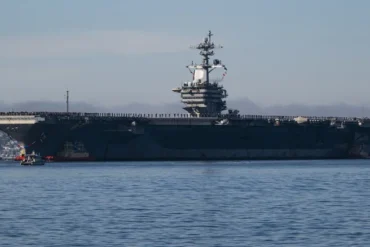
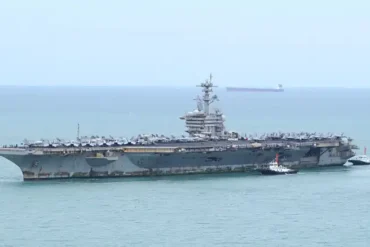
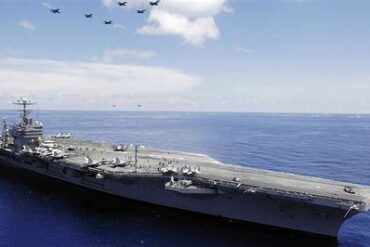
The USS Abraham Lincoln is no ceremonial flagship. Commissioned in 1989, it represents decades of iterative refinement in American naval dominance. A Nimitz-class carrier displaces over 100,000 tons, carries more than 60 aircraft, and operates as a self-contained floating airbase capable of sustained combat operations without reliance on foreign soil. Its nuclear propulsion allows it to remain at sea for years, limited more by crew endurance than fuel.
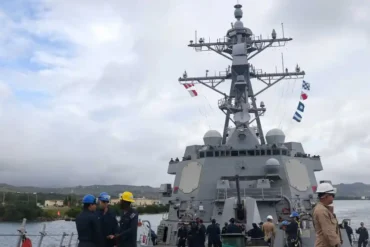
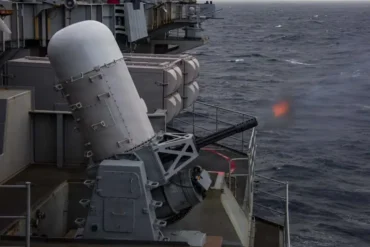
Accompanying the carrier are Arleigh Burke-class guided-missile destroyers, including USS Frank E. Petersen Jr., USS Michael Murphy, and USS Spruance. These warships form a layered defensive and offensive shield, armed with Tomahawk cruise missiles, advanced radar systems, and integrated air and missile defense capabilities. Together, they create a mobile strike complex capable of launching precision attacks hundreds of kilometers inland while defending against aircraft, missiles, and drones.
Carrier Strike Groups often include a Virginia-class fast-attack submarine, the U.S. Navy’s most advanced undersea platform. These submarines specialize in intelligence gathering, anti-ship warfare, and land-attack missions, operating undetected in contested waters. Their stealth adds a psychological dimension to deterrence: adversaries must assume they are present, even when no evidence confirms it.
F-35C Stealth Fighters Redefine Naval Air Power
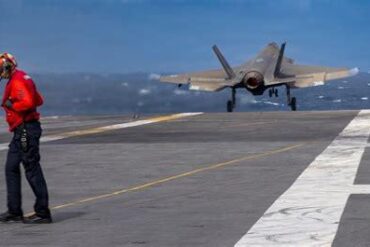
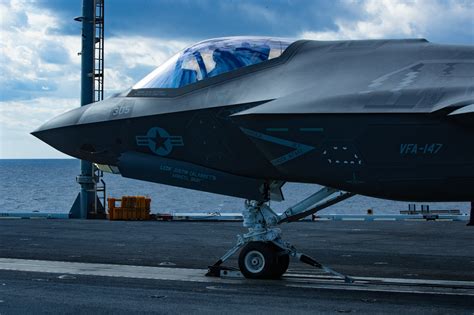
At the sharp end of the Abraham Lincoln’s offensive capability is Carrier Air Wing 9, anchored by F-35C Lightning II stealth fighters. Unlike earlier carrier aircraft, the F-35C combines low observable design with sensor fusion, allowing pilots to detect, track, and engage threats long before being detected themselves. In practical terms, this shifts the balance of power in heavily defended environments like the Persian Gulf.
Operating alongside F/A-18 Super Hornets, electronic warfare aircraft, and rotary-wing assets, the F-35C acts as both a striker and a battlefield quarterback. It can penetrate advanced air defenses, relay targeting data to other platforms, and coordinate complex strike packages across domains. Against Iran’s integrated air defense systems and missile infrastructure, this capability is not merely impressive—it is strategically transformative.
Trump’s Strategic Signaling and the “Big Flotilla”
President Donald Trump has framed the deployment in deliberately ambiguous terms. Referring to a “big flotilla” moving toward Iran “just in case,” he emphasized a preference to avoid escalation while underscoring readiness to act. This dual messaging reflects a classic deterrence strategy: make the cost of hostile action unmistakably high while leaving room for negotiation.
Speaking at the World Economic Forum in Davos, Trump confirmed that the United States struck Iranian uranium enrichment facilities last year to prevent nuclear weaponization. His remarks reinforced Washington’s red line while hinting at diplomatic openings. Tehran, he said, “does want to talk.” Yet diplomacy backed by an aircraft carrier is diplomacy with teeth.
The redeployment into the U.S. Central Command (CENTCOM) area of responsibility places the Abraham Lincoln within operational range of Iran’s coastline, missile sites, and key maritime chokepoints. From the Persian Gulf to the Arabian Sea, the carrier’s presence reshapes the strategic calculus for every actor in the region.
Iran’s Asymmetric Response: Drones, Missiles, and Saturation Threats
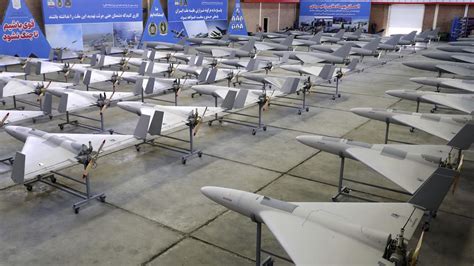
Despite America’s overwhelming conventional superiority, Iran is not without leverage. Tehran has invested heavily in asymmetric warfare, particularly drone swarms and anti-ship missile systems designed to exploit vulnerabilities in large naval formations. According to defense analysts, Iran’s drone arsenal—costing a fraction of high-end Western platforms—poses a credible saturation threat if deployed en masse.
Cameron Chell, CEO of Draganfly, has warned that hundreds of low-cost drones launched simultaneously could overwhelm defenses originally designed to counter smaller numbers of high-value threats. Even if most are intercepted, probability favors some getting through. For surface vessels operating near Iran, the risk is real, not theoretical.
Iran also fields anti-ship missiles with ranges exceeding 1,000 kilometers, and has reportedly tested guidance systems to adapt ballistic missiles for maritime targeting. These weapons, combined with coastal launch sites and mobile platforms, complicate the defensive picture for U.S. naval forces operating close to shore.
Escalating Rhetoric from Tehran’s Leadership
Iranian officials have responded to the U.S. deployment with increasingly sharp rhetoric. President Masoud Pezeshkian accused Washington and Israel of fueling unrest as “cowardly revenge” for defeat in the so-called 12-Day War. Senior military commanders have gone further, issuing explicit warnings that American interests would be legitimate targets in the event of an attack.
General Mohammad Pakpour of the Islamic Revolutionary Guard Corps (IRGC) declared that Iran has its “finger on the trigger,” while General Ali Abdollahi Aliabadi warned that U.S. bases and centers of influence across the region would not be spared. These statements are not mere bluster; they reflect a doctrine that emphasizes rapid retaliation and regional escalation as deterrence.
A Region on Edge, a Signal Impossible to Ignore
The deployment of the USS Abraham Lincoln Carrier Strike Group is a strategic punctuation mark in an already volatile sentence. It communicates resolve to allies, warning to adversaries, and reassurance to global markets anxious about energy security and regional conflict. Pentagon officials have described the move as intended to “bolster deterrence” and provide rapid response options should the situation deteriorate further.
Whether this show of force stabilizes the region or sharpens existing tensions remains uncertain. History suggests that carriers can deter wars as often as they precede them. What is certain is that the combination of nuclear-powered naval platforms, stealth aircraft, and integrated strike capabilities represents the highest tier of military signaling short of open conflict.
In the shadow of the Abraham Lincoln’s flight deck, diplomacy and deterrence now coexist uneasily. The next chapter will be written not only in speeches and sanctions, but in the silent calculations of commanders on both sides of the Gulf—each aware that miscalculation carries consequences measured not in rhetoric, but in firepower.