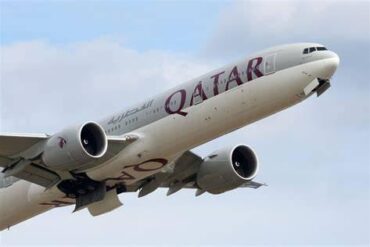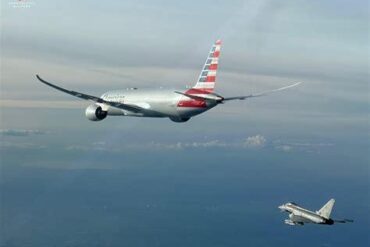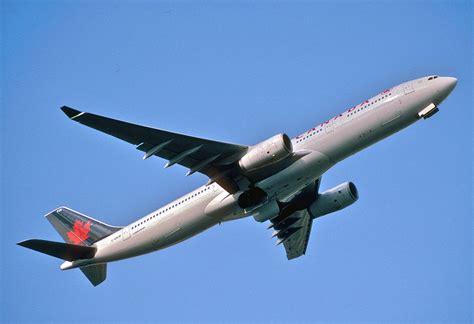
The Air Canada intercept incident over the North Atlantic has quickly become one of the most unusual aviation security events of 2026, blending loyalty program fraud, identity concerns, and a full-scale military response into a single unfolding drama. What began as a routine transatlantic journey from Brussels to Montreal escalated into a situation serious enough to prompt intervention from the North American Aerospace Defense Command (NORAD), underscoring how even non-traditional threats can trigger high-level security protocols.
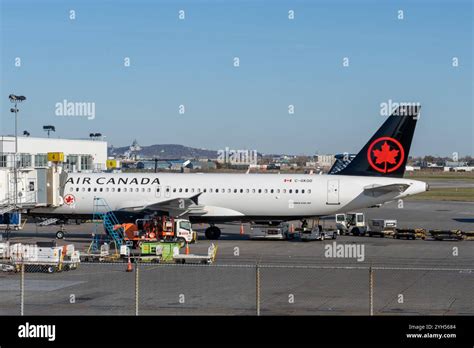
At the center of the incident was Air Canada Flight AC833, operated by a Boeing 777-300ER, carrying passengers on a standard seven-hour crossing from Brussels Airport (BRU) to Montréal–Trudeau International Airport (YUL). The flight was nearing its destination when events took a dramatic turn, catching passengers and aviation observers completely off guard.
Mid-Flight Discovery Sparks Immediate Security Escalation
The situation unfolded when the legitimate owner of a set of Aeroplan loyalty points attempted to board a separate Air Canada flight, only to discover that those points had already been redeemed—and that the individual using them was already airborne. This real-time discrepancy triggered a security alert that quickly escalated beyond routine fraud investigation.
Authorities determined that a passenger onboard AC833 was traveling under a false identity, having fraudulently accessed and used another person’s miles. While loyalty fraud is not new, the implications of an unidentified individual on an international flight raised concerns that extended far beyond financial misconduct.
NORAD Deploys CF-18 and F-16 Fighter Jets Over Atlantic Corridor
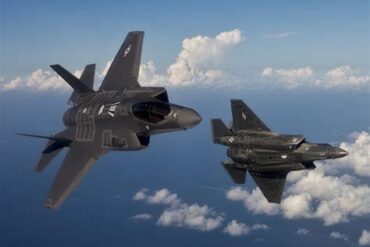
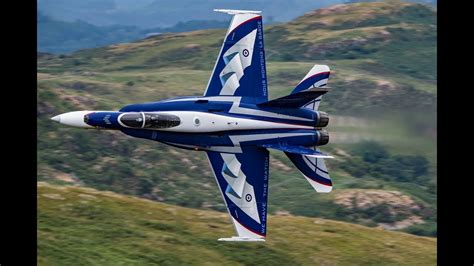
As the aircraft entered the final hour of its journey, NORAD initiated a rapid response. Both the Royal Canadian Air Force (RCAF) and the United States Air Force (USAF) were mobilized, deploying a CF-18 Hornet and an F-16 Fighting Falcon, supported by a KC-135 Stratotanker for aerial refueling.
Passengers onboard the Boeing 777 were stunned to see fighter jets flying in close formation alongside the aircraft—an unmistakable signal that the situation had escalated to a matter of continental defense.
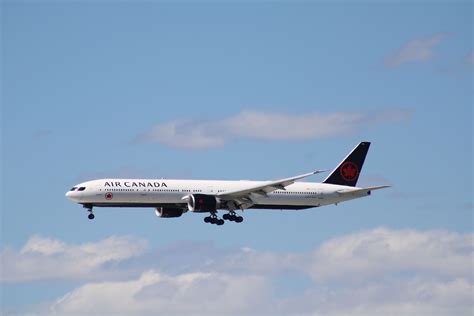
This type of interception is not symbolic. Fighter escorts are deployed to visually confirm cockpit control, establish communication if necessary, and prepare for worst-case scenarios. In extreme circumstances, military aircraft are authorized to take decisive action if a civilian plane is deemed a credible threat.
Safe Landing in Montreal Followed by Law Enforcement Action
Despite the high-stakes escort, Flight AC833 landed safely in Montreal, where law enforcement officers were already waiting on the ground. The suspected individual—a 27-year-old male passenger—was promptly taken into custody for questioning.
Authorities also treated his luggage as a potentially suspicious package, removing it from the aircraft for additional screening. While no immediate threat was found, the level of caution reflected the seriousness with which officials treated the breach.
A second individual, believed initially to be connected to the case, was also detained. However, investigators later determined that the two men were not associated, leading to both individuals being released without charges.
Aeroplan Fraud: A Growing Vulnerability in Airline Systems
The incident has drawn renewed attention to Air Canada’s Aeroplan program, one of the largest loyalty systems globally, with millions of active members. While designed to reward frequent travelers, such programs have increasingly become targets for digital fraud and black-market trading.
Airlines strictly prohibit the sale or unauthorized transfer of points, yet underground marketplaces continue to thrive. Fraudsters often exploit weak account security, phishing attacks, or data breaches to gain access to accounts and redeem points before detection.
What makes this case particularly alarming is not the theft itself, but the fact that it enabled a passenger to board an international flight under questionable identity credentials—a scenario that immediately crosses into national security territory.
Was the Military Response Justified? A Question of Risk vs. Cost
Deploying fighter jets is an extraordinarily expensive and rare measure, typically reserved for scenarios involving hijacking, loss of communication, or credible threats to national security. According to U.S. Department of Defense estimates, operating an F-16 costs up to $25,000 per hour, while a KC-135 tanker exceeds $18,000 per hour.
Given these figures, some observers have questioned whether the response was disproportionate to the nature of the threat. However, the broader context paints a different picture. Authorities were responding to a potentially unidentified individual on an international flight, at a time of heightened geopolitical tension and ongoing global security concerns.
From a defense perspective, uncertainty is often treated as risk. The inability to immediately verify a passenger’s identity, combined with the evolving nature of threats in aviation, leaves little room for hesitation.
Aviation Security in an Era of Non-Traditional Threats
The Air Canada intercept incident highlights a shifting reality in aviation security, where risks are no longer limited to conventional threats like hijacking or onboard violence. Instead, vulnerabilities now emerge from cybercrime, identity fraud, and interconnected systems that link digital accounts to real-world travel.
For passengers, the visual of fighter jets escorting a commercial airliner may feel like something out of a movie. For security agencies, it represents a calculated response to ambiguity—one where the cost of inaction could be far greater than the price of intervention.
Ultimately, the safe landing of Flight AC833 and the absence of charges suggest that the situation, while serious, did not escalate into a direct threat. Yet the incident serves as a powerful reminder: in modern aviation, even something as seemingly routine as frequent flyer miles can trigger a chain reaction reaching all the way to military airspace control.