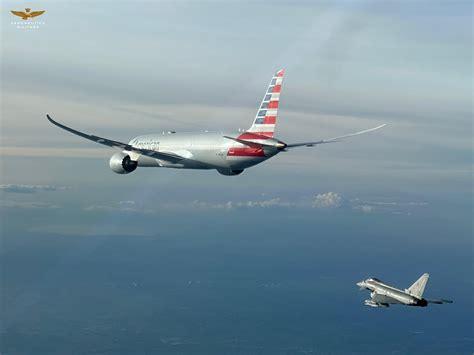
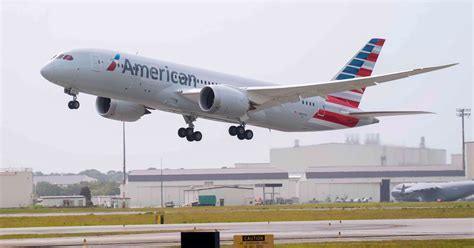
In a stunning and rare mid-air development on February 23, 2025, American Airlines Flight AA292 from New York (JFK) to Delhi (DEL) was diverted to Rome following a bomb threat. As the aircraft crossed European airspace, two Eurofighter Typhoons were scrambled to intercept and escort the Boeing 787 Dreamliner, marking a high-alert response to what was later determined to be a non-credible security threat. Yet, this incident has etched itself into aviation history, not because of violence or disaster, but due to unprecedented real-time documentation, public access to high-quality visuals, and the reflection it sparked on data preservation in a hyper-connected world.
Unfolding in the Skies: The Diversion to Rome
American Airlines flight AA292, en route to India, was cruising over Europe when airline authorities received an anonymous bomb threat email. Though later deemed non-credible, India’s aviation protocol required an immediate safety inspection, which forced a strategic rerouting. The aircraft was diverted to Rome Fiumicino Airport (FCO) where Italian authorities prepared for an emergency reception.
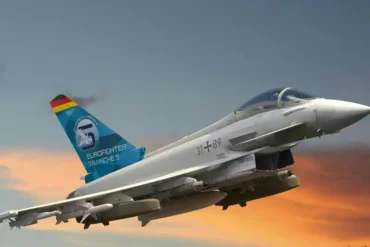
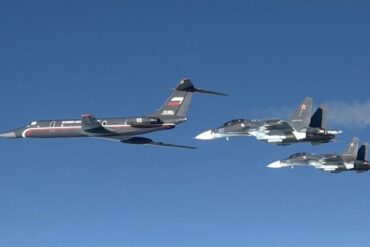
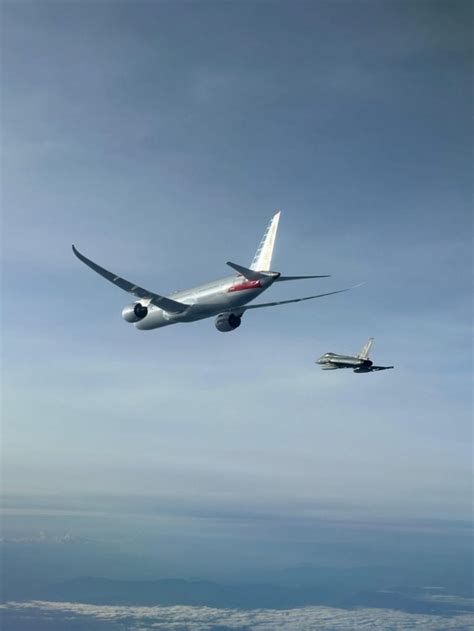
To ensure the security of European airspace and the passengers onboard, Italian Air Force Eurofighters were deployed to intercept AA292. The jetliner was escorted with precision—one Typhoon trailing in a combat-ready posture, and another maintaining lateral visual contact, as per standard NATO interception protocol.
Visual Proof in the Digital Age
What sets this event apart from previous emergency diversions was the sheer quality and immediacy of documentation. Thanks to modern smartphones, surveillance systems, and aerial coordination, high-resolution air-to-air photos and video emerged almost instantly on platforms like Reddit’s r/aviation. Enthusiasts and professionals were quick to recognize the event’s historic visibility. As railker, a mechanic and top contributor, aptly remarked: we live in an era where civilian eyes and lenses rival military surveillance.
Images of AA292 flanked by Eurofighters, normally classified or controlled footage, were now accessible to the public within hours. The fact that a commercial aircraft escorted by military jets was so clearly documented ignited discussions beyond aviation: from digital permanence to archiving practices.
From Emergency Frequencies to Fighter Protocols
According to user Furaskjoldr, experienced in military aviation, Eurofighter pilots follow strict interception rules. One fighter flies behind and is authorized to engage if the airliner poses a threat. The other flies adjacent, visually confirming cockpit activity and attempting contact via emergency frequency 121.5 MHz—the international air distress channel.
This standard mirrored past intercepts, such as the tragic Helios Flight 522 incident, when Greek F-16s shadowed an unresponsive Boeing 737. In contrast, AA292’s crew was responsive and cooperative throughout, ensuring that the escort was precautionary rather than tactical.
No Bomb Found: Night in Rome for AA292 Passengers
After safe landing in Rome, Italian authorities conducted a full security sweep of the Dreamliner. No explosive device or suspicious material was found. As per aviation law and crew rest requirements, passengers were grounded overnight before continuing their journey.
The Reuters wire confirmed the nature of the diversion, citing a security issue during the transatlantic leg that prompted the emergency landing. The cooperation between Italian defense forces and American Airlines staff ensured the episode concluded without incident.
A Snapshot of the Future: Surveillance, Phones, and Cultural Memory
This incident underscored the power and fragility of modern documentation. Users like guntycankles and euphoricarugula346 reflected on how today’s wealth of recorded data—from video evidence to family photos—is stored in formats that may be obsolete tomorrow. Echoing this, EmbarrassedHelp warned that platforms housing this cultural history may vanish without institutional or legislative support.
Librarian Enlightened_Gardener detailed the meticulous work of digital archivists: using outdated hardware to retrieve data from floppy disks and failed drives. They emphasized that much of humanity’s digital footprint is not EMP-proof, nor archived in permanent repositories. This realization drew sharp parallels to the infamous loss of Apollo mission tapes, ruined in a flooded basement, and reminded us that data loss is not just hypothetical—it’s historical.
Prepping, EMP Fears, and the End of Accessibility
The conversation took a philosophical turn as crm006 pondered the real-world effects of an EMP event, fearing that an electromagnetic pulse could render global data archives inaccessible. Others, like dagnammit44, countered these doomsday fantasies, preferring practical solutions such as urban gardening and offline knowledge.
There was humor, too: from zombie apocalypse jokes to a viral comment about how worst-case disasters often come down to little more than diarrhea and dental pain. Still, beneath the memes was a pressing concern: how much of our civilization is irreplaceably digital?
Documenting Intimacy: A Cultural Archival Debate
The more eccentric corners of the thread discussed preserving human sexual culture, with users like TheOtherBookstoreCat calling for a 10,000-year seedbank dedicated to documenting erotic evolution, reproductive ergonomics, and sex-tech artifacts. The debate balanced on absurdity and anthropological sincerity—underscoring that no facet of culture is too niche for preservation, especially in a world that might one day need to rediscover itself from scratch.
Light Pollution, Sky Advocacy, and Seeing Stars Again
The diversion and escort, set against Europe’s high-altitude twilight, stirred renewed appreciation for the clarity of night skies. Advocates like storystoryrory highlighted resources such as DarkSky.org, which campaigns to preserve natural nocturnal environments. Others reminisced about desert skies and novels like One Second After, drawing poetic connections between geopolitical unrest, digital vulnerability, and cosmic beauty.
Such thoughts reminded us that beyond the clouds and jet engines, we remain a species mesmerized by the stars—and newly aware of how technology might obscure or preserve that wonder.
A Moment Frozen in Pixels—and Maybe Time
Flight AA292’s diversion will fade from headlines, as user rs725 predicted, but not from memory—because we captured it. From the sharp flex of the Dreamliner’s wings to the imposing silhouette of the Eurofighter Typhoon, every frame tells a story of preparedness, coordination, and digital permanence.
Even critics from the UFO community, as noted by MobileArtist1371, were dismayed at how clearly this event was documented—if only cryptids and legends enjoyed such precision. As g_core18 joked, our phones can capture an air intercept in 4K, yet still struggle with Bigfoot.
In a world that moves fast and forgets faster, AA292 stands as a paradigm of airborne threat management, digital culture, and public memory—forever imprinted in terabytes, not typewriters.
Final Thoughts: The Intersection of Airspace, Archives, and Awareness
The escorted diversion of AA292 is more than an aviation footnote—it is a mirror of our era. It shows how global coordination, military readiness, and commercial aviation intersect with the realities of digital culture and data mortality. The event may have ended on a runway, but its echoes ripple through discussions of archiving, preparedness, and even human intimacy.
We live in an age where not only planes but entire civilizations fly at 35,000 feet—with smartphones instead of black boxes, and community threads instead of newsrooms. AA292 didn’t just land in Rome—it landed in the timeline of everything.