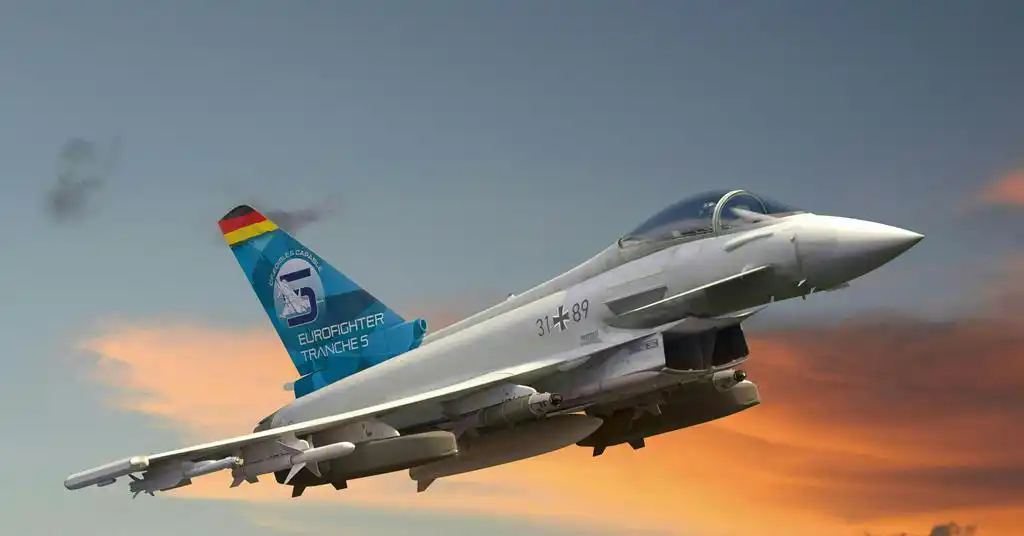
Germany has embarked on a transformative leap in air power by ordering 20 Eurofighter Typhoon jets, some of the most advanced military aircraft ever created. With delivery scheduled between 2031 and 2034, this monumental acquisition signals not only a strategic modernization of the Luftwaffe (German Air Force), but also a robust reaffirmation of Germany’s role as a cornerstone in NATO’s aerial defense architecture.
A New Era for the German Air Force
The announcement, made in partnership with Airbus, BAE Systems, and Leonardo, reflects years of defense cooperation and technological evolution. This order not only strengthens Germany’s existing fleet but also positions it at the forefront of 21st-century combat aviation.
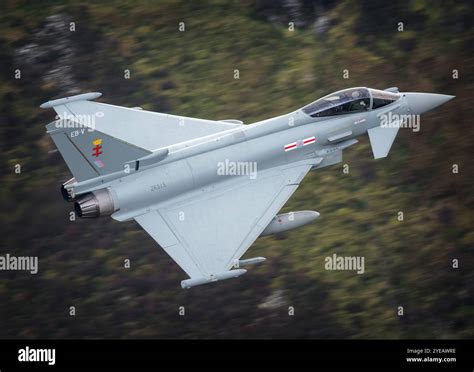
According to Airbus CEO Mike Schoellhorn, the Eurofighter deal represents “a new technological era for the German Air Force,” one that ensures operational readiness against rapidly evolving threats while embedding the nation deeper into NATO’s collective security fabric. The decision is as much strategic as it is symbolic, showing a definitive shift toward high-speed, high-stealth multirole platforms capable of ensuring air superiority in any theater of operations.
Eurofighter Typhoon: Anatomy of Supremacy
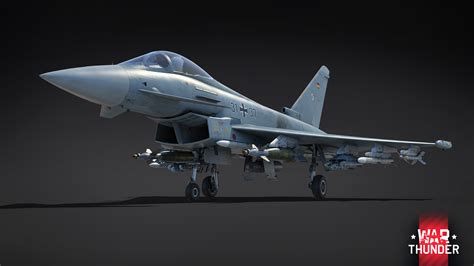
The Eurofighter Typhoon is a testament to four nations’ collective pursuit of aerial dominance — the United Kingdom, Germany, Italy, and Spain. Since its inception, the aircraft has undergone numerous iterations, integrating cutting-edge avionics, weapons systems, and stealth features. The jets ordered by Germany represent the latest Tranche 5 variant, which includes all upgrades developed to date and sets the foundation for future enhancements.
Key performance specifications:
- Maximum Speed: Mach 2.0 at altitude / Mach 1.25 at sea level
- Engines: Twin Eurojet EJ200 turbofan engines, each producing 90 kilonewtons of thrust
- Takeoff Time: Less than 8 seconds
- Airframe: 15% metal, largely composite for reduced radar cross-section
- Combat Radius: Over 1,390 km without refueling
- Service Ceiling: 55,000 feet
What makes the Eurofighter particularly unique is its intentionally unstable aerodynamic design, which allows for extreme maneuverability, especially during dogfights. This is stabilized by digital fly-by-wire systems that constantly adjust control surfaces to maintain flight integrity.
Situational Awareness and Pilot Empowerment
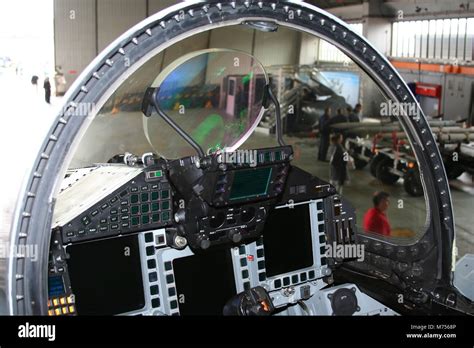
Inside the cockpit, the Eurofighter Typhoon is a paradigm of ergonomic military engineering. Equipped with advanced sensor fusion, pilots are granted unparalleled situational awareness through:
- Helmet-Mounted Symbology System (HMSS): Projects vital combat data directly onto the pilot’s visor
- DASS (Defensive Aids Sub-System): Integrates radar warning, missile approach warning, and electronic countermeasures
- IRST (Infra-Red Search and Track): Allows passive target detection without emitting radar signals
Combined, these systems empower the pilot to identify, lock on to, and neutralize threats faster than adversaries can respond — a critical advantage in modern warfare.
Weapons Loadout: A Multirole Arsenal
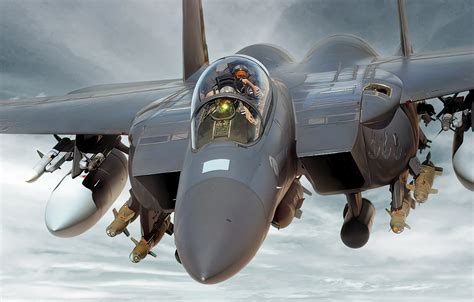
The Eurofighter Typhoon is equipped to excel in both air-to-air and air-to-ground combat scenarios, with a modular weapons bay allowing mission-specific configurations. Its arsenal includes:
- Air-to-Air Missiles: AIM-120 AMRAAM, IRIS-T, Meteor (long-range)
- Air-to-Ground Missiles: Storm Shadow, Brimstone, Taurus KEPD 350
- Precision-Guided Bombs: Paveway IV, GBU series
- Internal Gun: 27mm Mauser BK-27 cannon for close combat
These weapons are managed by an onboard mission computer capable of real-time threat prioritization and target engagement. Whether used for intercept, ground strike, suppression of enemy air defenses (SEAD), or nuclear deterrence, the Eurofighter is ready.
NBC Protection and Pilot Safety Systems
Eurofighters go beyond offensive capabilities by prioritizing pilot survivability in extreme combat environments. The aircraft comes with an integrated Nuclear, Biological, and Chemical (NBC) defense system, which includes:
- Anti-G Trousers: Prevents blood from pooling during high-G maneuvers
- Chest Counter-Pressure Garment: Maintains cardiovascular stability
- Liquid Conditioning Garment (LCG): Regulates body temperature
These systems are crucial in long-duration missions where combat stress and environmental threats can compromise pilot performance.
Radar Evasion and Stealth Profile
While not a traditional “stealth” aircraft in the sense of the F-35, the Eurofighter Typhoon incorporates low observability features that reduce its detectability. By using composite materials and strategically shaping its airframe, it achieves a reduced radar cross-section, making it more elusive to enemy tracking systems.
Its electronic warfare (EW) suite further augments stealth capabilities by jamming or deceiving enemy radars and missile guidance systems.
Comparison with American Counterparts
The Eurofighter Typhoon is frequently compared to American fighters like the F-16 Fighting Falcon and the F/A-18 Super Hornet. While each aircraft has its strengths, the Eurofighter excels in several areas:
- Higher speed and climb rate than F-16
- Superior dogfighting agility due to unstable airframe
- Multinational development ensures interoperability across NATO
- Greater thrust-to-weight ratio for enhanced acceleration and maneuvering
Where the F-35 trumps in stealth, the Eurofighter offers an edge in agility, mission adaptability, and operational cost-effectiveness.
Strategic Implications of Germany’s Acquisition
Germany’s decision to expand its Eurofighter fleet is more than a procurement move — it’s a geopolitical statement. As NATO recalibrates its eastern defenses and prepares for a future of hybrid and near-peer threats, having a fleet of Eurofighters ensures Germany is combat-ready.
This acquisition also serves to:
- Modernize aging Tornado and Typhoon models
- Enhance German contribution to NATO Quick Reaction Alert (QRA)
- Boost domestic aerospace manufacturing via Airbus facilities in Germany
- Signal political will to meet defense spending commitments
Delivery Timeline and Industrial Partnerships
The current plan projects that the first Eurofighter from this order will take flight in 2031, with all units delivered by 2034. This extended timeline allows German industry to scale up production, testing, and integration.
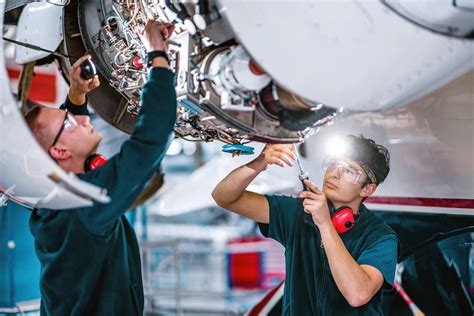
The jets will be assembled at Airbus Defense and Space’s site in Manching, Bavaria, providing hundreds of high-skill jobs and fostering continued research and development in aerospace and defense technologies. Moreover, it supports Germany’s ambition to play a leading role in the upcoming Future Combat Air System (FCAS), a next-gen initiative alongside France and Spain.
A Tactical and Technological Leap Forward
In sum, Germany’s order of 20 Eurofighter Typhoons represents an enormous step in fortifying its air force with top-tier tactical aircraft. These jets are not just tools of war, but flying platforms of digital dominance, combining brute speed with AI-assisted intelligence, unmatched agility, and lethal precision.
As the geopolitical landscape shifts, air superiority becomes not just a strategic priority but a national imperative. With the Eurofighter Typhoon, Germany is ensuring that its skies — and its allies’ — are in highly capable hands.