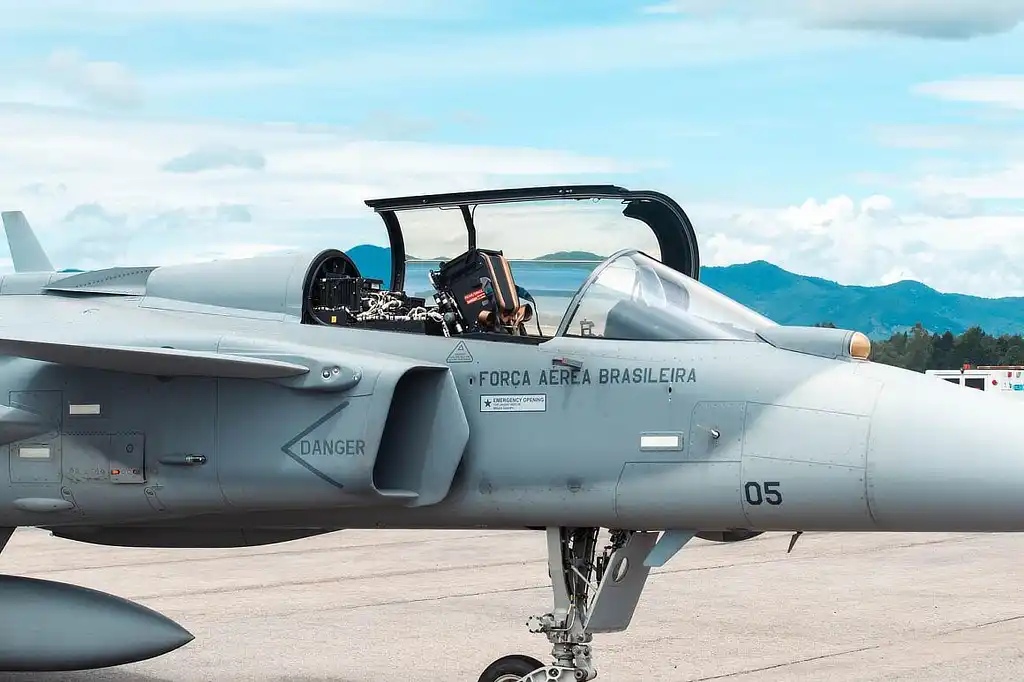
Colombia is entering a new era of military aviation with a bold move to replace its aging fleet of Kfir fighter jets. The nation has opted to modernize its aerial capabilities by procuring 18 advanced Gripen E fighter jets from Sweden’s Saab in a comprehensive $1.9 billion defense and development deal. This ambitious acquisition reflects Colombia’s desire to boost national defense, regional deterrence, and aerospace capability while embracing cutting-edge technologies.
The End of the Kfir Era: Colombia’s Aging Air Power
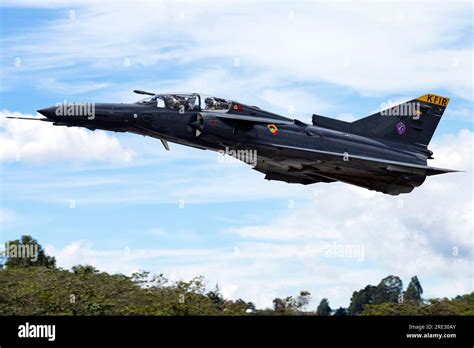
For decades, Colombia’s Fuerza Aeroespacial Colombiana (FAC) relied heavily on the Israeli-built Kfir, a fighter jet first designed in the early 1970s and based on reverse-engineered French Mirage 5 technology. Once a symbol of capability in the region, the Kfir’s relevance has faded. Its complex maintenance needs, obsolescent avionics, and aging airframes have made it increasingly difficult to operate safely and cost-effectively.
The limitations of the Kfir have not only reduced mission readiness but also restricted Colombia’s ability to engage with regional and international allies on equal terms. The search for a replacement marked a pivotal moment for Colombian defense planners, and after years of evaluation, including options such as the American F-16, French Dassault Rafale, and Chinese J-10CE, the Swedish Saab Gripen E emerged as the optimal choice.
The $1.9 Billion Saab Deal: A Strategic Partnership Beyond Jets
The finalized $1.9 billion agreement with Saab is not solely about aircraft acquisition. It includes provisions for renewable energy investment, infrastructure upgrades, and a favorable line of credit from the Swedish government. This positions the agreement as a broader bilateral development initiative, creating industrial and technological benefits for Colombia beyond the military domain.
In July 2025, Colombia proudly showcased its new Gripen E jets at F-AIR 2025, the nation’s premier International Aeronautics and Space Fair. This public unveiling was both a symbolic and practical step—signaling the country’s modernization ambitions and cementing Colombia’s strategic pivot toward multirole, next-generation military assets.
The Gripen E: Colombia’s Leap Into Modern Multirole Fighter Capability
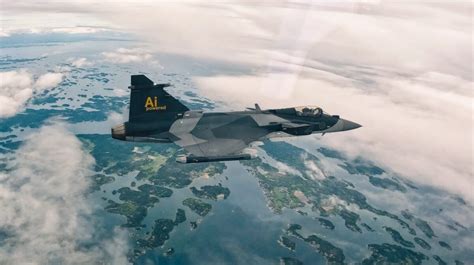
The Gripen E is not a fifth-generation stealth fighter, but it represents a quantum leap in capability for Colombia. Introduced in 2014 as an evolution of Saab’s earlier C/D variants, the Gripen E integrates state-of-the-art electronics, sensor fusion, and AI-assisted decision-making.
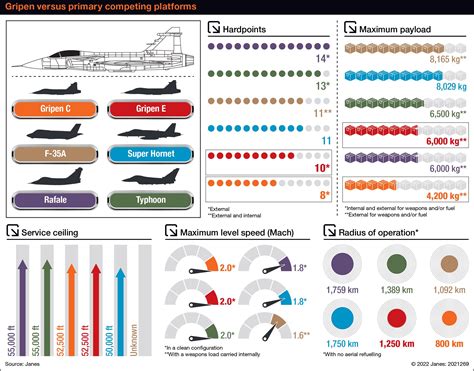
Powered by the GE F414G turbofan engine, the Gripen E reaches speeds of Mach 2 (over 1,500 mph) at high altitude. With a maximum takeoff weight of 16,500 kg, it boasts extended range, endurance, and remarkable operational flexibility. Designed for rugged Scandinavian environments, it can launch from unimproved runways or even roads, making it ideal for Colombia’s diverse terrain—from Amazonian rainforest airstrips to Andean mountain bases.
High-Tech Edge: Avionics, AI, and Multirole Versatility
The heart of the Gripen E lies in its advanced avionics and digital integration. Pilots operate in a fully digital cockpit with helmet-mounted displays, panoramic touchscreen interfaces, and augmented situational awareness. The aircraft’s Electronic Warfare System and Radar Warning Receivers provide defensive agility, while its Active Electronically Scanned Array (AESA) radar offers superior tracking, targeting, and resistance to jamming.
One of the standout features is Saab’s AI-powered Human-Machine Collaboration system, which supports real-time threat analysis, mission data fusion, and intelligent workload management. This next-generation interface reduces pilot fatigue and enables faster, more informed combat decisions.
Gripen E also comes equipped with ten hardpoints capable of carrying a wide arsenal of air-to-air, air-to-surface, and electronic warfare munitions, including:
- AIM-9 Sidewinder
- IRIS-T
- R-Darter and A-Darter
- Derby Beyond Visual Range (BVR) missiles
- Laser-guided and GPS-guided smart bombs
Ground crews can rearm and refuel the Gripen in under 10 minutes, ensuring rapid sortie regeneration. This feature is vital for Colombia, which may need to operate from remote, decentralized airfields in times of conflict or disaster response.
Regional Security and Strategic Deterrence
Colombia’s decision to purchase the Gripen E has both tactical and geopolitical significance. The country shares borders with five nations—Venezuela, Brazil, Ecuador, Peru, and Panama—and faces persistent challenges from organized crime networks, illegal armed groups, and regional tensions. A modern air force acts as a strategic deterrent and enhances sovereignty enforcement over airspace, border zones, and maritime approaches.
With the Gripen E, Colombia sends a clear message to allies and adversaries alike: the era of low-tech air defense is over. Furthermore, the platform’s interoperability with NATO and Western systems strengthens Colombia’s hand in joint operations, counterterrorism missions, and disaster response collaboration.
A Comparison: Gripen E vs. Regional Alternatives
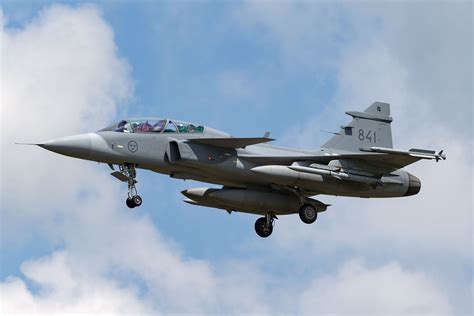
To understand why Colombia chose the Gripen E, it’s instructive to compare it against alternatives:
- F-16 Block 70/72: A reliable American jet with extensive combat history. However, operating costs are higher, and acquisition packages often include less favorable offsets.
- Dassault Rafale: A powerful twin-engine jet with excellent range and weaponry. Yet, its price tag is significantly higher, and maintenance complexity poses challenges.
- Chengdu J-10CE: An attractive offer from China, but concerns over technology transparency, supply chain reliability, and lack of combat-proven record likely influenced Colombia’s decision.
The Gripen E balances modern capability with affordability, low operational costs, and a reputation for ease of maintenance—a crucial factor for nations with constrained defense budgets.
The Industrial and Economic Dimension: Tech Transfer and Local Benefits
A lesser-known but critical element of the Saab deal is its potential for local industry participation and technology transfer. While specifics remain classified, Saab has a history of engaging in joint manufacturing, local assembly, and technical education programs in partner countries. Brazil, for example, co-produces Gripens through Embraer, boosting domestic aerospace capability.
For Colombia, this opens the door to developing indigenous aerospace engineering capacity, reducing reliance on foreign suppliers, and creating high-skilled jobs in a rapidly modernizing economy. There is also scope for joint research initiatives, drone development, and maintenance infrastructure upgrades that extend beyond the Gripen program itself.
Future-Proofing the FAC: Vision for the Next 50 Years
Colombia’s acquisition of the Gripen E is more than an aircraft purchase—it is a strategic vision to redefine air power for the next half-century. By replacing the Kfir with a platform that is agile, intelligent, and adaptable, Colombia positions itself to address evolving security challenges and emerge as a leader in South American air defense.
The Gripen E’s modularity ensures it can be upgraded with future technologies—such as drone integration, AI mission planning, and advanced stealth systems—ensuring long-term relevance and value. Saab’s track record of continuous upgrades and customer-centric development reassures Colombian officials that the fleet will not fall behind the technology curve.
In a region marked by rapid military modernization, Colombia’s bold investment stands as a statement of readiness, resilience, and ambition. The FAC’s next chapter will be written in the sky, with Gripen wings soaring high over the Andes, Caribbean, and Amazon.
Conclusion: Soaring into a New Strategic Horizon
The Colombian Air Force’s transition from the aging Kfir to the ultra-modern Gripen E marks a watershed moment in the country’s defense evolution. Backed by advanced weaponry, digital systems, and a far-sighted strategic partnership with Sweden, Colombia is not only modernizing its military but also laying the groundwork for a robust aerospace future. This initiative will reverberate across Latin America, shifting power balances and redefining regional deterrence for decades to come.