When it comes to U.S. nuclear weapons, the average American might picture missile silos in remote areas, Cold War-era standoffs, or perhaps vague mentions of deterrence policy. But very few would guess the specific state that holds the lion’s share of these catastrophic devices. Contrary to what one might assume, New Mexico, far more famous for its deserts, Native heritage, and atomic history than active military arsenals, is the unassuming host of America’s largest nuclear weapons stockpile.
This is no accident of geography or chance. New Mexico’s deep military and scientific roots — dating back to the Manhattan Project and the Trinity Test — have made it a keystone in the nuclear architecture of the United States. Yet, the scale of this reality is largely hidden from public view, shielded by high security, federal secrecy, and the layered infrastructure of the U.S. Air Force.
The Kirtland Complex: America’s Nuclear Vault
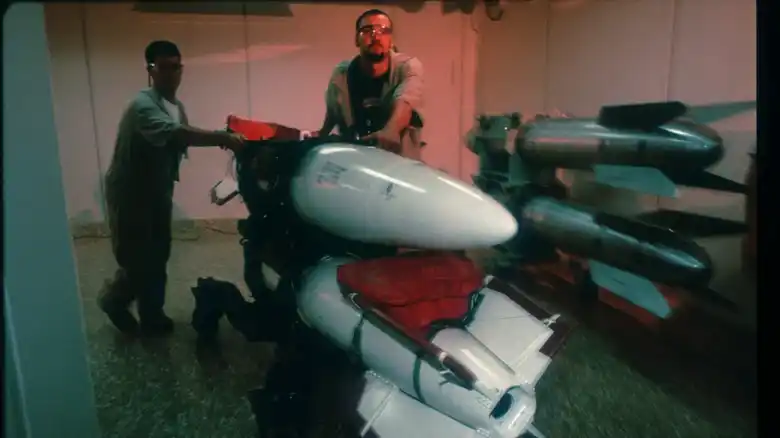
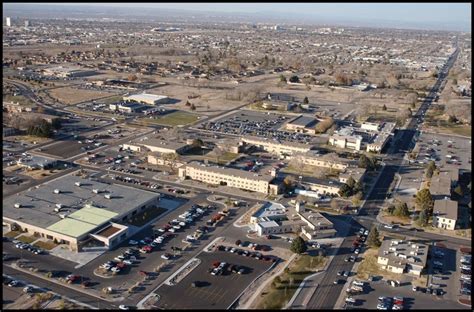
The epicenter of New Mexico’s nuclear role is the Kirtland Underground Munitions and Maintenance Storage Complex (KUMMSC), located just southeast of Albuquerque within the broader Kirtland Air Force Base. Here, beneath layers of concrete, earth, and classified access, rests what the Albuquerque Journal described as “unofficially … the largest storage center for nuclear weapons in the world.”
As of 2024, KUMMSC houses approximately 2,485 nuclear warheads, according to multiple defense reports — nearly half of the United States’ entire nuclear arsenal, which totals 5,044. The complex is managed by the 898th Munitions Squadron, whose mission includes security, maintenance, and oversight of these warheads. While the location is active and deeply fortified, the majority of the weapons stored are retired warheads awaiting dismantlement rather than those on high alert.
Despite that, these are not mere museum pieces. Many remain technically viable, and their presence at Kirtland reflects ongoing strategic planning, logistical staging, and the careful life-cycle management of nuclear arms.
What Happens to Retired Warheads? The Pantex Connection
New Mexico is not where warheads are born or where they are destroyed, but it is where they wait — in some cases for years. The final destination for many of these decommissioned weapons is the Pantex Plant near Amarillo, Texas, a unique 16,000-acre facility designated as America’s only nuclear weapons assembly and disassembly plant.
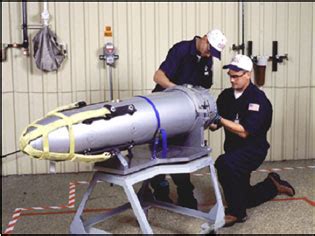
Pantex plays a critical role in ensuring old warheads are safely dismantled, their plutonium cores neutralized, and other radioactive components safely stored or reprocessed. Until a weapon’s parts are fully rendered inert, it remains a live, dangerous device — which makes Kirtland’s role not just logistical, but existential to the nuclear safety of the United States.
Why New Mexico? Geography, History, and Strategic Depth
To understand how this high-desert state became the epicenter of U.S. nuclear storage, one must consider its legacy as a scientific and military hub. It was here, at Los Alamos, that the Manhattan Project gave birth to the atomic bomb. It was also here, at White Sands Missile Range, that the first atomic weapon was tested. New Mexico’s remoteness, dry climate, and expansive federal lands have long made it ideal for weapons testing, research, and storage.
Kirtland’s proximity to both Los Alamos National Laboratory and Sandia National Laboratories, two of the foremost nuclear research institutions in the world, provides additional support and oversight. It’s a closed-loop system of storage, science, and policy, all existing within state borders.
How New Mexico Surpassed Other Nuclear States
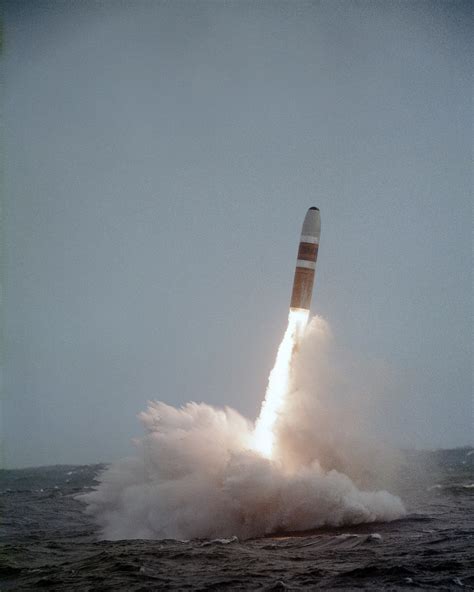
Historically, Washington State was once the frontrunner. In 2006, the Naval Submarine Base Bangor, west of Seattle, stored more nuclear warheads than Kirtland. It held a mix of Trident I and Trident II missile warheads, with an estimated 1,950 W76 and W88 units. These were active, sea-deployed weapons, loaded aboard nuclear submarines patrolling international waters as part of America’s second-strike capability.
At that time, New Mexico’s count stood around 1,914. But a shift began in the 2010s as arms control treaties, modernization programs, and evolving Pentagon strategies led to a redistribution and retirement of many warheads. The U.S. began shrinking its active arsenal, and more decommissioned warheads made their way to KUMMSC for long-term secure storage.
Kings Bay, Georgia and the Submarine Arsenal
Another major nuclear hub remains Kings Bay Naval Submarine Base in Georgia, home to Ohio-class submarines armed with Trident missiles. In 2006, Kings Bay reportedly stored around 1,364 warheads, but only about 896 were active, with the rest being deactivated Trident I warheads. Still, it remains a crucial arm of the U.S. nuclear triad — the three-pronged system of land-based ICBMs, air-delivered bombs, and submarine-launched missiles.
However, Kings Bay and Bangor have more dynamic roles. Unlike Kirtland, which stores warheads out of operational rotation, these bases maintain battle-ready nuclear assets. This difference in mission explains why New Mexico’s large inventory flies under the radar — it’s quieter, more dormant, and more easily forgotten.
How the U.S. Nuclear Stockpile Has Changed Over Time
In 1967, at the height of the Cold War, the United States held a jaw-dropping 31,255 nuclear weapons. Over the decades, arms control agreements, disarmament treaties, and shifting geopolitical strategies have brought that number down dramatically. By 2023, only 5,044 warheads remained, a figure still massive by any measure, but a fraction of what once was.
This downscaling has transformed the nature of U.S. storage infrastructure. Fewer warheads mean consolidated storage, and with specialized facilities like KUMMSC being capable of housing vast quantities securely, centralization became inevitable.
The Security and Secrecy of America’s Nuclear Storage
Despite their sheer numbers and deadly potential, nuclear warheads stored in New Mexico are surrounded by unparalleled security measures. These include hardened underground bunkers, round-the-clock surveillance, armed military guards, and layered access control systems. The 898th Munitions Squadron operates under strict Air Force protocols, regularly undergoing inspections and readiness drills.
The exact layout and specifications of KUMMSC remain classified, but leaked documents and satellite imagery suggest dozens of heavily reinforced igloos and underground vaults. These structures are designed not just to protect from external threats, but also to contain potential internal hazards, like accidental detonation (an extremely low-probability scenario).
Strategic Implications: A Silent Shield in the Desert
The presence of nearly 2,500 nuclear warheads in New Mexico is not just a technical footnote — it has profound strategic implications. In the event of geopolitical tension, warhead distribution plays a crucial role in military planning. Although Kirtland’s weapons are retired or inactive, their presence offers strategic depth — allowing flexibility in rearmament or reallocation should the global security environment shift.
Moreover, centralizing these weapons in one of the most secure and isolated areas of the country reduces the risk of accidental exposure, political protest, or insider threat incidents. It’s a quiet but potent layer of defense in America’s broader nuclear posture.
Conclusion: An Invisible Giant in the Southwest
New Mexico’s role in America’s nuclear framework is a powerful reminder that national defense isn’t always where we expect to find it. Hidden beneath the sands of Kirtland is not just a stockpile of weapons, but a complex, deeply embedded system of safeguards, science, and strategy.
Most Americans will never see KUMMSC. They may not even realize what lies just miles from downtown Albuquerque. But in the arid stillness of the Southwest, the world’s most destructive devices lie dormant — not forgotten, not active, but ever present, and under watchful guard.