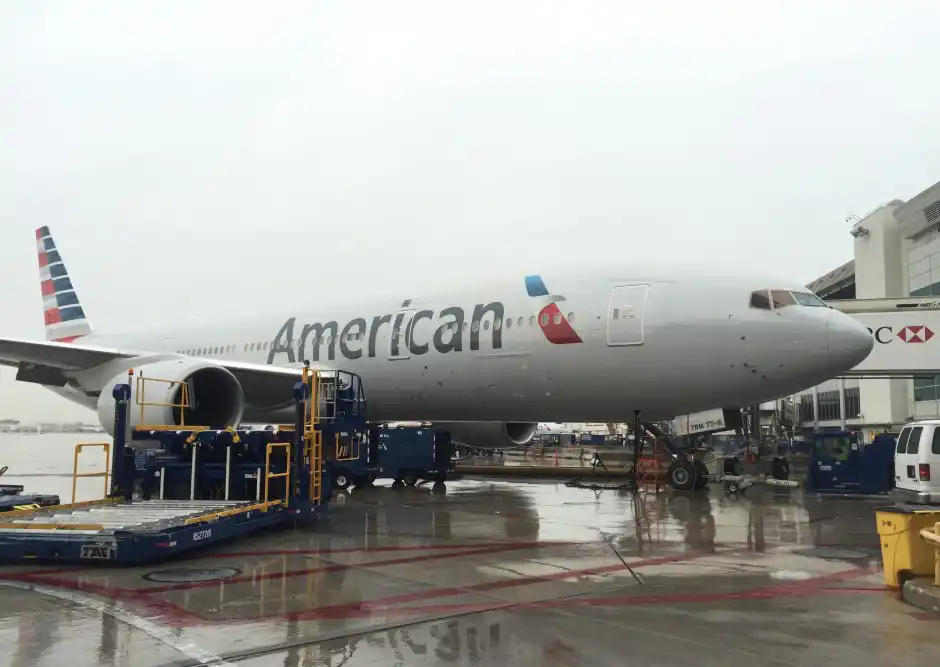
We examine the strategic, operational, and competitive forces that make Miami International Airport not merely another hub for American Airlines, but the center of gravity for its most defensible and profitable international franchise. Miami is the beating heart of the airline’s Latin America dominance, a historic gateway that continues to define how the carrier competes in an era of shifting demand, premium leisure surges, and long-haul constraints.
American Airlines’ relationship with Miami International Airport began in 1988, when it declared MIA an official hub after years of seeking a Southeastern stronghold to rival Delta’s expansive Atlanta base. Earlier attempts in Raleigh-Durham and Nashville had failed to offer the depth or geographic advantage the carrier needed, but Miami presented something altogether different. As Eastern Airlines declined—bleeding cash and losing market share—American seized the moment, purchasing Eastern’s once-lucrative Latin America routes and acquiring authority to operate Miami–London flights.
This bold expansion came just before Eastern’s collapse in 1991, leaving American with near-uncontested control over one of the most strategically indispensable airport systems in the Western Hemisphere. Miami’s geography dictated an entirely different operational profile than Atlanta or Dallas. Situated at Florida’s southern tip, MIA could not serve as a traditional east-west or north-south domestic connecting hub. Instead, it offered something far more powerful: the perfect launching pad from the United States to the Caribbean, Central America, and South America.
What Miami lacked in domestic connection convenience, it more than made up for with extraordinary origin-and-destination demand. Business travelers, leisure travelers, Latin American diaspora networks, financial services companies, and tourism-driven flows all converge in a single metropolitan area that functions as the unofficial capital of Latin America. Miami’s demographic reality aligns seamlessly with American’s historical strength in the region, producing a hub that has remained vital for more than three decades.
The Scale and Structure of American Airlines’ Miami Hub Today
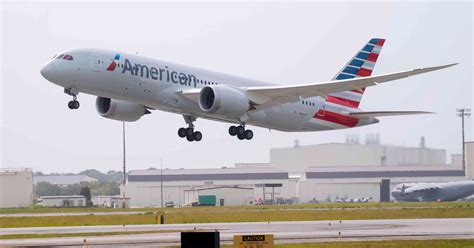
Miami is currently American Airlines’ third-largest hub, trailing only Charlotte and Dallas/Fort Worth, yet surpassing Phoenix. Its role, however, is not defined by sheer size but by strategic specialization. The airline bases A320-family aircraft, Boeing 737s, Boeing 777s, and Boeing 787 Dreamliners at MIA, enabling an unusually balanced mix of short-haul, medium-haul, and long-haul flights.
The data paints a clear picture of how American deploys its assets from Miami. Dallas/Fort Worth remains the busiest connection from MIA, with over 4,000 annual flights each way, underscoring Miami’s integration into the wider American network. Tampa tops the list for non-hub domestic routes, while Boston leads for non-Florida, non-hub service. Internationally, Havana stands as the busiest destination—an illustration of the deep cultural and economic connections linking south Florida with the Caribbean.
Yet the defining characteristic of American’s Miami operation is its expansive Latin American portfolio. Nearly 70 destinations in the Caribbean, Central America, and South America are served from MIA, giving American a dominant presence no competitor has meaningfully challenged. This intricate mesh of routes makes Miami the largest U.S. gateway to Latin America, and American Airlines the most prominent U.S. carrier in the region.
Miami also maintains strong domestic performance because of robust local demand. The city’s tourism economy, multinational corporate hubs, and year-round travel patterns produce consistent traffic that supports a dense schedule to the rest of the United States.
Why Miami Has Become Even More Critical in 2025
The 2020s have reshaped the competitive landscape of long-haul air travel. While Delta Air Lines and United Airlines have capitalized on surging premium leisure demand, American Airlines faces constraints that complicate expansion. The airline retired its Airbus A330 and Boeing 767 fleets during the pandemic and, due to Boeing 787 delays combined with prior deferrals, now operates with nearly 100 fewer widebody jets than United. This disparity limits American’s ability to compete in Europe, Asia, Oceania, and Africa.
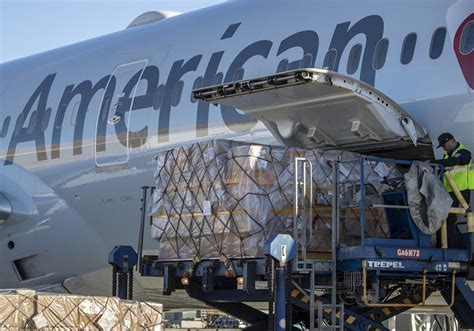
With fewer long-haul aircraft, American naturally leans into the one region where it possesses a genuine competitive advantage—Latin America. Miami is the beating heart of that advantage, and in 2025 the hub’s importance has intensified. Where Delta and United are thriving on transatlantic and transpacific demand, American is positioning itself as the indisputable leader in hemispheric connectivity.
Miami not only supports American’s strength but provides a launchpad for expansion into high-yield markets. The Caribbean continues to pull enormous premium leisure demand, while major South American business centers—São Paulo, Bogotá, Buenos Aires, Santiago, Lima—remain essential for corporate travel. Deploying emerging aircraft like the reconfigured Boeing 787-9 with a large business cabin helps American recapture premium passengers previously lost to competitors.
How Miami Shapes American’s Future in the Western Hemisphere
Miami’s unique characteristics create opportunities for American Airlines that other U.S. hubs cannot replicate. While the airline faces stiff competition in New York, Chicago, Los Angeles, and Philadelphia for transatlantic and transpacific flying, MIA stands apart as the one market where American reigns supreme.

Three major dynamics underscore Miami’s long-term value:
First, Miami enjoys stable transatlantic demand even in winter, a period when Europe-bound demand collapses from other U.S. origins. This gives American the option to grow Europe-Miami service sustainably without severe seasonal pullbacks. Second, the Caribbean and Latin America continue to generate premium leisure appeal year-round, offering the airline opportunities to strengthen performance without long-haul fleet additions. Third, Miami’s position as a hemispheric commercial hub allows American to amplify business-class offerings on South American routes, which rely less on seasonality and more on economic cycles.
American’s commitment to upgrading its premium cabins—including larger business-class configurations on the Boeing 777 and next-generation Boeing 787-9P suites—signals that Miami’s role will continue to expand. These product improvements align with the demands of high-value business travelers who frequently shuttle between U.S. financial centers and Latin America’s major economic corridors.
Competitive Pressures That Threaten American’s Miami Stronghold
No strategic advantage is permanent, and American’s Latin America crown faces real challenges. The most significant blow came in 2020 when Delta Air Lines purchased a 20% stake in LATAM, the largest airline in South America. LATAM subsequently left the Oneworld alliance, severed ties with American, and formed a joint venture with Delta—a partnership approved in 2022. While Atlanta lacks Miami’s geographic advantages, LATAM gives Delta unmatched connectivity depth into South America’s largest markets.
American’s current partners in South America—GOL in Brazil and JetSMART in Chile and Argentina—offer coverage but lack widebody fleets and do not belong to Oneworld. They cannot replicate the range, reach, or network coordination LATAM provides to Delta. Meanwhile, United has forged its own competitive alignment with Avianca and Azul, strengthening its South American feed.
This creates a landscape where American remains the strongest U.S. carrier to Latin America, but its lead is increasingly contested. The airline must intensify its presence, continue modernizing its fleet, and reinforce its premium strategy to avoid ceding ground. Miami provides the foundation for such resilience, but the competitive pressure will not ease.
Why Miami Will Continue to Anchor American’s Strategic Identity
Despite these competitive headwinds, Miami retains qualities that make it irreplaceable for American Airlines. Its mix of origin-and-destination demand, cultural links, business connectivity, and geographic advantage is unmatched. The carrier’s operational dominance at MIA also gives it the freedom to schedule flights, deploy widebodies, and experiment with new routes without the slot constraints that choke growth opportunities at airports like JFK or LAX.
If American intends to strengthen its long-haul competitiveness overall, Miami will be its most reliable engine. Leveraging this hub allows the airline to reclaim high-value leisure travelers, deepen business connectivity with the Southern Hemisphere, and rebuild international prestige even in the absence of a widebody fleet comparable to Delta or United.
Miami defines American’s identity in Latin America. The city’s cultural tapestry, economic links, and geographic position remain the airline’s best asset as it navigates the shifting dynamics of global air travel. As long as Miami continues to flourish as the premier gateway between the United States and Latin America, American Airlines will maintain its strongest path to international relevance—even as competitors grow their global footprints.
The airline’s mission over the next decade will revolve around safeguarding this advantage. Miami is not simply important to American Airlines; it is the lens through which the carrier must view its global future.