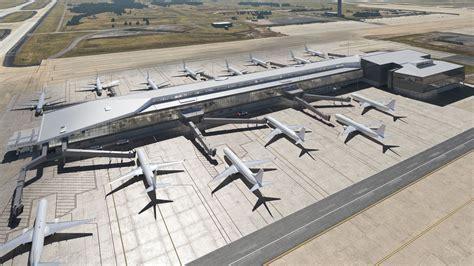
Washington Dulles International Airport has long been one of the most important pieces of United Airlines’ international network, but its physical infrastructure has never fully matched the scale of the operation built around it. That contradiction is now beginning to disappear. United Airlines is quietly helping reshape Washington Dulles into a modern, purpose-built global hub, using a massive airport redevelopment program to solve problems that have constrained its growth for decades.
The transformation is becoming especially significant because Dulles is no longer a secondary Washington gateway struggling to justify its enormous footprint. Passenger traffic has surged, international demand remains strong, and United has established an increasingly powerful position at the airport. In 2025, Dulles handled a record 29.01 million passengers, including 10.53 million international travelers. United accounted for roughly two-thirds of the airport’s total traffic, giving the airline an unusually strong influence over what the next generation of Dulles will look like.
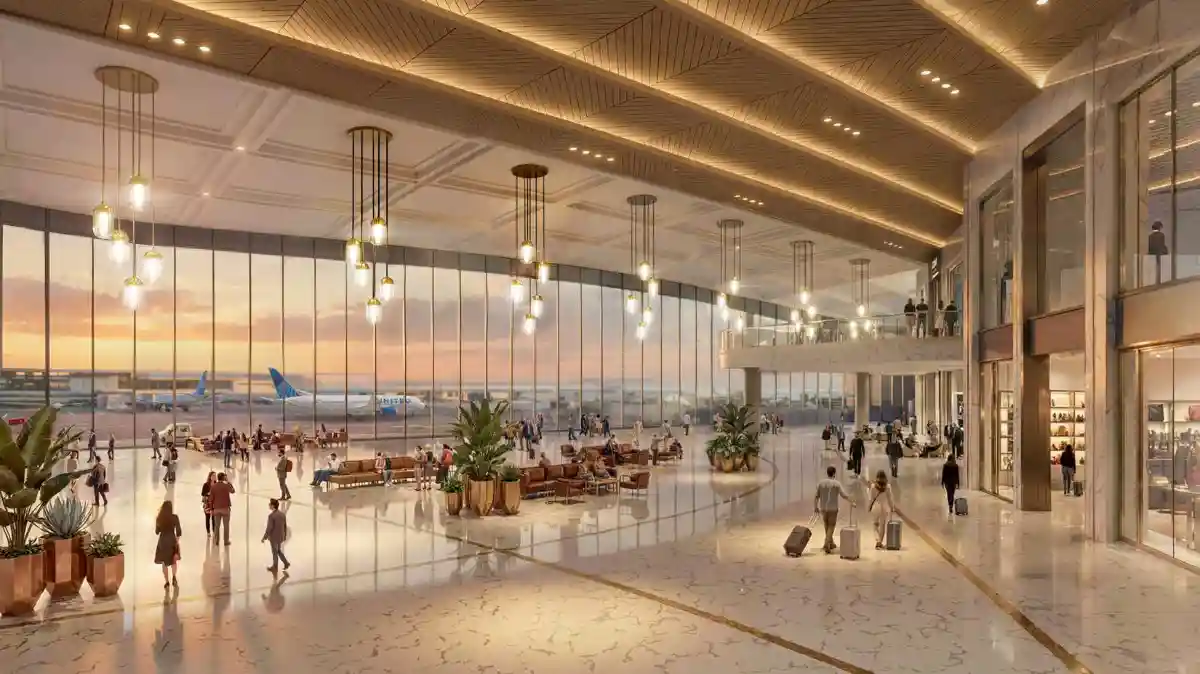
The scale of the proposed redevelopment is enormous. The Metropolitan Washington Airports Authority, or MWAA, has outlined a transformation involving more than 5 million square feet of new or renovated space, replacement concourses, expanded rail connections, improved international processing, additional parking and major new passenger facilities. The overall program has been associated with a figure of approximately $22.5 billion, although the airport’s modernization effort itself predates the latest political push.
That distinction is important because Washington Dulles is not suddenly receiving an entirely new airport plan. Much of the redevelopment comes from a long-running master-planning process that has been evolving for years. What has changed is the political momentum behind it. United CEO Scott Kirby brought the airline’s vision directly to President Donald Trump, helping turn a long-term infrastructure ambition into one of the most visible airport redevelopment projects in the United States.
United Airlines Has Been Waiting Decades For A Better Dulles Hub
The story begins with an infrastructure problem that has become increasingly difficult to hide. United’s primary operation at Dulles is centered on Concourses C and D, a complex that dates back to the mid-1980s. The facilities were designed as a temporary answer to a rapidly expanding airport rather than as a permanent home for one of America’s largest international hubs.
Nearly four decades later, temporary has become permanent.
The C/D complex was completed in 1985 and became the first midfield concourse at Dulles equipped with jet bridges. At the time, the arrangement made sense. The airport needed additional gates quickly, and the facilities provided United with the capacity necessary to build a hub around Washington’s growing international market. But the temporary design was always supposed to be replaced by permanent midfield concourses.
Instead, United built an enormous operation around infrastructure that was never intended to last this long.
The shortcomings are obvious to passengers. Low ceilings, dated passenger areas and limited circulation space contrast sharply with the scale of the aircraft and passenger volumes using the facility today. The relationship between the concourses and the AeroTrain is also awkward because the rail infrastructure was built with a future permanent concourse in mind.
That creates one of the stranger passenger experiences at a major American hub. Concourse C has an underground connection to the AeroTrain, while Concourse D does not have direct train access. International passengers may also find themselves depending on mobile lounges or plane mates to complete journeys that should be relatively straightforward in a modern hub.
Kirby’s description of the situation captures the absurdity particularly well: “Only in aviation does ‘temporary’ mean 45 years.”
The problem is no longer simply aesthetic. Infrastructure affects how quickly United can move passengers between flights, how efficiently aircraft can be turned around, how baggage can be transferred and how many flights the airline can schedule during its busiest connection periods.
Dulles Passenger Growth Is Forcing The Issue
United’s case for rebuilding Dulles has become stronger because the airport itself is growing rapidly. Passenger traffic increased from 21.38 million in 2022 to 25.14 million in 2023, then climbed to 27.25 million in 2024. In 2025, the airport reached 29.01 million passengers, representing another 6.4% increase.
International traffic has been particularly important. Dulles handled 7.37 million international passengers in 2022, followed by 9.35 million in 2023 and 10.38 million in 2024. The total reached 10.53 million in 2025.
That makes Dulles a particularly valuable asset for United because its network is not simply dependent on local Washington traffic. The airport acts as a bridge between the United States and international markets across Europe, Asia, the Middle East, Africa and beyond.
By the end of 2025, 46 airlines offered more than 340 daily departures to 164 destinations from Dulles. MWAA expects annual passenger activity to exceed 35 million by 2030, more than 30% above 2024 levels, while international passenger numbers could rise beyond 14 million.
For an airport operating with already heavily utilized gates, that forecast creates a simple problem: there is very little room for growth without rebuilding the physical airport.
United experiences that pressure most directly because of its dominant position. The airline carried approximately 19.7 million passengers at Dulles in 2025, giving it a roughly 67% share of total airport traffic. During major connecting banks, gates and passenger facilities can become heavily congested.
A larger airport therefore does more than improve the passenger experience. It gives United additional opportunities to schedule aircraft, optimize connections and grow its international network.
Concourse E Is The First Look At United’s Future
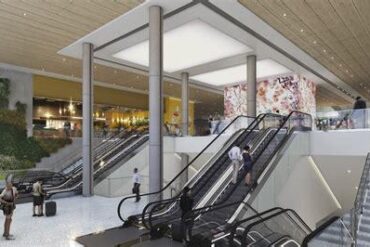
The most important clue to United’s future Dulles strategy is already taking shape. The first phase of the new Concourse E is scheduled to open in fall 2026, creating a modern facility that effectively serves as a prototype for what the rest of the airport could become.
The initial building will provide approximately 435,000 square feet of space and 14 gates, all dedicated to United. It will also feature around 46,000 square feet of concessions and a substantial 40,000-square-foot United Club.
That lounge is particularly revealing.
United has been investing heavily in premium cabins and premium airport facilities as it attempts to capture more high-value international travelers. At Dulles, the first phase of Concourse E will increase United’s lounge footprint by approximately 70%. The result is not simply more seats for passengers waiting for flights. It represents a broader strategy in which the physical airport becomes part of United’s premium product.
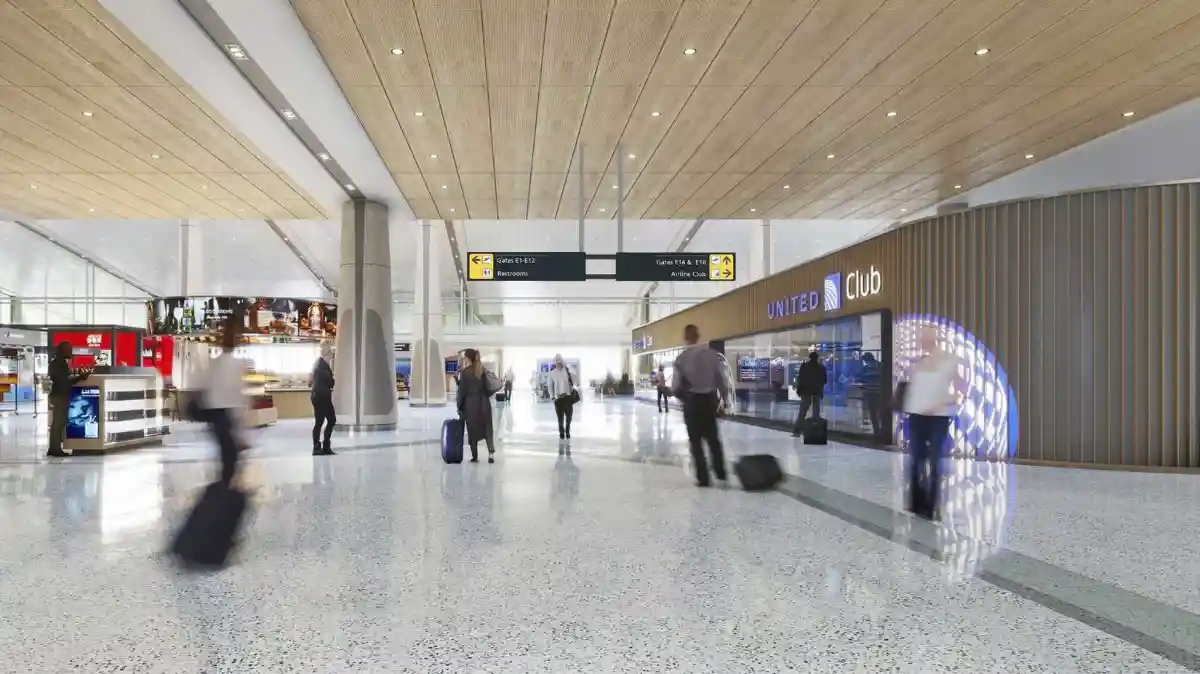
The concourse will also sit directly above an existing AeroTrain station, giving passengers a much more straightforward connection between rail transportation and the gates. International arrivals will have access to a dedicated passageway, while the facility itself is designed to accommodate larger mainline and widebody aircraft.
This matters because United’s Dulles operation increasingly depends on aircraft that demand more capable infrastructure. A global hub needs gates, taxiways, baggage systems, lounges, customs facilities and passenger circulation areas designed around the realities of long-haul flying rather than retrofitted around decades-old temporary buildings.
Concourse E therefore represents more than a new collection of gates. It is a physical preview of the United hub Dulles could become.
The first phase will primarily allow United to consolidate operations and retire some gates in Concourse A. A later central section of the planned E/F complex is expected to provide the additional capacity required to begin dismantling C/D.
Before the latest political push, some of that development was expected around 2030 or 2031. The new momentum could potentially bring portions of the process forward.
The New Dulles Will Be Designed Around Connections
The most important change may not be the appearance of the new buildings. It may be the way passengers move through them.
Dulles has historically relied on a complicated combination of concourses, mobile lounges, buses, underground walkways and rail connections. That system evolved because the airport was built in phases over many decades. It was never the product of a single coherent design optimized around United’s modern hub operation.
The proposed redevelopment changes that philosophy.
The future airport is expected to feature expanded AeroTrain connections, a central walking tunnel and additional moving walkways, reducing the need for passengers to rely on mobile lounges. The 19 mobile lounges currently make approximately 630 trips each day, an operational model that looks increasingly unusual at an airport preparing for more than 35 million annual passengers.
The goal is not simply to eliminate an eccentric piece of Dulles history. Faster and more predictable passenger movement can directly improve the economics of a hub.
United’s connecting banks depend on thousands of passengers moving between arriving and departing aircraft within relatively narrow windows. If passengers spend less time traveling between concourses, the airline can potentially create more reliable connections. Better passenger flows can also reduce pressure on gate areas, improve baggage transfers and make irregular operations easier to manage.
The proposed linear-concourse concept is especially important in this context. Instead of forcing United to adapt its network around inherited structures, the airport can be organized around the movement patterns of a modern connecting airline.
That is where Dulles could gain an advantage over some of United’s other major hubs.
Why Washington Dulles Could Become United’s Ultimate Hub
Calling Dulles United’s “ultimate hub” does not necessarily mean it will become the airline’s largest hub. Denver and Chicago O’Hare remain enormous operations, while Houston, Newark and San Francisco each have their own strategic importance.
Dulles is different because United has the opportunity to build its future network into the airport’s physical design.
In 2025, Dulles was United’s sixth-largest hub by passenger volume, with the airline carrying approximately 19.7 million passengers. Denver handled around 41.4 million United passengers, while Chicago O’Hare handled approximately 39.9 million. Houston reached about 35.2 million, Newark about 31.9 million and San Francisco about 26.6 million.
Yet those airports also have significant physical constraints.
Dulles possesses something United cannot easily create elsewhere: space.
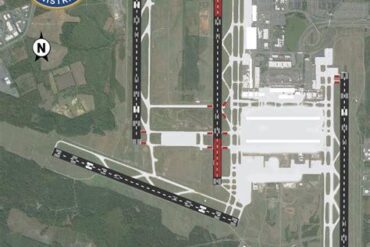
The airport occupies approximately 11,184 acres and has four runways, while preserving room for another runway and additional concourse development. It is already capable of handling the world’s largest commercial aircraft, and its enormous land footprint gives planners considerably more flexibility than they have at heavily constrained metropolitan airports.
That creates an extraordinary opportunity.
United does not have to squeeze a future hub into the physical limitations inherited from previous generations. It can use the redevelopment to design passenger flows, gates, lounges and international facilities around the network it expects to operate for decades.
The result could be a hub that is not necessarily the biggest in raw passenger numbers but is the most deliberately aligned with United’s global strategy.
International Growth Is At The Center Of The Strategy
Dulles has always possessed strong international credentials, but the next generation of facilities could make that advantage much more valuable.
The redevelopment includes a larger Customs facility, improved baggage handling, additional shopping and dining, and a sterile international arrivals route that would allow passengers to move more naturally through the airport.
For United, these improvements are particularly important because international connecting passengers are among the most valuable travelers in the network. They also tend to use premium cabins, lounges and connecting services more frequently.
A major new United Polaris Lounge is therefore more than an amenity upgrade. It fits directly into the airline’s strategy to compete for premium international travelers.
The combination of new widebody gates, larger lounges, better international processing and more efficient connections could allow Dulles to become one of United’s most important premium gateways.
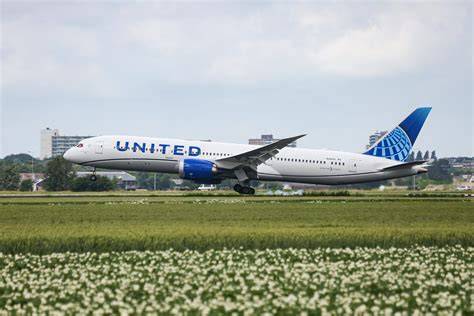
That is especially relevant as United continues expanding its international footprint. A hub designed around long-haul connections can support larger aircraft, more concentrated schedules and more complex global connections without forcing passengers through the physical bottlenecks created by the existing C/D complex.
The $22.5 Billion Question Is Financing
The vision is compelling, but the scale of the project introduces major uncertainties.
MWAA has already allocated approximately $7 billion toward Dulles modernization, and the airport’s master plan predates the latest announcement. The broader transformation could ultimately involve more than $20 billion, with the $22.5 billion figure promoted as part of the administration’s vision.
The financing structure remains one of the most important unanswered questions.
MWAA has indicated that airport authorities and airlines would fund new concourses and terminal facilities through municipal bonds, while certain components could potentially involve public-private partnerships. Officials have also emphasized that direct federal construction funding is not necessarily required.
But ultimately, airport infrastructure has to be paid for somehow.
Some costs could flow through airline fees, passenger facility charges, airport revenues or other financing mechanisms. That creates an important balancing act. United wants an airport that is dramatically better, but higher infrastructure costs can eventually influence airline economics and ticket prices.
The timetable is another challenge.
Trump has publicly pushed for an aggressive construction schedule, at times suggesting that the airport should be rebuilt much faster than conventional infrastructure programs normally allow. Yet Dulles cannot simply shut down while its core facilities are reconstructed.
United must continue operating a busy international hub throughout the process.
That means new gates must be built before old ones can disappear. Passenger flows must be maintained while rail and baggage infrastructure are modified. International processing must continue without creating unacceptable delays. Every construction phase has to coexist with an airport that is itself growing.
In other words, Dulles has to be rebuilt while simultaneously becoming busier.
United’s Quiet Strategy Could Be The Biggest Story
The political spotlight naturally falls on the proposed $22.5 billion airport transformation, but United’s role may ultimately be more consequential than the headline number suggests.
The airline is not merely waiting for MWAA to build a better airport. It has been advocating for permanent facilities for years, has invested in the emerging Concourse E concept and has presented its own vision of what Dulles should become.
Kirby’s involvement with the administration gave that vision additional momentum.
The result is an unusual alignment of interests. Washington wants a major infrastructure project that can become a visible symbol of modernization. MWAA needs additional capacity for a rapidly growing airport. United needs a permanent home for an increasingly important international hub.
Each party gets something different.
The airport receives modernization. The administration receives a high-profile infrastructure project. United receives the chance to shape the physical environment around its future network.
That last benefit may prove to be the most valuable.
For decades, United inherited Dulles’ limitations and adapted its operation around them. The coming transformation could reverse that relationship. Instead of designing an airline operation around an old airport, United can increasingly help design the airport around the airline.
That is why the redevelopment deserves attention beyond Washington. If the project is completed as envisioned, Dulles could become one of the clearest examples in the United States of an airport and airline network evolving together.
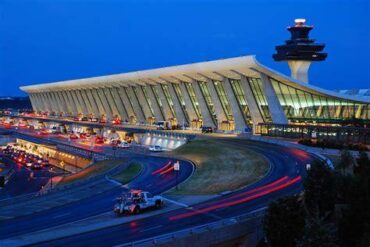
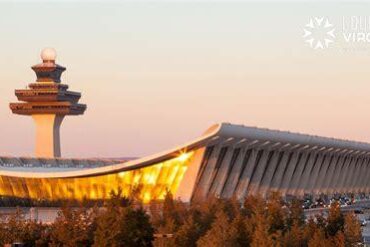
The iconic Saarinen terminal will remain, preserving the architectural identity that makes Dulles recognizable. But behind that landmark, almost everything else could change.
The temporary concourses could disappear. Mobile lounges could finally become museum pieces. Rail connections could become more intuitive. International arrivals could become faster and more predictable. United’s premium facilities could expand dramatically. Widebody aircraft could operate through gates designed for them rather than adapted to them.
And most importantly, United could gain something that its largest hubs rarely offer: a chance to build for the next generation rather than continually renovate the previous one.
Washington Dulles may therefore be entering the most consequential period in its history. The airport’s transformation is being presented as a national infrastructure project, but underneath that enormous public undertaking lies a much more specific airline strategy.
United is preparing Dulles for the network it wants to operate in the future.
If the plans survive their financing, design and construction challenges, the payoff could be enormous. Dulles may never become United’s largest hub, but it could become its most carefully engineered one—a spacious, international, premium-focused gateway built around the airline’s global ambitions rather than constrained by the temporary infrastructure of the past.
That is the quiet transformation taking place at Washington Dulles: United is not simply expanding its hub. It is helping rebuild the airport around the hub it wants to have for the next several decades.