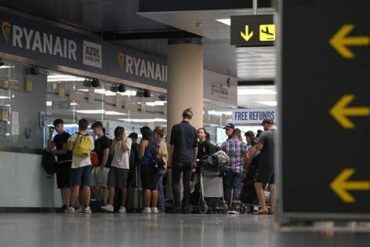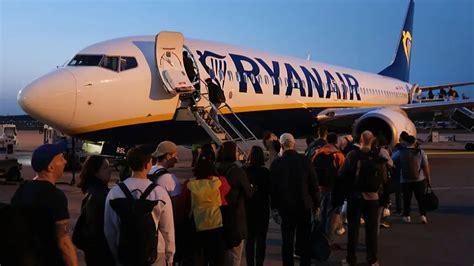
Ryanair has quietly written off thirteen airports across its European network, and the airline’s own schedule submission to OAG now shows no flights to any of them. The removals stretch from a single winter route in Galicia to an eighteen-route operation in the Jordanian capital, and they land hardest on the smaller regional airports that spent years courting the carrier in the first place. For travellers, the cancellations mean rerouted itineraries, lost direct connections and, in several cases, the disappearance of the only meaningful low-cost option from their local runway. For airport managers, they are a warning shot fired across the whole continent.
Ryanair’s Scale Makes Every Exit a Strategic Signal
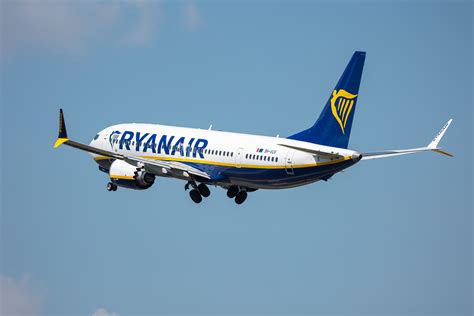
The context matters enormously here. Ryanair is by far the largest operator in Europe once airline groups are set aside, and its 2026 schedule submission to OAG shows 3,272 daily movements, a rise of 4% on 2025 and a new record for the carrier. That volume means Ryanair alone provides one in six of the continent’s short-haul services, an extraordinary concentration of capacity in the hands of a single ultra-low-cost brand. Its primary fleet of Boeing 737-800s and 737 MAX 8-200s averages 191 seats per flight, itself a record, and those higher-capacity airframes are fundamental to pushing seat-mile costs down far enough to keep fares low and demand growing. The result is that Ryanair now holds 18% of Europe’s short-haul seats, which explains why its withdrawal from a route is never a purely local story.
The Full List of Ryanair’s Thirteen Cancelled Destinations
Schedule analysis indicates that Ryanair has stopped flying to the airports below, and the list deliberately excludes base closures where the carrier still serves the airport using non-stationed aircraft. Ryanair is renowned for pulling out of airports whenever fees and charges rise, and that reputation is earned again here: for most of the entries the operation was tiny, usually because the cost of serving the place never justified the yields it produced. The Turkish airports add a second layer of complexity, because traffic rights were a factor alongside economics, whereas Jordan enjoys open skies with the EU and should in theory be an easier market to serve.
- Vigo, Spain — served since 2016, one route, ending January 2026
- Amman, Jordan — served since 2018, eighteen routes, ending March 2026
- Asturias, Spain — served since 2012, three routes, ending March 2026
- Clermont-Ferrand, France — served since 2003, one route, ending March 2026
- Ponta Delgada, Portugal — served since 2015, two routes, ending March 2026
- Terceira, Portugal — served since 2016, two routes, ending March 2026
- Rodez, France — served since 2003, two routes, ending August 2026
- Bodrum, Turkey — served since 2019, two routes, ending October 2026
- Dalaman, Turkey — served since 2018, three routes, ending October 2026
- Kalamata, Greece — served since 2013, two routes, ending October 2026
- Niš, Serbia — served since 2016, four routes, ending October 2026
- Volos, Greece — served since 2010, one route, ending October 2026
Although Ryanair’s overall schedule is currently loaded through September 2027, none of these markets are expected to see the airline again, and for several of them the door is effectively closed for the foreseeable future.
Amman Stands Out as the Most Significant Casualty
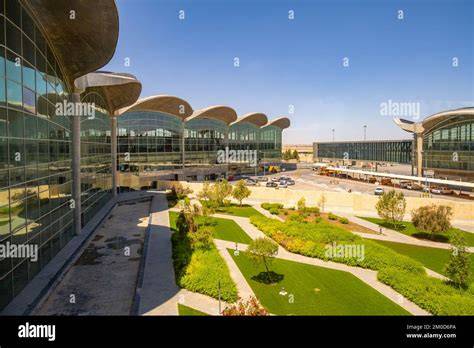
The Jordanian capital deserves separate treatment, because it is the outlier on the list in almost every respect. Ryanair flew to Queen Alia International Airport from 2018 and had built up eighteen routes, a far larger commitment than any other airport being dropped. Flights to Amman were suspended earlier this year as a direct consequence of the ongoing war, and although they were due to resume in July, the conflict and the surrounding uncertainty pushed the restart back to the end of October. All future flights were then removed entirely, with no services planned through next summer, which is precisely why the market appears on this list at all. Amman remains the entry most likely to return one day, given the country’s open skies arrangement with the EU and the depth of the network that once existed.
Bremen Will Become Ryanair’s Next Exit in 2027
A further withdrawal is already confirmed for the following year. Ryanair disclosed that service to Bremen, Germany, will end in late March 2027, and unusually for a market being axed, Bremen was a base from the very beginning, with a single 189-seat 737-800 stationed there at launch. Across nineteen years, 18.3 million round-trip seats were put on sale, equivalent to a third of the airport’s total capacity and 51% of its international seats, an extraordinary level of dependence on one carrier. That dependence has been shrinking for years: from a peak of 1.8 million round-trip seats in 2010, capacity collapsed to just 478,000 in 2025, a decline shaped in large part by Hamburg joining Ryanair’s map in 2014 despite the two airports sitting only around 75 miles (120 km) apart, while the Bremen base itself closed in 2018.
Curiously, Ryanair’s Bremen capacity actually rose by 8% in 2026, driven by a new route to Lamezia Terme in the far south of Italy alongside substantially more seats to Alicante, Palma de Mallorca and Zadar. Bremen ranks as Ryanair’s 119th most-served facility in 2026, out of 230 airports across its network, which underlines how marginal the station had become. Six routes remain until the end: Alicante, Lamezia Terme, London Stansted, Malaga, Palma and Zadar. The final departure is set for Saturday, March 27, 2027, the closing day of the Northern Hemisphere winter under IATA slot seasons, when FR3633 is scheduled to leave for Stansted at 4:55 PM, one of three flights on the route that day. After that date, Bremen will have no flights to the United Kingdom at all.
Why Ryanair Keeps Pulling Out of Airports
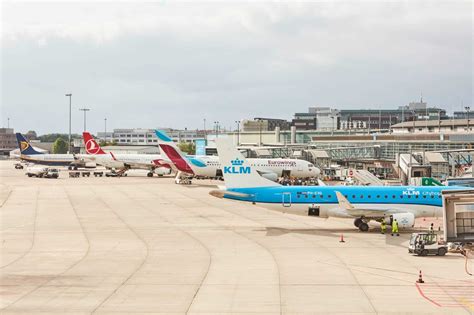
Ryanair’s explanation for Bremen was blunt, blaming the exit on excessive access costs, specifically air traffic control fees, security fees and high airport charges, combined with the federal government’s exorbitant air passenger duty. Some of the routes being cut had existed for many years, and the honest reading is that they performed well enough financially, otherwise they would never have lasted that long. The logic is that they become less viable, or outright unprofitable, once costs climb, because Ryanair’s margin per passenger is thin and capacity can be moved elsewhere with remarkable speed.
That, however, is only part of the picture. Ryanair is a business whose overriding priority is ever-increasing profitability, and by threatening to leave airports or actually leaving them, it sets an example that other airports, regions and even national governments are expected to notice before they raise charges. The economic consequences can be severe, particularly where a destination needs Ryanair far more than Ryanair needs the destination. If the carrier simply accepted higher charges and paid them, as smaller operators with less leverage generally do, every other airport would follow suit, Ryanair’s cost advantage would erode and the entire low-fare model would be exposed. Played as a business strategy rather than a grievance, the hard line makes complete sense, and whether Ryanair technically wins each individual fight matters far less than the message it sends. Where charges rise, growth stops, schedules shrink or the airline walks away, and where conditions stay competitive, capacity flows in.