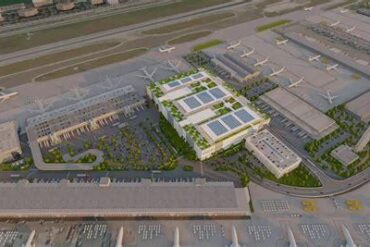
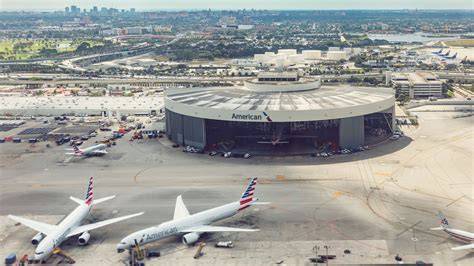
The D60 expansion is an infrastructural correction that has been decades in the making, and it sits at the center of Miami International Airport’s next chapter. For years, one of the busiest corners of MIA functioned as a throwback rather than a showcase: a shared regional boarding facility where passengers walked out of the terminal, waited in the South Florida heat, or climbed aboard a bus that shuttled them across the apron to an aircraft parked far from any jet bridge. The $1 billion redevelopment now underway will replace that arrangement with 17 traditional contact gates, each with its own passenger hold room, connected directly to Concourse D. The change sounds routine. In practice, it touches the operational core of the airport and of the airline that dominates it.
Miami is not a peripheral station in any airline’s network. It is the American gateway to Latin America and the Caribbean, a point where domestic traffic, transatlantic services, and deep Latin American connectivity converge inside a single terminal. American Airlines carries more than 60% of all passengers at MIA and operates roughly 400 daily departures from the airport. When the facility supporting those departures is rebuilt, the consequences ripple through scheduling, fleet allocation, terminal flows, customer satisfaction, and the airline’s ability to defend the most valuable hub position it holds anywhere on the eastern seaboard. Seventeen gates, viewed in isolation, look like a modest line item. Viewed through the lens of a hub carrying 55.3 million passengers a year, they represent the difference between an airport designed for the past and one built for the next two decades.
Why Miami Anchors American Airlines’ Entire Latin American Strategy
American Airlines’ position at Miami International Airport is unlike anything it holds elsewhere in its network. The airport’s geography makes it the natural transit point between the United States and the markets of Central America, South America, and the Caribbean, and American has built a hub structure around that reality that no competitor has managed to replicate. Its 61.7% market share, according to US Bureau of Transportation Statistics data, places it far ahead of Delta Air Lines at 6.9%, United Airlines at 3.7%, Frontier Airlines at 2.7%, and Southwest Airlines at 2.6%. That concentration is not accidental. It reflects years of route development, terminal investment, and a deliberate strategy of using Miami as the transfer engine for hemisphere travel.
The scale of the operation explains why infrastructure decisions here carry unusual weight. MIA handled 55.3 million passengers in 2025, making it one of the busiest airports in the United States, and Miami-Dade County estimates that activity at the airport generates roughly $212 billion in business revenue annually while supporting nearly 946,000 jobs. Aviation in South Florida is not a supporting industry; it is a load-bearing pillar of the regional economy. For American, maintaining and strengthening its Miami position is therefore about far more than flight counts. It is about preserving the connective tissue between domestic US markets and destinations across the hemisphere, and about capturing the international traffic that flows through Miami in both directions.
That logic extends to the carrier’s route map. Last year’s busiest international routes from Miami read like a who’s who of Latin American commerce and leisure: London Heathrow (LHR) led with 1,060,000 passengers, followed by Bogotá (BOG) at 993,000, Panama City (PTY) at 894,000, São Paulo (GRU) at 865,000, and Lima (LIM) at 850,000. The domestic picture is equally instructive, with Atlanta (ATL) at 946,000, New York LaGuardia (LGA) at 904,000, Dallas/Fort Worth (DFW) at 759,000, New York JFK (JFK) at 687,000, and Chicago O’Hare (ORD) at 665,000. Every one of those passengers eventually passes through a gate, and a disproportionate share of them pass through the regional facility at D60 before boarding smaller aircraft that feed the hub’s long-haul and Latin American network.
The Real Cost of Bus Boarding at the Existing D60 Facility
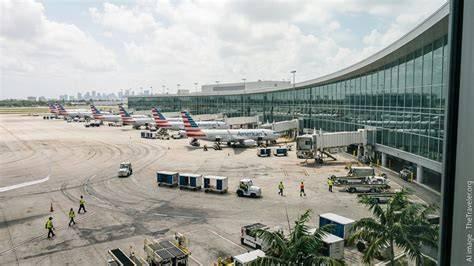
The facility now serving those flights was never designed for the traffic it handles. Rather than individual boarding areas connected to aircraft by jet bridges, it operates as a shared waiting space serving 17 ground-level regional aircraft positions. Passengers departing from it follow a process that is unusual at any major international gateway: they leave the terminal, board a bus, and are driven to an aircraft parked outside the main concourse. On other occasions they board through outdoor arrangements, exposed to Miami’s heat, humidity, and the sudden thunderstorms that roll across South Florida on summer afternoons.
The practical friction compounds during peak periods. Multiple departures share a single general waiting area, which means boarding announcements, passenger movements, and delay management all compete for the same physical space and the same attention. When several flights are approaching departure simultaneously, the environment becomes crowded and confusing. Ground staff must coordinate aircraft, buses, and passenger flows without the separation that individual hold rooms provide, and passengers must interpret information that is delivered to a crowd rather than to a defined group. None of this is impossible to manage. It is simply inefficient in a way that becomes more visible as passenger volumes rise.
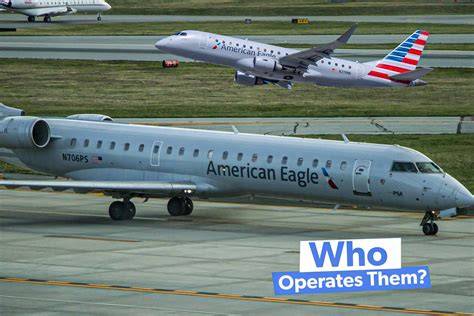
The aircraft serving this facility reflect the nature of the operation. American Eagle, the regional brand under which these flights are marketed, relies on Embraer 170 and Embraer 175 aircraft operated by Envoy Air, Embraer ERJ 145 and Embraer 175 aircraft operated by Piedmont Airlines, and Bombardier CRJ700 and CRJ900 aircraft operated by PSA Airlines, according to ch-aviation data. These are efficient aircraft for thinner routes, but they were never the problem. The problem was always the ground experience attached to them, and the way that experience exposed the gap between American’s premium long-haul product and the regional feeder operation that sustains it.
What the D60 Expansion Actually Delivers
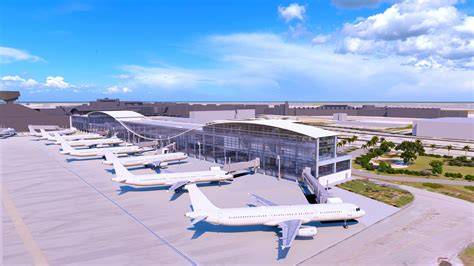
The D60 project will transform the existing facility into a three-level extension of Concourse D. Rather than renovating the shared waiting space, the plan converts the 17 ground-level regional aircraft positions into 17 traditional contact gates, each with its own passenger hold room and direct access to aircraft. The design accommodates both larger regional aircraft and narrowbody aircraft, giving the airline flexibility that the current arrangement cannot offer. That matters because aircraft requirements shift as demand evolves across individual routes, and a gate that can handle a narrowbody today may carry an entirely different service mix five years from now.
Passenger facilities receive substantial attention as well. Each gate will have an individual boarding area, and the expansion introduces additional dining and shopping opportunities that align with the expectations travelers bring to a major international hub. An improved baggage handling system supports the increased operational requirements of the expanded facility, helping the airport manage the volume that comes with growth. The project is scheduled to break ground in 2027, with completion initially targeted for 2030, although MIA’s published capital improvement information also identifies 2033 as the scheduled completion date, a reminder that delivery timetables remain subject to planning developments. Financing comes primarily through airport bonds, supplemented by $34 million in grants from the Florida Department of Transportation.
Eliminating Bus Boarding and Its Passenger-Facing Benefits
Of all the improvements bundled into the $1 billion investment, the removal of bus boarding is likely to be the change passengers notice first. Instead of transiting a shared boarding area and transferring to an aircraft outside, travelers will use individual gates connected directly to the concourse. The journey from departure lounge to aircraft becomes predictable: wait in a designated area, receive flight information at a specific gate, and board without a bus ride. For passengers with reduced mobility, families traveling with young children, and travelers carrying additional luggage, the difference is not cosmetic. It is the difference between a process that requires assistance at every stage and one that follows the same rhythm as any conventional domestic departure.
Weather is the other consideration that cannot be ignored. Miami’s tropical climate brings intense heat, heavy rainfall, and frequent thunderstorms, and outdoor boarding exposes passengers to all three. Eliminating that exposure improves comfort during the summer months, when temperatures and humidity make the apron an uncomfortable place to stand. The operational benefits are real but qualified: removing the need to coordinate buses and outdoor passenger movements can simplify ground handling, yet actual improvements to turnaround times will depend on staffing, aircraft scheduling, and other factors that no terminal project can control. What the new gates reliably deliver is a more organized environment in which airline employees can manage boarding and assist customers, with each flight assigned to a defined space rather than a shared one.
International Arrivals and a More Connected Concourse D
The most strategically significant feature of D60 may be its connection to the US Customs and Border Protection facility. The expansion provides third-level connections to Concourse D’s customs infrastructure, creating the capability to accommodate international arrivals. That capability matters because Miami is not simply a domestic hub for American; it is one of the carrier’s most important international gateways, and international arrivals require separation and secure circulation before passengers reach customs and immigration.
Building those connections into the design gives the new gates operational flexibility that the current facility lacks. Demand between Miami and Latin American and Caribbean destinations varies considerably, and aircraft assignments change as route requirements evolve. Infrastructure that can support international arrivals widens the range of flights the facility can handle, rather than restricting it to a narrow band of regional operations. For passengers, improved integration could eventually mean more convenient international travel through Concourse D, depending on how individual services are allocated and how the airport implements its passenger processing arrangements. The underlying design signals that D60 was conceived around the long-term requirements of an international hub, not merely as a replacement for an inconvenient regional boarding area.
D60 Within Miami’s Multibillion-Dollar Modernization Program
The Concourse D expansion is one component of MIA’s wider Modernization in Action program, a multibillion-dollar effort covering passenger facilities, terminal infrastructure, baggage systems, and other essential services. Other major projects include the development of Concourse K, scheduled to open in 2029, and the redevelopment of the Central Terminal, currently targeted for completion around 2031. Together, these developments increase capacity and modernize facilities across different parts of the airport, and D60 sits alongside them as part of a coordinated effort to prepare Miami for continued passenger growth.
For American Airlines, the stakes are higher than for any other carrier because its dominance at MIA leaves it proportionally exposed to the quality of the airport’s infrastructure. An airport carrying more than 60% of its passengers on a single airline needs facilities that can support the demands of a major hub, not ones designed around much smaller regional operations. Better gates, more comfortable boarding areas, and improved international connections all feed directly into the airline’s ability to serve its customers and defend its position against Delta and United, both of which maintain far smaller but strategically relevant presences at the airport.
Why Seventeen Gates Carry So Much Weight
The significance of D60 lies in the gap between the airport American Airlines needs and the facilities it currently has. Seventeen gates may appear modest within an airport handling more than 55 million passengers annually, yet their transformation addresses a longstanding weakness at one of the carrier’s most important hubs. The new contact gates will eliminate bus boarding, shorten the walk from lounge to aircraft, bring regional departures into the same terminal logic as mainline flights, and give the airline room to adjust aircraft assignments as demand shifts across its Latin American and domestic networks.
Miami International Airport is, in effect, making a substantial investment in the future of its busiest airline, and American is the beneficiary of a project that aligns airport infrastructure with the operational reality of a 400-departure hub. The timeline stretches toward the end of the decade and possibly beyond, and the benefits will arrive gradually as construction phases complete. But the direction is clear. The days of walking out of a terminal to board a regional jet at Miami are numbered, and the gates that replace them will do more than improve a boarding area. They will strengthen the connective infrastructure of the busiest international gateway in the American Airlines network.