United Airlines could be preparing for one of its most ambitious expansion moves in Florida, with CEO Scott Kirby expressing interest in establishing a major United Airlines hub at Miami International Airport (MIA). The idea would dramatically strengthen the carrier’s position in the Caribbean and South America, regions where it already has an important presence but remains heavily dependent on its Houston hub. The biggest obstacle, however, is immediately obvious: United could need access to 40 to 50 gates, placing it directly against American Airlines, the dominant carrier at Miami.
Miami would give United something its existing network cannot easily provide. Although Houston’s George Bush Intercontinental Airport serves as the airline’s southernmost major hub, its location limits how efficiently United can build a truly extensive network deeper into the Caribbean and South America. A Miami operation would place those markets considerably closer to the center of United’s network, allowing domestic passengers from across the United States to connect southward through Florida.
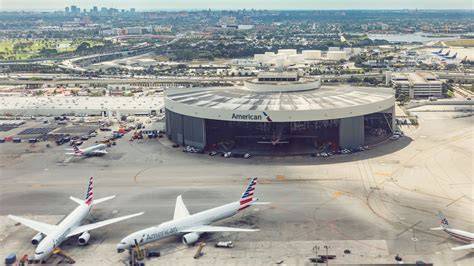
The opportunity is particularly significant because Miami is already one of the most important aviation gateways between the United States, Latin America and the Caribbean. American Airlines controls roughly 74% of flights at MIA, creating an extraordinary competitive advantage that has lasted for decades. American operates approximately 108 daily departures from Miami toward South America and the Caribbean, far ahead of LATAM Airlines with around 10, Avianca with eight, and Bahamasair and Arajet with two each.
Why Miami Could Transform United’s Latin American Network
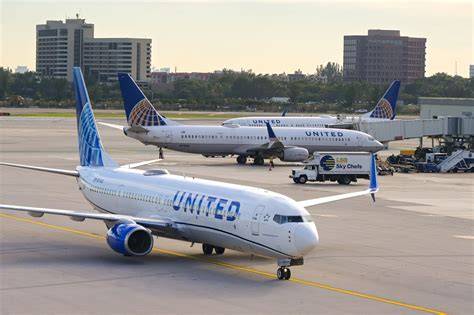
United already ranks first among major US airlines in Central America and maintains a meaningful position across South America and the Caribbean. According to Cirium data cited in the reference material, United holds an 11% market share in South America, ranking second behind American Airlines, while its Caribbean market share stands at approximately 8%. In Central America, United ranks first, largely because of the powerful network it operates through Houston.
A Miami hub could change that balance. Instead of routing so many passengers through Houston, United could use Miami as a dedicated connecting point for travelers heading from the Northeast, Midwest, West Coast and other US markets toward destinations south of Florida. The airport’s geographic position would make connections to the Caribbean particularly attractive, while also creating opportunities for expanded service into major South American cities.
United’s existing network already demonstrates the potential. San Juan, Punta Cana, Nassau and Montego Bay are among its most frequently served Caribbean gateways, with five routes each. Aruba, São Paulo, Providenciales, St. Thomas and Grand Cayman follow with four routes apiece. A substantially larger Miami operation could turn many of these destinations into higher-frequency markets while supporting new routes that are difficult to justify from existing hubs.
The 50-Gate Problem at Miami International Airport
The challenge is not demand. It is airport capacity and gate access. United would reportedly need between 40 and 50 gates to build a hub large enough to support the necessary aircraft, crews, connections and flight frequencies. That requirement would put the airline in direct competition with American, which has spent decades building Miami into one of its most important international gateways.
Convincing American to surrender enough gates would be extremely difficult. A true United hub would require more than a handful of new routes; it would need a large-scale operation with narrowbody and widebody aircraft, connecting banks, maintenance resources and eventually a substantial crew base. Without sufficient gates, United could operate additional flights at Miami, but it would struggle to create the connectivity and scale that define a genuine hub.
Could Fort Lauderdale Become United’s Florida Alternative?
If Miami proves impossible, United may have another option in Fort Lauderdale-Hollywood International Airport (FLL). The airline has already become increasingly important at Fort Lauderdale following the collapse of Spirit Airlines, and its growing relationship with JetBlue could provide another strategic opening in South Florida.
Fort Lauderdale does not offer exactly the same international profile as Miami, but it could allow United to establish a large Florida presence without confronting American for dozens of gates at MIA. The airport could also benefit from United’s broader partnership strategy involving Copa Airlines and Avianca, both of which provide valuable access across Latin America.
United’s Hub Network Shows the Scale of the Ambition
United’s existing hubs provide a useful indication of what a Miami operation could eventually become. Chicago O’Hare leads with an average of 618 daily departures in 2026, followed by Denver with 525 and Houston with more than 475. Newark averages around 375, while San Francisco, Washington Dulles and Los Angeles handle smaller but still substantial United operations.
Miami would therefore need to become a major operation rather than simply another focus city. The combination of aircraft, gates, crews and connecting passengers would have to generate enough revenue to justify moving capacity away from established hubs.
For Kirby, the attraction is clear. A United Airlines Miami hub could challenge American’s long-standing dominance, deepen United’s presence across the Caribbean and South America, and give the carrier a strategically valuable southern gateway. The question is whether United can secure the gates required to turn that vision into reality. Without 40 to 50 gates, Miami may remain an opportunity rather than the next major United hub.