Long-haul narrowbody jets such as the Airbus A321XLR have undeniably reshaped how airlines think about point-to-point travel, opening niche city pairs that once demanded a widebody or a connection through a megahub. Yet for the world’s premium and legacy carriers, many of them tethered to slot-restricted hubs where every movement must carry as much revenue as possible, the capacity and range of twin-aisle aircraft remain impossible to replace. Slot constraints do not merely limit takeoffs and landings; they force airlines to extract maximum value from each one, and only a widebody can convert a single precious movement into hundreds of seats across premium cabins. That commercial logic explains why the operators ranked here have spent decades assembling their twin-aisle armadas, and why the order books of Airbus and Boeing are still dominated by these giants.
The eight fleets profiled below are a study in contrasting strategies. Emirates and Qatar Airways, both based in the Gulf, are almost pure widebody operators whose geography places them within range of two-thirds of the world’s population. The big three US legacy carriers, by contrast, hold widebody fleets as a byproduct of vast overall operations: American, Delta, and United each surpass 1,000 aircraft, with narrowbodies outnumbering twin-aisles several times over. Singapore Airlines sits somewhere between the two models, running an almost entirely widebody operation, while Turkish Airlines is plotting the most aggressive expansion of the group. The figures that follow draw on Planespotters.net data and reflect a moving target, since deliveries, retirements, and fleet churn alter these counts month by month.
Emirates: The Undisputed Champion With Over 290 Widebodies
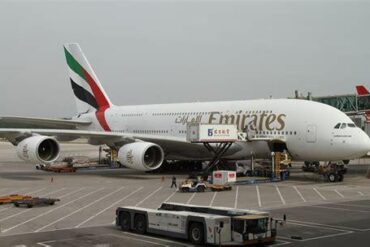
According to Planespotters.net data, the airline with the largest widebody fleet is Emirates. Aside from a single Airbus A319, the carrier’s fleet of 291 planes is exclusively twin-aisle, making it the only major operator on this list for whom widebodies are not a strategic choice but the entire business model. The aircraft involved include 28 A350-900s, 116 A380-800s, 10 777-200LRs, 117 777-300ERs, and 18 777Fs, a composition that concentrates an extraordinary share of global twin-aisle capacity inside a single Dubai hub.
The most eye-catching aspect of the Emirates fleet is its 116-jet portfolio of A380s, the world’s largest passenger aircraft and one the airline has used as a flagship to showcase some of the best premium products in commercial aviation. These include private suites and onboard shower spas, features no competitor has replicated at the same scale. The airline configures the aircraft in two-, three-, and four-class layouts, and one of its two three-class configurations is dedicated to ultra-long-haul flying alongside the four-class version. This flexibility allows Emirates to match cabin density to route economics with a precision that a single-layout operator cannot achieve.
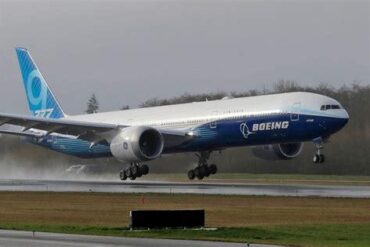
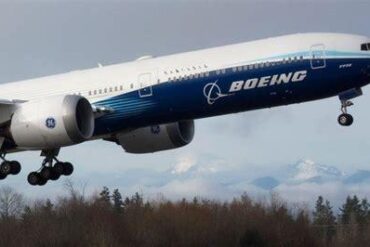
A new flagship is on its way. Emirates has ordered 270 777X aircraft, a commitment that will make the type its long-haul workhorse for operations out of Dubai International Airport (DXB) and a fitting replacement for its aging 777-300ER and A380 jets. Destinations will include countless airports across America, Europe, Africa, and Asia served nonstop. The newest of these jets was spotted rolling out of Boeing’s Everett plant ahead of its paint job this September, prompting Stephanie Pope, President and CEO of Boeing Commercial Airplanes, to say: “We are deeply honoured that Emirates has once again selected the Boeing 777X to power its future as the airline refreshes its world-class fleet and expands its vaunted global network.”
United Airlines: Over 240 Widebodies and an All-Boeing Strategy
The second-biggest widebody fleet belongs to another US legacy giant, United Airlines, which operates 245 twin-aisle planes out of a total fleet of 1,149. None of them are Airbus jets, a striking distinction among the world’s largest carriers and a testament to United’s long-standing relationship with Boeing. United flies 53 767s, divided between 37 767-300ERs and 16 767-400ERs, aircraft that have become increasingly rare among major long-haul operators yet remain central to United’s transatlantic and domestic trunk routes.
United’s 787 and 777 fleets are its joint largest at 96 planes each. The Dreamliner contingent includes 12 787-8s, 63 787-9s, and 21 787-10s, while the 777 family comprises 74 777-200s and 22 777-300ERs. That enormous 777 fleet is a legacy asset built over three decades, yet as with all other US carriers, United will not buy any new Boeing 777X planes. There was speculation that United could purchase older 777X aircraft rejected by Emirates, but Emirates president Sir Tim Clark confirmed this would not happen, noting that too many expensive upgrades would be needed to bring them in line with the 777X planes Boeing is currently building.
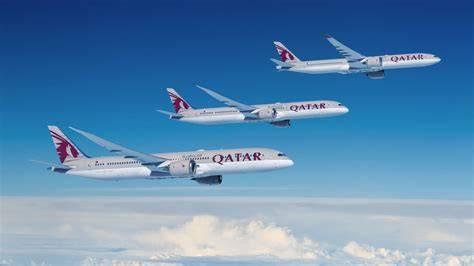
Qatar Airways: Nearly 230 Widebodies Across Four Aircraft Families
Per Planespotters.net, the Qatar Airways widebody fleet is far larger than its narrowbody fleet. The Middle Eastern carrier flies two families of Airbus twin-aisles, the A380 with eight jets and the A350 with 64, the latter divided into 34 A350-900s and 30 A350-1000s. It also operates 93 777s, comprising six 777-200s, 57 777-300ERs, and 30 777Fs, together with 61 Dreamliners split between 32 787-8s and 29 787-9s. That distribution across four aircraft families produces a total widebody fleet of 226 planes, against a narrowbody complement of just 31 aircraft from the A320 and A321.
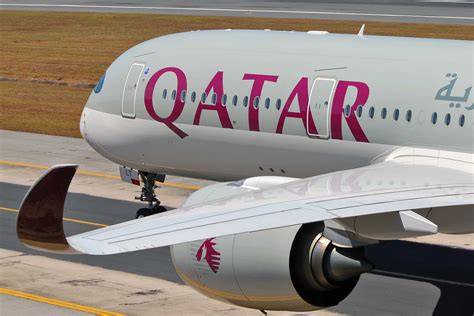
The airline’s appetite for headline-grabbing routes extends to the world’s shortest bookable A350 flight, between Doha Hamad International Airport (DOH) and Bahrain International Airport (BAH). That hop of just 80 nautical miles takes the crown from an Ethiopian Airlines fifth-freedom service, although a shorter sector exists between Bonaire’s Flamingo International Airport (BON) and Curaçao International Airport (CUR), flown by World2Fly for Corendon Dutch Airlines, for which no tickets can be booked as a standalone leg.
Delta Air Lines: Just Over 170 Widebodies Across Three Families
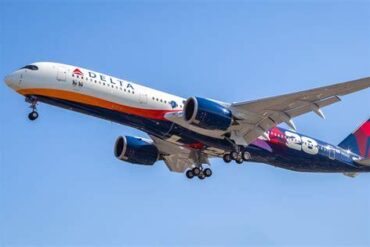
As stated by Planespotters.net, the Delta Air Lines widebody fleet currently spans just three aircraft families yet has reached a fleet of considerable size. The carrier operates two Airbus families, the A330 with 81 jets and the A350 with 42, including 11 A330-200s, 31 A330-300s, and 39 A330-900s, alongside A350s that are all the A350-900 variant. Delta’s only Boeing widebody family is the 767 with 57 jets, divided into 36 767-300ERs and 21 767-400ERs.
As with American, this widebody fleet is meager when set against the narrowbody operation. Delta has 1,006 planes in total, of which just 180 are twin-aisles; both its 737 and A321 fleets alone are larger than the entire widebody complement. That imbalance reflects how US domestic and transatlantic flying has shifted toward highly efficient single-aisles, leaving widebodies concentrated on long overwater missions, premium transcontinental services, and routes where cargo revenue tips the economics in their favor.
Turkish Airlines: Over 160 Widebodies Fueling a Global Ambition
Planespotters.net data reveals a substantial Turkish Airlines twin-aisle fleet of 164 planes. It includes 35 A350-900s, 20 A330-200s, and 37 A330-300s, alongside 33 777-300ERs, 12 777Fs, and 27 787-9 Dreamliners. The mix reflects Istanbul’s strategic position as a bridge between Europe, Asia, and Africa, where a five-hour radius captures an extraordinary density of destinations and where freight demand justifies a meaningful freighter presence.
Turkish Airlines has plans for enormous fleet expansion in the years to come, with hopes to reach a total fleet size of 800 aircraft by 2036. That growth underpins a network of 350 destinations and an annual revenue target of $50 billion, as reported by Simple Flying. As part of its efforts to premiumize the fleet, the carrier wants to reintroduce premium economy to its widebody aircraft starting in 2028, replacing around 8-9% of its current economy cabin with premium economy seats. “Our research shows that around two-thirds of the passengers on long-haul flights are willing to pay a premium for additional legroom and comfort,” its former Chief Commercial Officer Ahmet Olmuştur told Forbes.
Singapore Airlines: Nearly 140 Widebodies and the Unique A350-900ULR
While British Airways and American are dominated by narrowbodies, Singapore Airlines is built almost exclusively of twin-aisles, with just 26 Boeing 737s among its fleet. Its widebody complement of 138 aircraft includes 61 A350-900s in service with 4 parked, 11 A380-800s in service with one parked, seven 747-400s, 25 777-300ERs and 777Fs in service with two parked, and 27 787-10s in service with one parked.
The unique attribute of Singapore Airlines’ widebody fleet is its Airbus A350-900ULR, of which it is the exclusive operator. The airline uses this jet to fly the world’s longest commercial routes currently in operation, all operating with premium-only cabins offering just business class and premium economy. That configuration transforms range into revenue density, proving that on ultra-long sectors the most profitable approach is often fewer seats of higher value rather than maximum capacity.
American Airlines: Over 130 Widebodies and the Trusty 777-300ER
Planespotters.net data shows that American Airlines has 67 Boeing 777s, split between 47 777-200s and 20 777-300ERs, for a total of 137 twin-aisle aircraft. The carrier also owns 70 Boeing 787 Dreamliners, including 37 787-8s and 33 787-9s. The American widebody fleet is a relatively small fraction of the 1,037 aircraft in the total fleet, and its historic lineup once included 747s, 767s, and Airbus A330s now consigned to the US Airways merger era and the pandemic’s retirements.
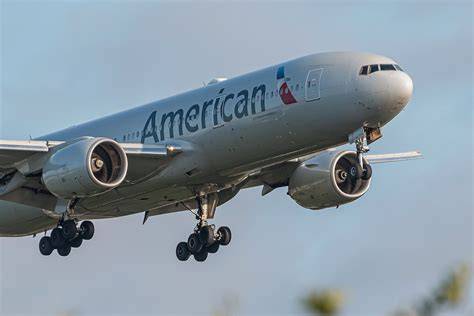
The 777-300ER at the heart of this fleet is a workhorse that is immensely popular among these carriers, with typical two-class capacity of 396 or three-class capacity of 365, a length of 242 feet 4 inches, a wingspan of 212 feet 7 inches, and a fuselage width of 20 feet 4 inches. Its maximum takeoff weight of 775,000 pounds is powered by two General Electric GE90-115BL high-bypass turbofans producing 115,300 pounds of thrust each, giving a range of 7,370 nautical miles and a takeoff distance of 10,550 feet. Those figures explain why the type became the default long-haul aircraft for so many airlines, combining payload, range, and proven economics in a single airframe.
British Airways: Just Over 100 Widebodies and the 747 Legacy
According to Planespotters.net, British Airways currently operates a fleet of 299 aircraft. Its widebody aircraft comprise 18 Airbus A350-1000s and 12 A380-800s, along with 59 777s divided into 42 777-200s and 16 777-300ERs. The 43 Dreamliners are divided into 12 787-8s, 18 787-9s, and 13 787-10s, giving a total of 132 twin-aisle jets.
British Airways once had one of the world’s most significant fleets of 747 aircraft, a force that defined its long-haul identity for generations. However, retirement due to the COVID-19 pandemic brought half a century of 747 operations, if we include British Airways’ precursor BOAC, to a sudden conclusion in July 2020. The abruptness of that withdrawal still shapes the airline’s fleet planning, as replacement capacity has had to be found in a market where both Boeing and Airbus are sold out years ahead.
What These Eight Fleets Reveal About the Twin-Aisle Market
The largest twin-aisle fleets belong overwhelmingly to carriers whose geography, hub constraints, or premium strategy make widebodies the only sensible tool. Emirates and Qatar have built entire businesses around them, Singapore Airlines treats the narrowbody almost as an afterthought, and the US legacy carriers deploy their twin-aisles selectively within enormous single-aisle fleets. What unites all eight is a dependence on the Boeing 787, 777, and Airbus A350 families as the backbone of future growth, with the 777X on the horizon for Emirates while American, Delta, and United have so far chosen to remain buyers of existing types. As the A321XLR chip away at the edges of the long-haul market, these operators demonstrate that the twin-aisle is not being displaced, but concentrated where its capacity pays best.