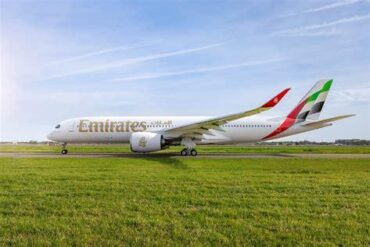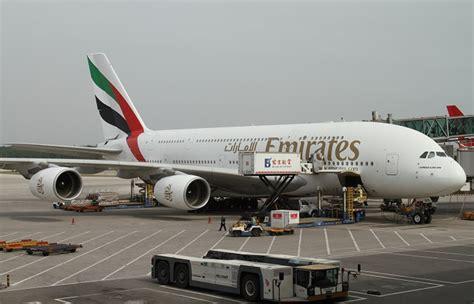
The Middle East’s three powerhouse carriers — Emirates, Qatar Airways, and Etihad Airways — continue to define the long-haul landscape through expansive Airbus A380 deployment. Their superjumbo strategies shape global connectivity, influence airport infrastructure, and set benchmarks for premium travel. The following in-depth analysis explores how each airline utilizes its A380 fleet and where these iconic aircraft operate today, offering readers a richly detailed understanding of the region’s most influential routes.
Emirates maintains an unmatched presence in the A380 world, operating the largest superjumbo fleet ever assembled. With more than a hundred aircraft in active service, the airline uses Dubai as a launchpad to reach major international hubs across Europe, Asia, and Oceania. Its scheduling volume far exceeds any competitor, reflecting a firm commitment to high-capacity trunk routes that thrive on frequency and consistency.
The airline’s operations concentrate heavily on markets where premium demand, transfer traffic, and slot-restricted airports intersect. With up to six daily A380 flights to London Heathrow and multiple daily frequencies to destinations like Bangkok, Cairo, Jeddah, Singapore, and Sydney, the aircraft operates at the heart of Emirates’ network strategy. The winter season often triggers additional boosts, and London sees some of the most significant increases due to seasonal travel spikes.
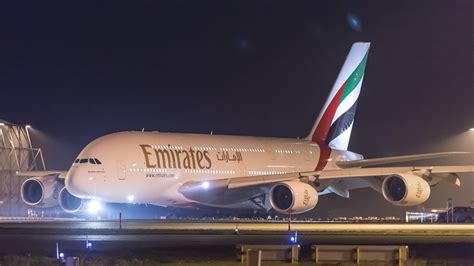
Dubai’s strategic geography magnifies the effectiveness of the A380 on these routes. Travellers moving between Europe and Australasia, or between the Middle East and Southeast Asia, rely heavily on Emirates’ wide choice of departure times. Each A380 rotation helps maintain a high-flow, tightly interconnected hub, matching the needs of both business travellers and leisure passengers seeking seamless global journeys.
Qatar Airways’ Focused A380 Usage From Doha
Qatar Airways deploys its smaller A380 fleet with precision. Although the number of superjumbo flights is far lower than its Emirati rival, each route serves a clear purpose in the airline’s network design. The aircraft’s configuration, featuring a compact first-class cabin and a spacious economy section, makes it ideal for dense regional-Asia flows and long-haul premium markets.
Bangkok stands out as the carrier’s top A380 destination. Multiple daily flights reinforce the city’s status as a high-volume leisure and business gateway, and Qatar Airways leverages this route to funnel travellers across Southeast Asia. Paris Charles de Gaulle and Sydney Kingsford Smith also play central roles, each receiving daily A380 service that supports strong premium cabin demand.
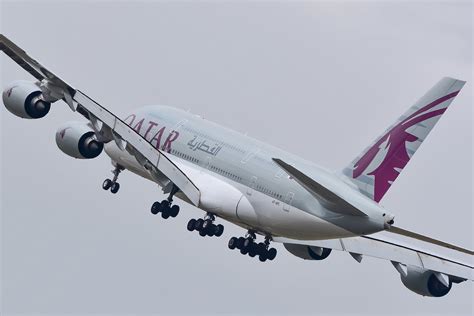
Although London Heathrow appears in the schedule, its frequencies fluctuate based on slot availability and seasonal considerations. Two specific December days gain a second rotation, illustrating how Qatar Airways adjusts superjumbo deployment to dynamic market conditions. The airline continues expressing long-term confidence in the A380, highlighting the type’s relevance despite industry-wide retirement trends.
Etihad Airways’ Refined A380 Revival in Abu Dhabi
Etihad Airways operates the smallest A380 fleet among the trio, yet its strategic use of the aircraft has become increasingly deliberate. After previously grounding the type, the airline revived its A380 operations to strengthen premium demand corridors and enhance Abu Dhabi’s growing status as a long-haul transit hub. Its configuration — which includes the famed ‘Residence’ suite and an elevated first-class cabin — positions the A380 as a flagship symbol of the brand.
London Heathrow remains Etihad’s most significant A380 market, with near-daily triple rotations. The connection between Abu Dhabi and London consistently attracts strong premium traffic, making it an ideal route for the superjumbo’s return. Paris and Singapore also receive daily service, aligning with Etihad’s efforts to stabilise high-density international routes.
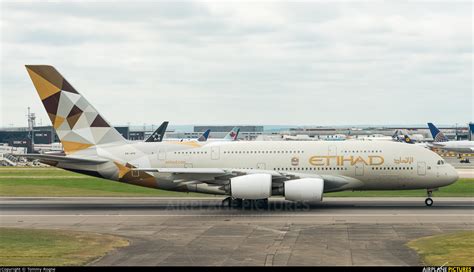
One notable destination on Etihad’s list is Toronto Pearson. The presence of the A380 here stands out as the least common among the Middle Eastern carriers, offering Canadian travellers increased capacity and a premium-heavy product unique in the region. The combination of diaspora travel, business ties, and tourism demand sustains the route’s viability and makes Toronto an intriguing part of Etihad’s December schedule.
Why the A380 Still Thrives in the Middle East
The sustained presence of the A380 across these three carriers demonstrates how geography and hub-focused strategies keep the aircraft economically relevant. While many airlines worldwide retired their superjumbos, the Middle Eastern Big Three continue leveraging their dense connecting networks to fill seats year-round. Their hubs sit at the crossroads of continents, making ultra-large aircraft practical for markets that require both scale and efficiency.
Each airline’s A380 routes reflect individual brand philosophies. Emirates uses the aircraft aggressively to dominate high-traffic corridors. Qatar Airways adopts a targeted, yield-driven approach that amplifies key markets. Etihad applies the A380 selectively, focusing on routes where its premium-heavy interior can perform at its best.
The result is a region where the A380 remains not only operationally viable but deeply woven into the identity of these carriers. Passengers continue seeking the comfort and spaciousness the aircraft offers, and airports benefit from the efficient transfer of large volumes of travellers through well-designed hubs. As global travel demand continues to rebound, the superjumbo’s presence in the Middle East shows no sign of fading — instead, it stands as a testament to the enduring power of strategic long-haul aviation planning.