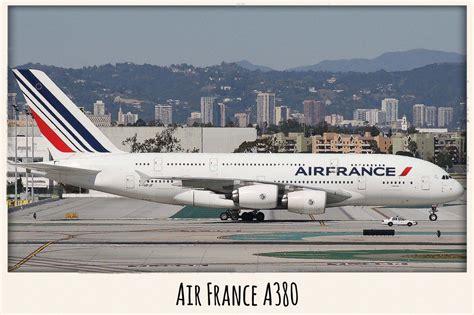
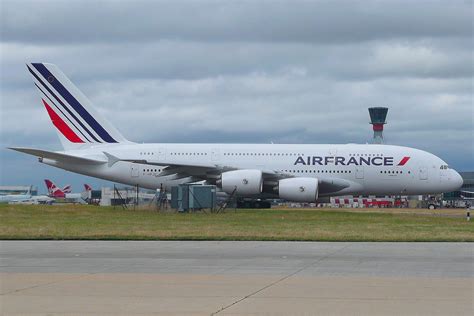
Air France’s relationship with the Airbus A380 was always a fascinating contradiction—ambitious in scale, yet restrained in commitment. With just ten superjumbos in its fleet, the French flag carrier never fully embraced the aircraft as a long-term flagship. Yet, between 2009 and early 2020, the airline quietly built an impressive global network of 18 A380-operated routes, connecting Paris Charles de Gaulle to some of the world’s most strategic long-haul markets.
The retirement of the A380 fleet marked the end of an era not only for Air France but also for a generation of aviation defined by scale, luxury, and sheer engineering audacity. While other carriers turned the double-decker into a symbol of prestige, Air France treated it more like a powerful but temporary tool—one that served its purpose before efficiency and economics dictated a shift.
The Rise of Air France’s Airbus A380 Operations
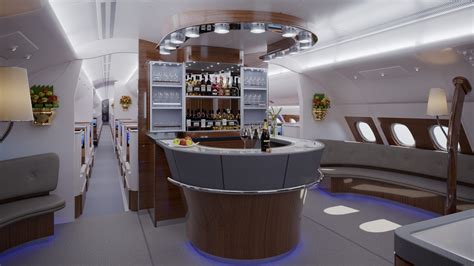
Air France took delivery of its first A380, registered F-HPJA, in October 2009. Within weeks, the aircraft entered service on the iconic Paris CDG–New York JFK route, instantly signaling the airline’s entry into the ultra-high-capacity segment. Configured with 516 seats across four classes, the aircraft was designed to balance premium comfort with mass transport.
Despite its relatively small fleet, Air France quickly scaled operations. From November 2009 through March 2020, the airline operated 20,193 A380 departures from Paris CDG, ranking it among the top global operators of the type. That level of utilization, achieved with only ten aircraft, reflects a carefully optimized deployment strategy focused on high-demand corridors.
Full List of Air France A380 Routes
Air France deployed its A380 exclusively from its Paris hub, connecting to a diverse mix of intercontinental destinations. The following routes define the airline’s complete A380 network:
- New York JFK (2009–2020)
- Johannesburg (2010–2020)
- Los Angeles (2012–2020)
- Washington Dulles (2011–2020)
- Shanghai Pudong (2013–2020)
- Mexico City (2016–2020)
- San Francisco (2011; 2014–2019)
- Tokyo Narita (2010–2014)
- Miami (2014–2020)
- Abidjan (2014–2020)
- Hong Kong (2014–2017)
- Montreal (2010–2012, plus one-off in 2010)
- Singapore (2012–2013)
- Atlanta (2017 one-off; 2019 regular service)
- Dubai (2011–2012; 2018–2019)
- London Heathrow (2010, training flights)
- Cancun (single flight in 2013)
- Rio de Janeiro Galeão (single flight in 2016)
These routes reveal a pattern: dense, high-yield markets combined with occasional symbolic or experimental deployments.
Strategic Highlights: Where the A380 Truly Mattered
Among all destinations, New York JFK stood out as the backbone of Air France’s A380 operations, with over 4,000 departures. This transatlantic corridor consistently justified the aircraft’s massive capacity, blending business travel with steady leisure demand.
Equally important was Johannesburg, which became one of the airline’s most reliable long-haul routes for the A380. Its combination of distance, limited competition, and strong premium demand made it an ideal candidate for high-capacity service.
Meanwhile, destinations like Los Angeles, Shanghai, and Mexico City demonstrated the aircraft’s versatility across continents. These routes required not only volume but also operational efficiency over long distances—something the A380 delivered when demand aligned.
Unique Destinations: Airports Exclusively Served by Air France’s A380
One of the most intriguing aspects of Air France’s A380 network lies in its exclusivity. The airline was the only A380 operator at several airports, including:
- Abidjan
- Mexico City
- Montreal
- Cancun (one-off)
- Rio de Janeiro Galeão (one-off)
These routes highlight Air France’s willingness to deploy the aircraft in unconventional markets. Abidjan, in particular, stands out as a high-yield African destination with strong historical and economic ties to France. The presence of the A380 there underscored the route’s importance and profitability.
Peak Operations: When the Superjumbo Ruled Paris CDG
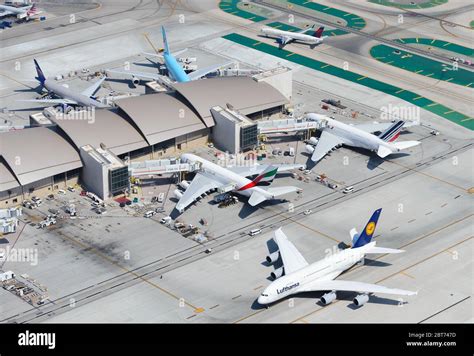
At its peak, Air France operated up to eight daily A380 departures from Paris Charles de Gaulle. This level of activity was most prominent between 2015 and 2019, following the delivery of the airline’s final A380 in 2014.
A snapshot from August 13, 2017, illustrates the intensity of operations. On that single day, A380 flights departed to San Francisco, Los Angeles, Mexico City, Washington Dulles, New York (twice), Abidjan, and Shanghai—all within a carefully orchestrated schedule.
Such density transformed the A380 from a novelty into a core operational asset, even if only for a limited period.
Why Air France Retired the A380 Early
Despite its operational success on select routes, the A380 never aligned with Air France’s long-term strategy. The aircraft’s high operating costs, limited flexibility, and dependency on consistently high load factors made it increasingly difficult to justify.
The shift toward twin-engine, fuel-efficient aircraft like the Boeing 787 and Airbus A350 offered a more adaptable model. These jets allowed Air France to maintain frequency while reducing risk—an approach better suited to evolving market conditions.
By early 2020, all ten A380s were retired, bringing a swift and definitive end to the airline’s superjumbo chapter.
A Legacy Defined by Precision, Not Scale
Air France’s A380 story is not one of dominance, but of precision deployment. With only ten aircraft, the airline managed to build a network spanning 18 routes, operate tens of thousands of flights, and even carve out unique positions in underserved markets.
The result is a legacy that feels both understated and remarkable. The A380 may no longer grace Air France’s fleet, but its imprint on global aviation—and on the airline’s long-haul strategy—remains unmistakable.