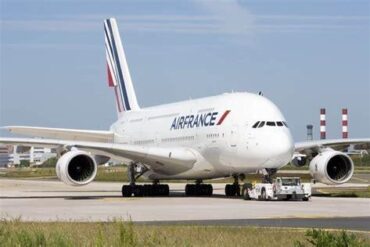
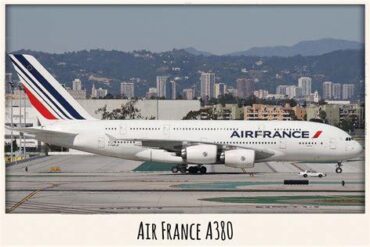
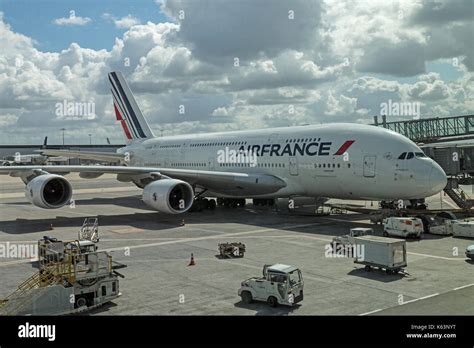
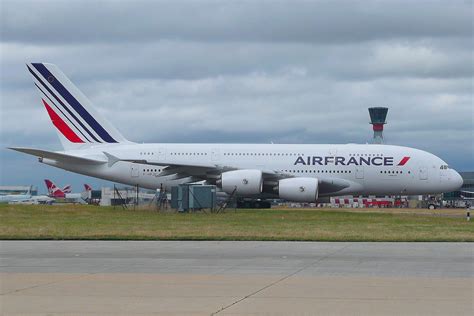
Air France’s once-celebrated Airbus A380 fleet has officially faded into the history books, and the reasoning behind its retirement is now clearer than ever. Speaking candidly, Air France CEO Ben Smith confirmed that the airline’s flagship double-decker aircraft were “not producing profits”, highlighting a tough economic reality behind one of aviation’s most iconic jets.
The Fall of the Flying Giant: High Costs, Low Returns
When the Airbus A380 took flight in 2005, it was hailed as a marvel of modern engineering — capable of carrying over 800 passengers in an all-economy layout and boasting luxurious multi-class configurations. Yet, despite its technical brilliance, Air France’s experience with the aircraft turned into a financial burden.
According to Smith, each aircraft would have required a massive €50 to €60 million in upgrades — particularly in engine overhauls and cabin retrofits — to remain competitive in the post-pandemic market. This level of reinvestment, at a time when leaner and more fuel-efficient aircraft like the Airbus A350 were outperforming the A380 in operating economics, simply did not add up for the French flag carrier.
A Symbol of Prestige That Failed Profitability Tests
Air France initially placed an order for ten A380s during the 2001 Paris Air Show, eager to join other global full-service carriers in operating the world’s largest commercial aircraft. Deliveries began in 2009, but within just over a decade, the airline became the first major carrier to permanently retire the A380, accelerating the phaseout during the COVID-19 pandemic.
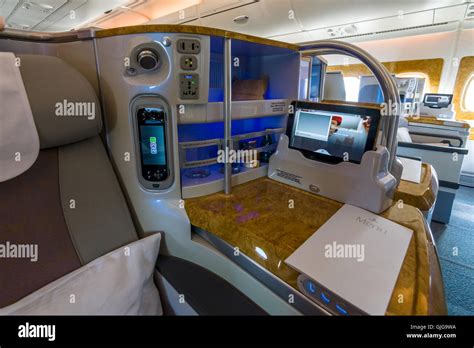
Passenger sentiment toward the aircraft remained overwhelmingly positive. Spacious interiors, quieter cabins, and the novelty of the double-decker layout made it a favorite among frequent fliers. But these strengths weren’t enough to offset its high fuel consumption, maintenance complexity, and limited compatibility with many airports.
An Uneven Route Network: Where the A380 Actually Flew
Between 2009 and 2020, Air France deployed the A380 to 18 destinations worldwide, all originating from its main hub at Paris Charles de Gaulle (CDG). The route network included long-haul heavyweights and surprising short-haul exceptions.
For instance, in 2010, Air France briefly operated the A380 between Paris and London Heathrow (LHR) — a route spanning just 188 nautical miles — likely for pilot training purposes. However, the majority of deployments were transcontinental, including regular flights to New York JFK, Los Angeles, and Johannesburg.
The A380 was flown on these major routes:
- New York (JFK) – the most frequently served destination with 4,062 flights
- Johannesburg (JNB) – second most popular with 3,052 flights
- Los Angeles (LAX) – third with 2,824 flights
- Washington D.C. (IAD) – fourth with 1,656 flights
- Shanghai Pudong (PVG) – fifth with 1,603 flights
Other destinations included Dubai, Miami, Tokyo Narita, and Mexico City, with some routes operated only on rare occasions. This eclectic route map reflects an attempt to balance the A380’s massive capacity with fluctuating demand across diverse markets.
The Economics of Obsolescence: Why It Couldn’t Survive
The A380’s undoing within Air France was not driven by technological failure, but by economic misalignment. At a time when environmental pressures and cost-efficiency dominate airline strategy, the A380 struggled on both counts.
Its four-engine layout is far less fuel-efficient than modern twin-engine widebodies like the A350 or Boeing 787. Additionally, the superjumbo’s size made it difficult to achieve high load factors outside of peak seasons and key trunk routes. Any drop in passenger numbers — such as those experienced during COVID-19 — quickly turned an A380 flight into a money-losing operation.
Ben Smith emphasized that while the aircraft may have delivered a solid passenger experience, it did not meet the strategic or financial needs of the airline in today’s environment.
A350: The New Workhorse of the French Fleet
As of today, Air France has 37 Airbus A350s in active service, with four more on order. With an average age of just 2.8 years, the A350 fleet has proven highly efficient, reliable, and adaptable. These aircraft have taken over many long-haul missions once served by the A380, offering reduced fuel burn, lower emissions, and greater flexibility in route planning.
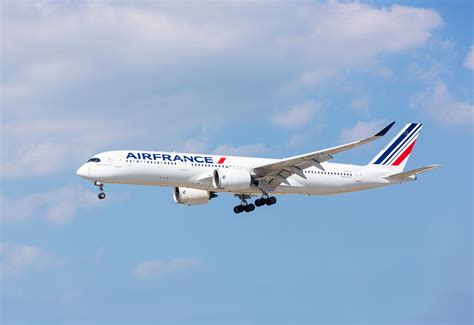
Unlike the A380, which required airports to invest in specialized gates and runways, the A350 operates seamlessly at most international hubs. The decision to expand the A350 fleet — and to invest heavily in premium cabins and passenger experience onboard — reflects a strategic pivot toward sustainable growth.
Lessons from the A380 Era: Ambition vs. Adaptability
The Air France A380 chapter offers a powerful case study in the limits of aviation ambition. While Airbus envisioned a future dominated by mega-hub airports and ultra-high-capacity aircraft, the market reality shifted toward point-to-point travel, enabled by long-range, smaller aircraft.
Air France’s experience underscores the risk of investing heavily in prestige aircraft without flexible cost structures. The A380 simply could not adapt fast enough to evolving demand patterns, particularly as low-cost carriers and fuel efficiency reshaped the aviation landscape.
Smith’s remarks also clarify that Air France’s exit from the A380 program was not a reluctant retreat but a calculated decision. The A350’s success in the airline’s network reinforces that even legacy carriers must prioritize adaptability over nostalgia.
The Future of the Superjumbo: A Shrinking Fleet Worldwide
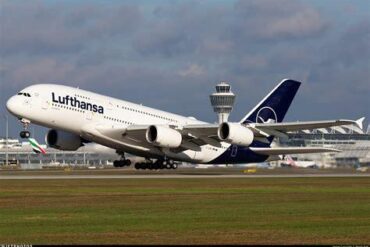
Globally, the A380’s presence is shrinking. Airlines like Qatar Airways, Singapore Airlines, and Lufthansa have brought some units back into service temporarily to meet post-pandemic demand. However, none have committed to expanding A380 operations long-term.
Even Emirates, the largest A380 operator, is gradually retiring older units, and Airbus has already ceased production. For Air France, the decision to retire the A380 early positioned it ahead of the curve, especially as competitors now face the mounting costs of keeping their own superjumbos operational.
Conclusion: End of an Icon, Rise of Efficiency
Air France’s decision to phase out the A380 was driven by hard numbers, not sentiment. While the aircraft offered prestige and comfort, it could not keep up with the airline’s economic needs and sustainability goals. The move toward a more modern fleet — spearheaded by the Airbus A350 — signals a pragmatic shift for the airline, one that aligns with global trends in fuel efficiency, emissions reduction, and agile network planning.
For aviation enthusiasts, the sight of the A380 in Air France colors may be missed, but for the airline’s bottom line and future competitiveness, its retirement was not just understandable — it was essential.