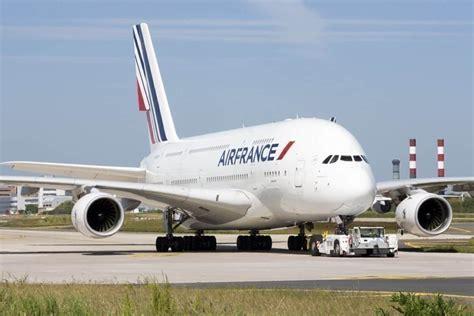
Air France’s decision to fully withdraw the Airbus A380 from its long-haul fleet marked an unmistakable shift in strategy—one shaped by economics, evolving customer expectations, and the hard reality that even aviation’s most majestic aircraft can become a liability. The industry often romanticizes the A380 as the King of the Skies, yet for Air France, the aircraft never fit the business model that eventually defined its modern era.
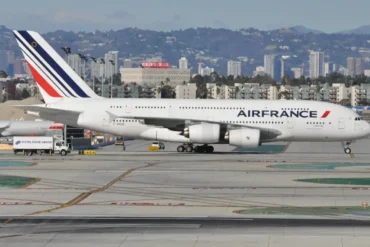
The airline entered the A380 program with confidence when deliveries began in 2009. Paris, as both a global business hub and a magnet for international tourism, seemed the perfect stage for this enormous double-decker. The aircraft offered nine La Première seats, 80 business class seats, and capacity for more than 500 passengers. On paper, this looked like a long-term flagship built to elevate the brand. The truth proved more complicated.
By the time the COVID-19 crisis arrived, demand had collapsed by over 90%, turning the thirsty four-engine superjumbo into a financial weight too heavy to justify. The pandemic merely accelerated a retirement already planned for 2022, but the underlying reasons ran much deeper.
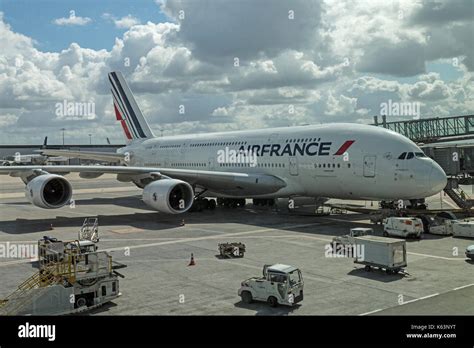
The Fleet That Never Reached Its Promise
Air France operated only ten A380-800s—a relatively small subfleet compared to Emirates, Lufthansa, or Singapore Airlines. Small fleets create notoriously high per-unit operating and maintenance costs, and this became one of the early cracks in the A380’s foundation at Air France. Each aircraft required specialized support, costly engine maintenance for the GP7200 powerplants, and significant crew investments.
Although Airbus marketed the A380 as a potential successor to the Boeing 747-400, Air France didn’t use it that way. Its 747s had already been replaced by Boeing 777-300ERs in denser configurations. The A380, instead, became a standalone experiment—an expensive outlier that never integrated smoothly into the broader long-haul network.
Network Limitations And The Battle To Fill 516 Seats
The romantic idea of flying the world’s largest airliner only works when demand supports it. Air France quickly discovered how narrow that margin truly was. Routes like New York, Los Angeles, Johannesburg, and Mexico City supported the superjumbo consistently. Others—such as Singapore, Montreal, Washington, Dubai, Atlanta, and Hong Kong—proved far more volatile.
European carriers depend heavily on North American transatlantic demand, which fluctuates dramatically between seasons. Winters routinely dropped load factors, leaving the airline hunting for warm-weather destinations that could handle both premium and high-volume leisure traffic. Very few matched the A380’s unique appetite for passengers.
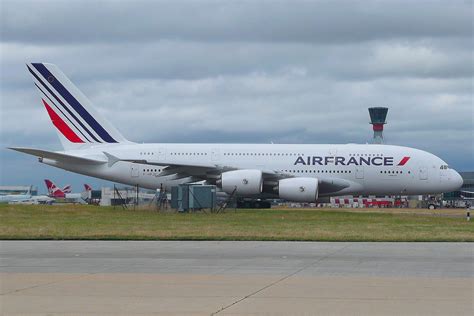
A Shift Toward Premium Strategy
As the 2010s progressed, Air France reimagined its identity. Losses earlier in the decade triggered a sweeping transformation centered on premium service. La Première was redesigned to attract ultra-high-net-worth travelers. Business class became the heart of the long-haul product. Premium economy seating grew more important. And economy was deliberately sized down to avoid low-yield reliance.
The A380, with its huge cabin and oversized economy section, contradicted this strategy. The nine-seat La Première cabin was too large for an increasingly exclusive flagship product. Its 80-seat business class, outdated and arranged in a six-abreast layout, failed to meet the rising global standard of direct-aisle-access suites. Retrofitting would have required over $50 million per aircraft, and even then, the fundamental capacity challenge remained.
The Financial Weight Of Operating The Superjumbo
The A380’s charm comes with an expensive fuel bill. Four engines—each older-generation technology compared to modern A350 and 787 powerplants—burn far more fuel than today’s twinjets. And while cockpit commonality helped with training, crew compensation, parts, and maintenance costs remained exceptionally high.
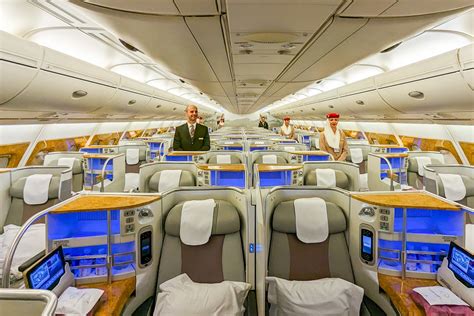
The sheer size of the airframe also made cabin modernization costly. As Air France invested heavily in renewing interiors across the 777 and 787 fleets, the A380s lagged behind with aging seats, limited privacy, and a premium product that no longer reflected the airline’s aspirations. The aircraft, though adored for its quiet ride, became the weakest link in the brand experience.
A Problem Larger Than Air France Alone
Much of the A380’s struggle wasn’t specific to one airline. The aircraft was engineered as a shrink version of a planned—but canceled—stretched variant, leaving it with an oversized wing and higher-than-necessary structural weight. Even when full, it was often less fuel-efficient per seat than modern 777s, and dramatically less efficient than the A350 or 787.
Air France rarely used the jet’s full range, and the airline couldn’t consistently fill its enormous economy cabin without depressing yields. The global shift toward smaller, more flexible long-haul aircraft sealed the superjumbo’s fate.
The Retirement Arrives Early
When COVID-19 devastated international travel, Air France seized the moment. With global demand collapsing, the A380 became impossible to justify. Its retirement, once planned for 2022, was moved forward immediately. The airline publicly affirmed that it had no intention of bringing the aircraft back—unlike Lufthansa, Qatar Airways, or Korean Air, which reactivated their A380s due to new aircraft delays.
The choice proved decisive. Today, Air France operates one of Europe’s most modern long-haul fleets, centered on the Boeing 777 and Airbus A350—both far more aligned with the company’s premium focus, sustainability commitments, and network flexibility.
A Majestic Aircraft That Couldn’t Find Its Place
Passengers around the world still adore the A380 for its vast cabin, whisper-quiet interior, and unrivaled comfort. Yet for Air France, the aircraft became a mismatch: too large, too costly, too inflexible, and too outdated to carry the brand into its next chapter.
By retiring the A380 early, the airline shed a financial burden and aligned its fleet with a strategy driven by premium service, efficiency, and reliability. The world may remember the A380 as an engineering marvel, but Air France remembers it as a symbol of another era—one that ultimately had to be left behind as the skies evolved.