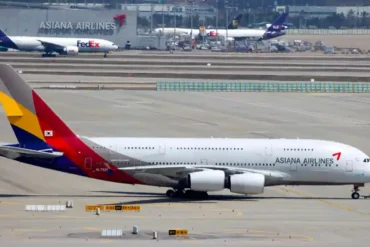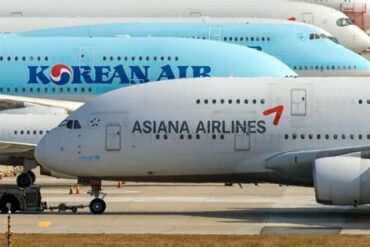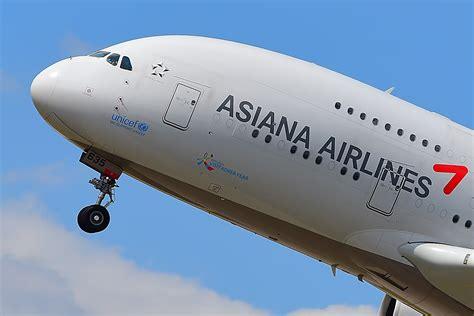
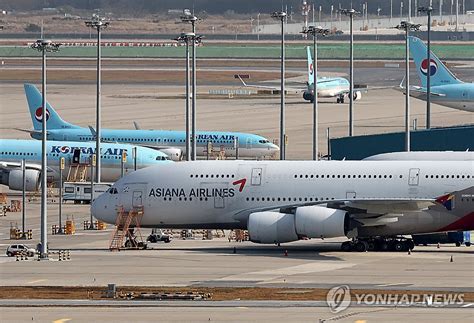
South Korea’s Asiana Airlines is accelerating the retirement of its Airbus A380 flights between Seoul-Incheon (ICN) and New York-JFK, cutting the iconic double-decker from the route nearly a month earlier than previously planned. The move, which will see A380 operations end on September 4 rather than October 1, marks the early conclusion of a short-lived summer resurgence of the aircraft on this transpacific route.
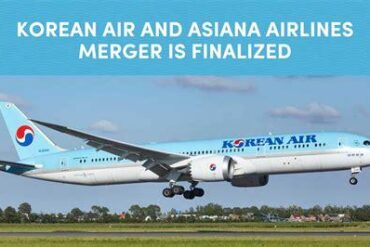
The decision, sourced from aviation data provider Cirium, comes as the airline adjusts its fleet strategy amid a looming merger with Korean Air, signaling the gradual wind-down of Asiana’s A380 operations and foreshadowing wider changes to its long-haul offerings.
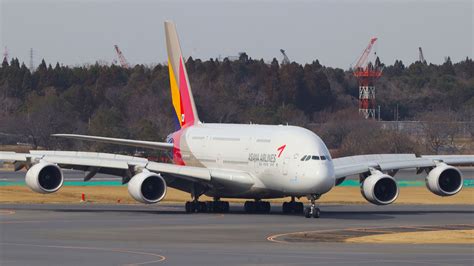
The A380’s Short Return to JFK After a Six-Year Hiatus
The Airbus A380, once a symbol of premium, long-haul travel, had been absent from Asiana’s New York schedule since October 2019. Its return in May 2024 was seen as a bold gesture, particularly during the high-demand summer season. The airline had planned to operate 91 round-trip flights using the A380 during this period, offering approximately 45,045 seats in each direction.
On the ICN-JFK route, the A380 operated as flight OZ224, departing Incheon at 21:05 KST and arriving in New York at 23:00 EDT after a 14-hour journey. The return leg, OZ223, would leave JFK at 01:30 and arrive back in South Korea at 06:10 after a 13-hour flight.
This A380 service complemented a second daily flight using the Airbus A350-900, which offers 311 seats and flies as OZ222 from Incheon at 09:40, arriving in New York by 10:55, and returning as OZ221 at 12:55.
Fleet Rationalization Amid Korean Air Merger
Asiana currently operates a fleet of six Airbus A380-800 aircraft, all of which are expected to be absorbed by Korean Air following the long-delayed but now moving merger. While it remains unconfirmed whether Korean Air will integrate these jets into its own A380 fleet or phase them out, the consolidation is already reshaping Asiana’s network planning.
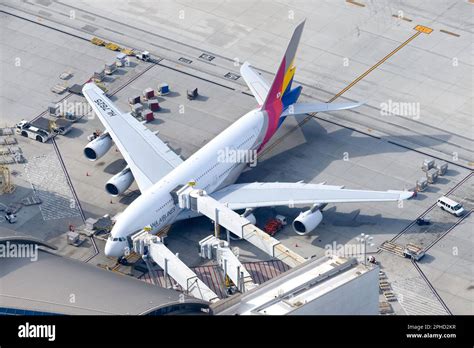
Asiana’s A380s were delivered between 2014 and 2016, with an average age of 10.2 years. They were temporarily sidelined during the COVID-19 pandemic, with two aircraft (registrations HL7634 and HL7635) placed in storage for more than two years. All six jets are configured in a two-class layout after a 2019 retrofit that eliminated First Class in favor of Business Suites, a move reflecting broader industry trends toward higher-yield business products over increasingly costly first-class cabins.
A380 Fleet Overview:
- HL7625 – Delivered May 29, 2014
- HL7626 – Delivered July 24, 2014
- HL7634 – Delivered May 7, 2015
- HL7635 – Delivered June 8, 2015
- HL7640 – Delivered October 25, 2016
- HL7641 – Delivered December 22, 2016
While the A380 was primarily utilized on long-haul trunk routes to New York and Los Angeles, it also flew to Frankfurt, Tokyo, Taipei, and Bangkok, offering large-scale capacity on popular regional and intercontinental routes. However, the twin-engine A350-900, which is lighter, more fuel-efficient, and less costly to operate, is likely to replace many of these roles moving forward.
Passenger Experience Onboard the Asiana A380
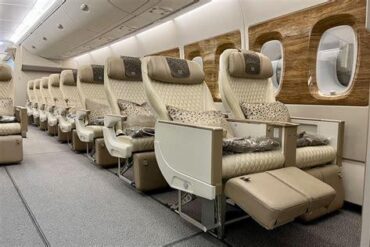
For travelers lucky enough to have flown aboard the Asiana A380 during its final months on the New York route, the experience blended space, comfort, and Korean hospitality. The aircraft featured 12 Business Suites located on the upper deck, each offering privacy and full-flat recline with direct aisle access. The remaining cabin was filled with spacious economy seating, divided between the main and upper decks.
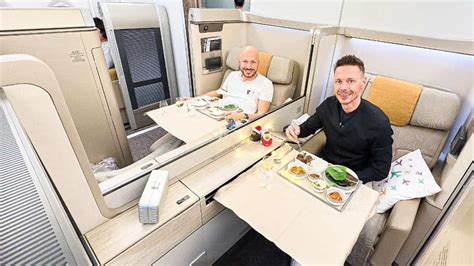
Standard services included checked baggage, hot towel service, and inflight meals showcasing Korean specialties like bibimbap and galbi, as well as Western options. Seatback entertainment offered a wide array of movies, TV shows, music, and games, while satellite phones – unique to the A380 – were available for $7 per minute. Free seat-to-seat calling was a small but convenient perk for groups traveling together.
Although no longer a true “flagship” product due to the removal of First Class, the A380 maintained its allure as one of the few aircraft offering multiple decks and whisper-quiet cabins — a feature that continues to attract aviation enthusiasts worldwide.
Industry and Strategic Implications
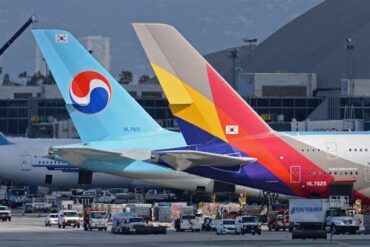
The early cessation of Asiana’s A380 JFK service is more than a schedule adjustment; it’s a clear signal of changing priorities and operational realities. The upcoming merger with Korean Air, which has faced regulatory hurdles and delays since its announcement in 2020, is now gaining momentum. With Korean Air also operating its own fleet of A380s and already announcing a complete retirement of the type by 2026, it’s increasingly unlikely that these aircraft will remain in frontline service much longer.
For Asiana, the phaseout aligns with a strategic focus on fleet simplification and route optimization. The A380, while impressive, comes with high fuel burn and airport fees. By contrast, newer aircraft like the A350-900 and the Boeing 787-9 offer a better mix of efficiency, range, and passenger comfort. Moreover, the flexibility of these aircraft allows for year-round service without relying on the seasonal demand spikes needed to justify operating a near-500-seat aircraft.
The Final Curtain for the A380 Era in South Korea?
With both Korean Air and Asiana gradually removing the A380 from active duty, the double-decker’s days in South Korea appear numbered. Once seen as the future of long-haul travel, the aircraft is now mostly cherished by aviation enthusiasts and a shrinking pool of airlines still willing to operate it — notably Emirates, Singapore Airlines, and British Airways.
Asiana’s accelerated withdrawal from JFK also raises questions about the broader viability of the A380 on routes not supported by mega-hub connections or robust premium demand. While the aircraft proved valuable in handling summer capacity surges, its limited deployment window highlights the challenges in operating such a behemoth profitably outside peak seasons.
Looking Ahead: A More Flexible, Efficient Future
The shift to all A350 service on the New York route represents a strategic pivot toward sustainability, profitability, and operational consistency. The A350, with its carbon-fiber fuselage, next-gen Rolls-Royce engines, and reduced operating costs, is better suited to evolving passenger trends and environmental pressures. It also reflects the industry’s post-pandemic trajectory, where nimbleness and cost discipline are critical.
Asiana’s move also aligns with consumer behavior, where demand for direct flights, modern cabin experiences, and efficient connections outweighs the novelty of flying aboard a massive aircraft. For most travelers, the loss of the A380 will barely register. But for aviation enthusiasts and longtime fans of the aircraft, its departure from JFK will mark the end of a captivating, if fleeting, chapter.
Conclusion: A Short Return, A Long Goodbye
Asiana Airlines’ decision to end A380 flights to New York-JFK earlier than expected underscores the fleet and strategic transformations underway as it prepares for full integration into Korean Air. It also marks the slow sunset of the Airbus A380 in South Korean skies — an aircraft that once embodied ambition and grandeur, now yielding to the realities of modern air travel.
While Asiana’s A380 enjoyed a brief return to JFK, it was perhaps a final bow rather than a comeback. As September 4 draws closer, the double-decker’s engines will spool up on the JFK runway one last time, climbing into the night sky — and into memory.