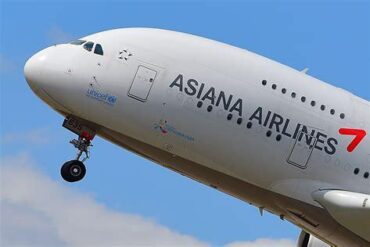
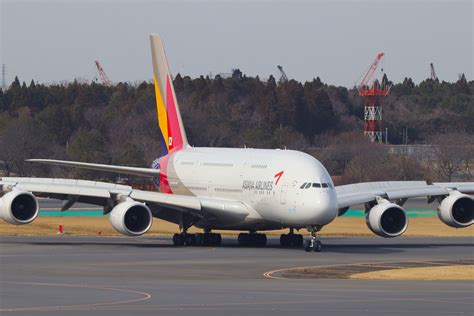
Asiana Airlines has entered a decisive new phase in its long-haul strategy, quietly withdrawing its Airbus A380 operations from five distinct routes while narrowing the future footprint of the iconic double-decker. The move reflects evolving demand patterns, operational recalibration, and the airline’s gradual transition under the broader umbrella of Korean Air.
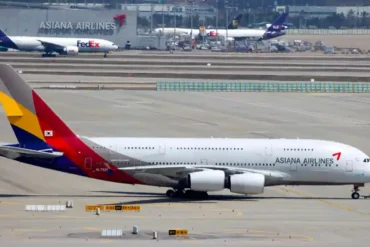
The South Korean carrier remains one of the few global operators of the Airbus A380, maintaining a fleet of six aircraft with an average age of just over 11 years. Delivered between 2014 and 2016, these superjumbos once symbolized Asiana’s premium long-haul ambitions. Today, however, their deployment is becoming increasingly selective, signaling a shift away from broad network coverage toward high-density, high-yield trunk routes.
Asiana’s A380 story began in June 2014, when it launched its inaugural commercial flights from Seoul Incheon to Hong Kong and Tokyo Narita. At the time, the airline joined an elite group of Northeast Asian carriers operating the world’s largest passenger aircraft, positioning itself as a serious player in global aviation.
Five Routes Quietly Dropped From A380 Operations
A detailed review of operational data reveals that five routes have now lost regular A380 service. These are not minor adjustments but rather a clear indication of where demand no longer justifies deploying a 495-seat aircraft.
The affected routes include:
- Frankfurt
- Hong Kong
- Osaka Kansai
- Barcelona
- Amman (a one-off charter service)
Each route tells a slightly different story. Frankfurt, once a cornerstone of Asiana’s European network, accounted for 1,202 A380 departures, making it one of the aircraft’s most frequently served destinations. Hong Kong followed with 899 departures, while Osaka Kansai, Barcelona, and Amman saw far more limited or irregular use.
The decision to discontinue A380 service on these routes reflects a combination of demand fluctuations, operational efficiency concerns, and competitive pressures. Notably, some of these destinations—such as Hong Kong and Osaka—were among the airline’s earliest A380 markets, underscoring how dramatically network priorities have shifted over time.
Frankfurt: A High-Profile Exit From a Strategic Market
Among the discontinued routes, Frankfurt stands out as the most significant. The German financial hub has long been a vital link between South Korea and Europe, driven by strong business ties and a substantial Korean expatriate community.
Passenger data highlights the importance of this corridor, with approximately 462,000 round-trip travelers annually, placing Frankfurt just behind Paris as Seoul’s busiest European destination. Historically, the route even supported multiple A380 operators simultaneously, including Lufthansa and Korean Air—a rare occurrence in global aviation.
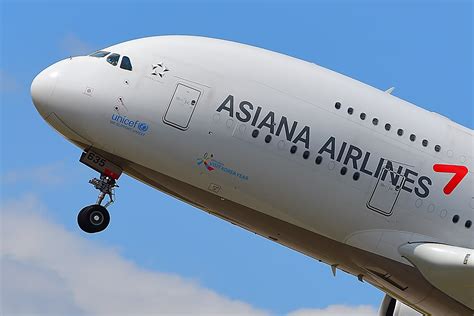
Asiana operated the A380 on a daily year-round basis between 2017 and 2020, later reintroducing it sporadically in 2023, 2024, and briefly in 2025. Despite this intermittent revival, the aircraft has now been removed from the schedule again, leaving open the question of whether it will ever return.
The withdrawal suggests that even high-demand markets are no longer immune to fleet right-sizing strategies, especially when smaller, more fuel-efficient aircraft can deliver comparable profitability with lower risk.
Inside Asiana’s A380: High Capacity, Changing Value
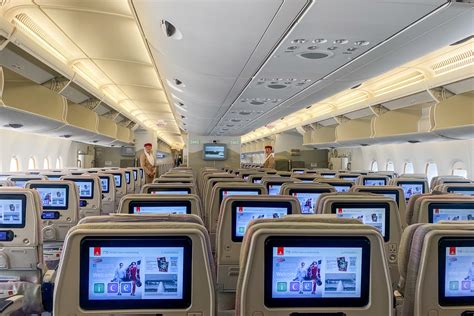
Each Asiana A380 is configured with 495 seats, emphasizing capacity over exclusivity. The layout includes:
- 12 enclosed business suites
- 66 additional lie-flat business seats
- 417 economy seats across two decks
While spacious by most standards, this configuration is notably denser than Korean Air’s A380s, which prioritize premium seating with fewer total passengers. This difference highlights a key challenge: filling nearly 500 seats consistently is increasingly difficult, especially outside peak routes.
As fuel efficiency, flexibility, and frequency become more critical, the A380’s traditional strengths—sheer capacity and onboard comfort—are no longer sufficient to justify widespread deployment.
What Remains: A Reduced but Focused A380 Network
Looking ahead to the remainder of 2026, Asiana’s A380 operations will be concentrated on just six routes, all of which represent either high-demand long-haul markets or strategically important regional links.
These include Los Angeles, New York JFK, Bangkok, Tokyo Narita, Sydney, and Taipei. Even within this reduced network, capacity is being trimmed. For example, flights to Tokyo and Taipei have seen significant frequency reductions compared to 2025, indicating a broader pullback rather than a simple reshuffle.
Interestingly, some of the remaining routes are remarkably short for such a large aircraft. The Seoul–Tokyo Narita sector, at just 680 nautical miles, stands as one of the shortest A380 routes globally, illustrating how airlines sometimes deploy the aircraft for slot optimization and high-density regional demand rather than pure long-haul efficiency.
A Gradual Farewell to the Superjumbo Era
Asiana has signaled that its A380 fleet will likely remain in service until around 2030, but the trajectory is clear. The aircraft is transitioning from a network workhorse to a specialized tool used sparingly on select routes.
This shift mirrors a broader industry trend. Airlines worldwide are reevaluating the role of large four-engine aircraft in favor of next-generation twin-engine jets that offer greater flexibility and lower operating costs.
For Asiana, the withdrawal from five routes is more than a scheduling adjustment—it marks a strategic pivot away from scale toward precision, where capacity is carefully matched to demand rather than projected ambition.