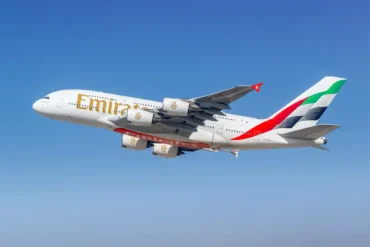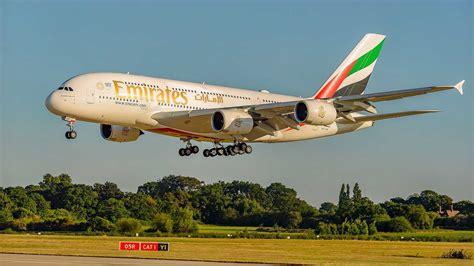
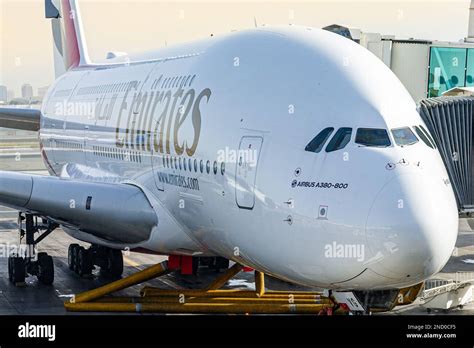
As the global aviation market inches toward peak summer travel, Emirates is making a calculated adjustment that signals both tactical restraint and long-term ambition. The Dubai-based carrier has confirmed the removal of its flagship Airbus A380 from six major international routes throughout June, a move that reflects shifting demand patterns, fleet optimization, and an aggressive cabin retrofit program reshaping the airline’s premium offering.
Rather than a blanket capacity reduction, this decision reveals a nuanced balancing act. Emirates is not retreating—it is recalibrating, ensuring that aircraft deployment aligns precisely with passenger demand while simultaneously upgrading its most iconic product.
Six Major Routes Lose A380 Service in June
According to the latest scheduling data, Emirates will suspend A380 operations on routes connecting Dubai to:
- Copenhagen (CPH)
- Osaka Kansai (KIX)
- Washington Dulles (IAD)
- Munich (MUC)
- Manchester (MAN)
- London Gatwick (LGW)
These routes were originally scheduled to see 286 one-way A380 flights in June. That entire block has now been replaced with smaller widebody aircraft, primarily the Boeing 777 and, on select routes, the newer Airbus A350.
This is not a minor tweak. It represents a deliberate shift away from ultra-high-capacity operations on routes where demand does not justify the economics of a 500+ seat aircraft.
Why the A380 Is Being Temporarily Grounded on These Routes
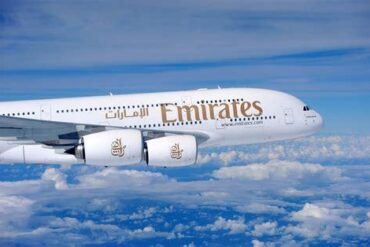
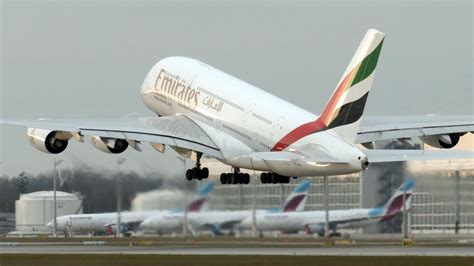
The Airbus A380 remains a marvel of engineering, but its size is both its strength and its limitation. Operating such a large aircraft requires consistently high passenger loads to remain profitable. In June, several factors are undermining that equation.
First, regional geopolitical tensions have subtly altered travel demand across certain corridors. While not catastrophic, the impact has been enough to soften bookings on specific long-haul routes.
Second, Emirates is pursuing a classic airline strategy: capacity right-sizing. By deploying smaller aircraft like the Boeing 777, the airline can:
- Maintain route frequency
- Improve load factors
- Reduce fuel burn per flight
- Protect yield and profitability
This is not about cutting service—it’s about flying smarter.
The Hidden Driver: A380 Cabin Retrofit Program
Beyond demand fluctuations, a more strategic factor is at play. Emirates is currently in the middle of an ambitious A380 cabin retrofit program, targeting a subfleet of 15 high-density aircraft.
These aircraft were originally configured with a staggering 615 seats, prioritizing volume over premium space. That philosophy is now being reversed.
The retrofit introduces:
- 56 premium economy seats
- 18 additional business class seats
- Removal of approximately 120 economy seats
The result is a redesigned aircraft with 569 total seats, but significantly higher revenue potential per flight.
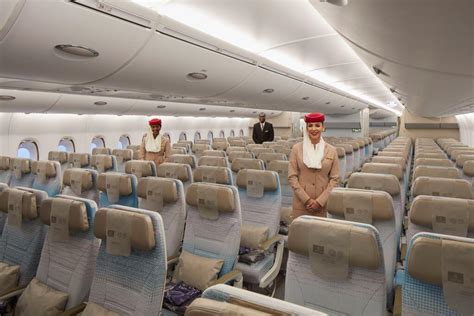
This transformation reflects a broader industry shift: premium cabins are outperforming economy in revenue generation, particularly on long-haul routes.
Each retrofit takes roughly 30 days per aircraft, and with multiple airframes undergoing upgrades simultaneously, temporary capacity gaps are inevitable. The June schedule adjustments are, in part, a direct consequence of this fleet modernization effort.
Why These Specific Routes Were Affected
Not all routes are equally impacted by the retrofit program. Emirates has historically deployed its high-density A380 subfleet on a consistent set of destinations, including:
- Copenhagen
- London Gatwick
- Manchester
This explains why three of the six affected routes overlap directly with the retrofit-heavy subfleet. As these aircraft are pulled from service, replacements must come from the broader fleet—often smaller or differently configured aircraft.
Other routes, such as Washington Dulles and Osaka, are more sensitive to seasonal demand variability, making them prime candidates for temporary down-gauging.
A Strategic Shift Toward Premium Revenue
This is not merely an operational adjustment—it is a strategic pivot. Emirates is doubling down on the idea that fewer seats can generate more revenue, provided those seats are premium.
By increasing the proportion of business and premium economy seating, the airline is positioning itself to capture:
- Corporate travel demand
- High-yield leisure passengers
- Travelers seeking upgraded long-haul experiences
In an era where travelers are increasingly willing to pay for comfort, this move aligns perfectly with market trends.
Network Resilience Despite Regional Disruptions
Despite these adjustments, Emirates continues to demonstrate remarkable operational resilience. The airline has achieved a network recovery exceeding 96%, outperforming many regional competitors.
This recovery is closely tied to the rapid reopening of airspace in the United Arab Emirates, which allowed Emirates to restore connectivity faster than airlines based in more restricted regions.
Compared to its peers:
- Etihad Airways has recovered approximately 70–80% of operations
- Qatar Airways remains in the 60–65% range
- Other Gulf carriers are still catching up
Emirates’ ability to adapt quickly—whether by rerouting flights, adjusting capacity, or upgrading cabins—has solidified its position as one of the most agile global carriers.
What This Means for Passengers
For travelers, the immediate impact is subtle but meaningful. Passengers on affected routes may notice:
- A switch from A380 to Boeing 777 or Airbus A350
- Different cabin layouts and onboard amenities
- Potentially fewer seats available on certain flights
However, the long-term payoff is significant. As retrofitted A380s return to service, passengers can expect:
- Enhanced premium economy cabins
- Expanded business class seating
- A more refined onboard experience overall
In essence, Emirates is trading short-term disruption for long-term product superiority.
A Calculated Move, Not a Retreat
The removal of the Airbus A380 from six routes in June is not a signal of decline—it is a precision adjustment within a broader transformation strategy.
Emirates is aligning its fleet with evolving market realities, investing heavily in premium offerings, and maintaining operational flexibility in an unpredictable environment. The A380 is not disappearing—it is being reinvented.
And when it returns to these routes in its upgraded form, it won’t just be bigger—it will be better, more profitable, and more aligned with the future of long-haul travel.