
Europe’s once-lucrative transatlantic travel corridor is undergoing a significant transformation in 2025, as American, Delta, Air France, and British Airways scramble to respond to a sharp decline in European arrivals to the United States. The traditionally robust summer influx of Western European tourists is faltering, with arrivals down 4.4 percent in May and an even more dramatic 17 percent plunge in March, according to preliminary figures from the U.S. National Travel and Tourism Office (NTTO). These developments are forcing carriers to dramatically slash fares to key U.S. cities such as Atlanta, Washington D.C., Boston, and Los Angeles, in a race to salvage load factors and profitability during what should be peak season.

The decline from Europe comes at a time when the U.S. dollar continues to soar, making American vacations prohibitively expensive for many foreign travelers. Compounded by shifting political winds in the U.S. and Europe, and fueled by resurgent demand from Mexico, Canada, and the Caribbean, the global balance of air travel in 2025 is pivoting in real time. Airlines are no longer just tweaking prices—they are reengineering their transatlantic strategy in response to a sudden and disruptive shift in passenger behavior.
Europe Retreats as Dollar Dominance Bites
For many European travelers, the strengthening dollar has turned routine summer travel into an unaffordable luxury. With the euro and British pound weakening relative to the greenback, the cost of hotels, meals, and domestic flights within the U.S. has spiked by double-digit percentages in real terms for international visitors. Vacationers from France, Germany, Italy, and the UK are increasingly choosing to stay within Europe or opt for more affordable destinations in Asia or North Africa.
Compounding the cost pressures are growing political concerns. The return of Donald Trump to the political spotlight in early 2025—with rhetoric that includes aggressive foreign policy stances, restrictive immigration proposals, and controversial statements—has dampened enthusiasm among many Europeans considering U.S. travel. Industry analysts point out that perception matters: the idea of America as less welcoming, or more volatile politically, plays a critical role in travel decision-making.
According to data released in June, Western European travel to the U.S. declined for the third consecutive month, with May marking the steepest single-month pullback since the pandemic recovery began in earnest. While Eastern Europe saw a 4.6 percent increase, its overall volume is insufficient to offset the Western slump. Airlines, therefore, are feeling the squeeze.
Transatlantic Fare War Reignites
In a direct response to softening demand, major carriers have cut fares aggressively to U.S. gateway cities. Data from aviation analytics firm Cirium indicates that average round-trip economy fares across over 50 transatlantic routes are down 7 percent year-over-year, with some routes seeing reductions of over 50 percent.
On the London–Atlanta route, economy tickets are selling for 55 percent less than in 2024, making it one of the steepest fare drops of the year. Similarly, flights from Paris, Frankfurt, and Amsterdam to Washington D.C., Boston, and Los Angeles have been discounted in a bid to maintain occupancy.
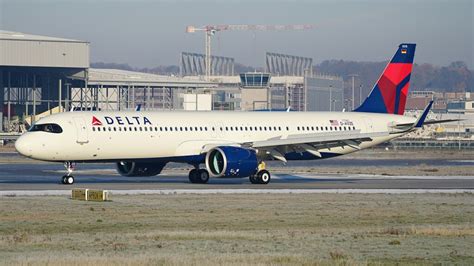
Travel booking platform Hopper reports that the average U.S.–Europe round-trip fare is now $817, a 10 percent decline from last summer and closely resembling pre-pandemic pricing seen in 2019. Flash sales and limited-time promotions are becoming a weekly occurrence as airlines strive to stimulate demand with urgency.
Airlines Shift Focus to U.S. Outbound and Regional Travel
While inbound European traffic is declining, U.S.-originating demand remains strong. Carriers like Delta and American report that up to 80 percent of their international bookings originate from U.S. travelers, helping to stabilize revenue. For these airlines, the drop in European interest is being mitigated by continued outbound enthusiasm among Americans looking to travel abroad.
Delta, which serves key hubs including Atlanta and New York, has confirmed no route suspensions but has adjusted fare structures downward to appeal to a more price-sensitive market. American Airlines, similarly, has slashed prices while retaining its summer route network intact, banking on resilient U.S. consumer appetite.
European carriers, on the other hand, are having to recalibrate their strategies more fundamentally. Lufthansa has reduced frequency on several U.S. routes while increasing its advertising efforts to attract U.S.-based travelers. Air France-KLM CEO Ben Smith acknowledged a “slight pullback” in traffic and revealed fare reductions and targeted marketing efforts to minimize half-empty cabins.
The general sentiment from carriers is one of rapid realignment—with every decision grounded in the need to protect margins in a summer market that no longer resembles the predictable transatlantic boom of previous years.
Mexico, Canada, and the Caribbean Step Into the Void
As Western Europe stalls, the Western Hemisphere steps forward. Travelers from Mexico, Canada, and the Caribbean have emerged as crucial to maintaining airline profitability. According to Hopper’s latest scheduling data, international departures from the U.S. are up 4.3 percent this summer, a reflection of both stronger outbound demand and reciprocal travel within the Americas.
U.S. carriers are capitalizing on this trend. Airlines have expanded frequencies to Cancún, Toronto, Vancouver, Montego Bay, and other high-volume Caribbean and Canadian destinations. Routes that once relied on European tourists are now being rebalanced toward regional travelers whose demand remains stable, and in many cases, is growing.
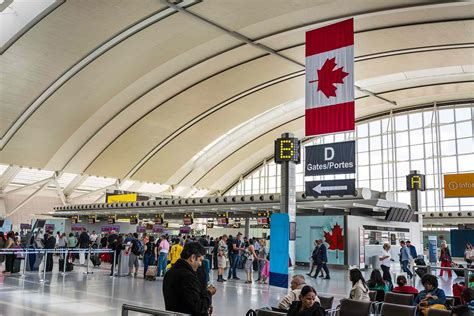
These regions benefit from shorter travel distances, more favorable exchange rates, and simplified border policies. Unlike Western European nations where U.S. politics play a larger role in traveler sentiment, travelers from Canada and Latin America are showing sustained confidence in U.S. travel.
Airline Financials Under Strain
The cascading effects of Europe’s pullback are also showing up in profit warnings and earnings adjustments. Tourism Economics, a unit of Oxford Economics, issued a sobering outlook for airlines relying on transatlantic routes. Director Aran Ryan noted that while global travel volume may still be healthy, the mix and directionality of demand is shifting in costly ways for legacy carriers.
The once-premium transatlantic corridor, long a cash cow for airlines, is now operating on thinner margins. To fill aircraft, carriers are relying on pre-pandemic style tactics, such as deep discounting, short-notice fare drops, and extended low-season pricing through high season dates.
The net effect is that while load factors may remain high, yield per passenger is declining, placing long-term pressure on route profitability unless demand from Europe rebounds or alternative markets can sustain current capacity.
Airline Reactions: A Snapshot of Industry Moves
The following summary illustrates the extent to which major airlines are reacting to Europe’s freeze and repositioning their fare structures and routes:
- American Airlines: Maintained full transatlantic route map but implemented deep fare cuts to Atlanta, Boston, L.A., and Washington D.C. CFO Devon May highlighted strong U.S. demand as a stabilizing force.
- Delta Air Lines: Kept most routes operational; aggressively reduced fares while leveraging high U.S.-origin demand. No route suspensions confirmed to date.
- United Airlines: Adjusted pricing after a 6 percent drop in Europe-origin bookings; focusing on San Francisco, Newark, and Chicago.
- Air France-KLM: Reduced frequencies to Seattle and Washington D.C.; implementing strategic fare reductions across affected cities.
- Lufthansa: Reduced frequencies, not full suspensions; prioritizing U.S.-booked travel and targeting New York and Chicago in new campaigns.
- British Airways: Suspended Las Vegas, trimmed Orlando and Philadelphia. Redirecting capacity toward higher-performing European and U.S. destinations.
- Virgin Atlantic: Warned of a slower transatlantic summer; adjusted pricing but maintained core routes to New York and Los Angeles.
- Iberia: Reduced flights to Chicago and Dallas, heavily discounted Madrid–NYC fares, and pulled back overall U.S. capacity.
A Rebalanced Global Travel Equation
What’s clear in 2025 is that the dynamics of international travel are no longer Eurocentric. The shift in transatlantic flows marks not only a temporary response to economic and political currents but potentially a longer-term recalibration of airline priorities and traveler behavior.
As airlines chase demand across a more diversified landscape, traditional assumptions about high-value corridors like London–New York or Paris–Los Angeles are being tested. Regional partnerships, bilateral route optimization, and market-sensitive pricing are replacing the one-size-fits-all model of past years.
The industry’s resilience is now tied to its agility—how quickly it can pivot from stagnating markets to surging ones. In 2025, that means focusing less on a cooling Europe and more on the Americas, where travel demand remains vibrant and relatively insulated from geopolitical headwinds.
Outlook: Uncertain Skies Ahead
The outlook for the remainder of the year remains uncertain. If the U.S. dollar remains strong and political volatility persists, Europe’s retreat may deepen. Alternatively, a rebound in sentiment—driven by improved exchange rates or geopolitical easing—could quickly restore the transatlantic corridor’s profitability.
For now, though, the numbers tell a clear story: Europe is hesitating, and the Americas are rising to take its place. Whether this is a blip or a trend will depend on how airlines continue to adapt—and how travelers continue to choose.