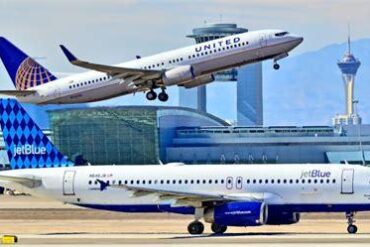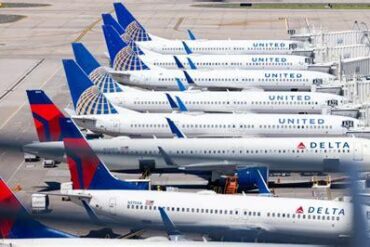
The American airline industry is undergoing a major retrenchment in 2025, with leading carriers such as Delta Air Lines, United Airlines, American Airlines, JetBlue, and Southwest pulling back on flight routes and cutting revenue forecasts. Despite a slight uptick in passenger numbers, the economic headwinds and shifting traveler behavior are driving widespread network reductions and signaling a strategic pivot for the entire sector.
Economic Pressure Triggers Industry-Wide Route Reductions
The post-pandemic boom in air travel has hit a plateau. While the U.S. Department of Transportation (DOT) reported a 3% rise in passenger volumes in Q1 2025 compared to the previous year, that growth has not translated into financial gains. Average domestic airfare plummeted by 6% in March, undercutting airline margins and leading to intensified cost-control measures. Simultaneously, air ticket sales through U.S. travel agencies dropped by 5% year-over-year in May, illustrating a disconnect between passenger numbers and revenue generation.
Behind the numbers lies a growing price sensitivity among consumers. More travelers are opting for budget fares and economy seating, leaving premium cabins undersold. This shift in demand has made long-haul and business-oriented routes especially vulnerable, prompting a recalibration in how airlines allocate capacity.
Delta and United Scale Back Ambitions in International Markets
Delta Air Lines, once optimistic about a 4% revenue gain for the year, has walked back those expectations to below 2%. The airline is slashing international routes to Germany, Brazil, and South Korea. Even key domestic hubs like Atlanta and Detroit are seeing flight reductions, particularly on routes traditionally buoyed by corporate traffic.
United Airlines is making even deeper cuts. Weighed down by reduced corporate bookings and geopolitical instability, United is trimming or suspending services to Tel Aviv, Shanghai, and South America. Its frequency between Chicago and Tokyo has been reduced, and select transcontinental U.S. flights are being removed from the schedule. United’s 2025 forecast has been significantly downgraded as it shifts focus from growth to preservation.
American Airlines and JetBlue Focus on Core Networks
American Airlines is paring back service to major international destinations like London Heathrow, Frankfurt, and Buenos Aires. Domestically, high-profile routes such as New York–Los Angeles and Dallas–San Francisco are seeing reduced frequencies. These cuts reflect both declining business travel and waning consumer discretionary spending.
Meanwhile, JetBlue Airways, after an ambitious attempt to expand into long-haul transatlantic markets, is retracting flights to Amsterdam, Paris, and London Gatwick. The airline is consolidating efforts on U.S. East Coast operations and Caribbean hotspots such as San Juan and Cancún, seeking profitability over prestige.
Low-Cost Carriers Reposition Amid Fuel and Labor Costs
Southwest Airlines is maintaining a broad domestic presence but has pulled out of underperforming regional routes in New England and the Midwest. The airline is betting on volume, bolstering its service to Orlando, Las Vegas, and Phoenix while rolling out aggressive discounts to attract price-driven consumers.
Ultra-low-cost carriers Spirit and Frontier face different challenges. Spirit is downsizing operations at Chicago O’Hare and Baltimore, whereas Frontier is doubling down on volume-driven markets like Las Vegas, Denver, and Orlando. However, both are being squeezed by escalating fuel and labor costs, undermining the ultra-low-cost business model.
Business Travel Continues to Slide as Self-Managed Bookings Rise
One of the starkest trends of 2025 is the continued deterioration of business travel. According to the U.S. Travel Association, business-related bookings dropped by 8% in May year-over-year. Companies are tightening expense policies, increasingly relying on virtual meetings, and instructing employees to choose lower-cost travel options.
At the same time, the rise of online travel agencies (OTAs) like Expedia, Google Flights, and Kayak has shifted the booking landscape. OTA usage jumped by 8% in early 2025, while direct airline bookings surged to an all-time high of 73%. This digital migration complements airlines’ efforts to optimize pricing strategies and streamline customer engagement.
Global Headwinds Create Uncertainty Across the Aviation Sector
The economic backdrop in 2025 is anything but favorable. Data from the Bureau of Economic Analysis (BEA) reveals a slight GDP contraction in early 2025, driven by persistent inflation and escalating tariff disputes with major trade partners like China, Mexico, and Canada. This has eroded consumer confidence, reflected in the University of Michigan’s Consumer Expectations Index, which now sits at its lowest point since 2011.
The impact on international travel has been profound. Inbound tourism from Canada and Mexico—historically strong contributors to U.S. tourism—has dropped significantly. Airlines have responded by axing flights on cross-border routes, deepening the scale of U.S. airline route reductions in 2025.
TSA Data Offers Hope but Warns of Future Volatility
Despite the grim economic indicators, the Transportation Security Administration (TSA) reported screening 904 million passengers in 2024, marking a 5% increase from 2023. Early figures from 2025 suggest domestic air travel remains relatively resilient, especially through major hubs like Atlanta (ATL), Los Angeles (LAX), Chicago O’Hare (ORD), and Dallas-Fort Worth (DFW).
However, the underlying data reveals potential vulnerabilities. With falling fare yields and cooling advanced bookings, industry experts caution that the positive momentum may not last into late 2025 unless consumer sentiment rebounds.
Airlines Shift to Resilience, Abandoning Growth-at-All-Costs Strategy
Facing persistent uncertainty, U.S. airlines are abandoning traditional expansionist strategies. The new focus is on resilience, operational efficiency, and demand elasticity. Dynamic pricing models, AI-powered demand forecasting, and optimized loyalty programs have become integral to airline strategy.
The route networks of the future will likely be leaner and more demand-responsive, prioritizing profitability over scale. Premium cabins may become rarer outside international business centers, replaced by economy-plus offerings and flexible fare tiers aimed at value-conscious travelers.
From 2025 through 2028, the carriers that succeed will be those who can adapt to economic shocks, leverage direct-to-consumer sales channels, and anticipate consumer behavior with greater precision.
Conclusion: A New Chapter for U.S. Aviation
The sweeping route reductions and downgraded forecasts in 2025 are not simply a reaction to short-term turbulence—they mark the beginning of a long-term industry transformation. Airlines like Delta, United, American, JetBlue, and Southwest are resetting their strategies to survive and thrive in a post-pandemic, inflation-laden, and digitally driven world.
As major U.S. airlines reduce routes, travelers will encounter fewer options but potentially better pricing—at least in the short term. For the aviation industry, the path forward is no longer about reaching farther but about becoming smarter, leaner, and more attuned to a world that no longer travels as it once did.