Microbursts represent one of the most formidable weather threats to aviation, particularly during the critical phases of takeoff and landing. These compact but intense downdrafts of air, emerging from powerful thunderstorms, can compromise aircraft stability in a matter of seconds. When the updrafts within a cumulonimbus cloud collapse, they send a surge of cool, dense air toward the surface. Upon impact with the ground, this air spreads out violently, creating sudden, high-speed horizontal wind shear that can disorient even the most experienced flight crews.
The risks associated with microbursts have been extensively studied since the late 20th century, especially after a series of fatal crashes in the 1980s. While modern radar and training tools have advanced, microbursts remain an unpredictable hazard, demanding constant awareness and rapid pilot response.
Defining the Microburst: A Meteorological Threat in Miniature
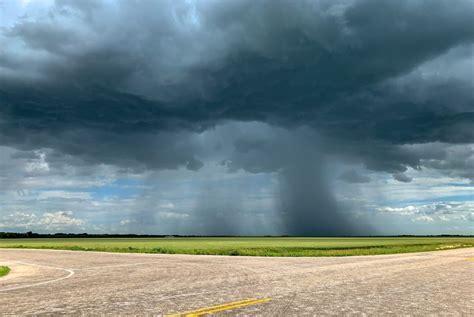
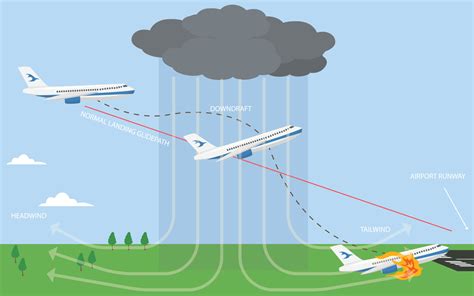
A microburst is a highly localized column of sinking air that descends from a thunderstorm and accelerates downward due to evaporative cooling. Upon striking the ground, the air mass disperses radially in all directions, creating horizontal winds that can exceed 150 miles per hour. The entire phenomenon can last between 5 to 15 minutes but unfolds so rapidly that standard weather monitoring systems may struggle to provide timely warnings.
While microbursts may occupy a physical area of less than 4 kilometers in diameter, their effects are disproportionately dangerous due to their capacity to alter wind direction and velocity over a short distance—conditions known as wind shear. This sudden and violent shift can compromise the aerodynamic performance of an aircraft, especially when it’s flying at low speed and altitude.
Types of Microbursts: Wet vs Dry
Microbursts are primarily classified into two categories based on moisture content and visibility: wet microbursts and dry microbursts.
Wet Microbursts
These typically occur in humid environments where rain falls through a dry sub-cloud layer. The rain evaporates rapidly, leading to intense cooling and subsequent descent of the air mass. Upon ground impact, the cooled, heavy air fans out violently, generating strong outflow winds. Wet microbursts are more commonly observed in desert regions or areas with layered humidity structures.
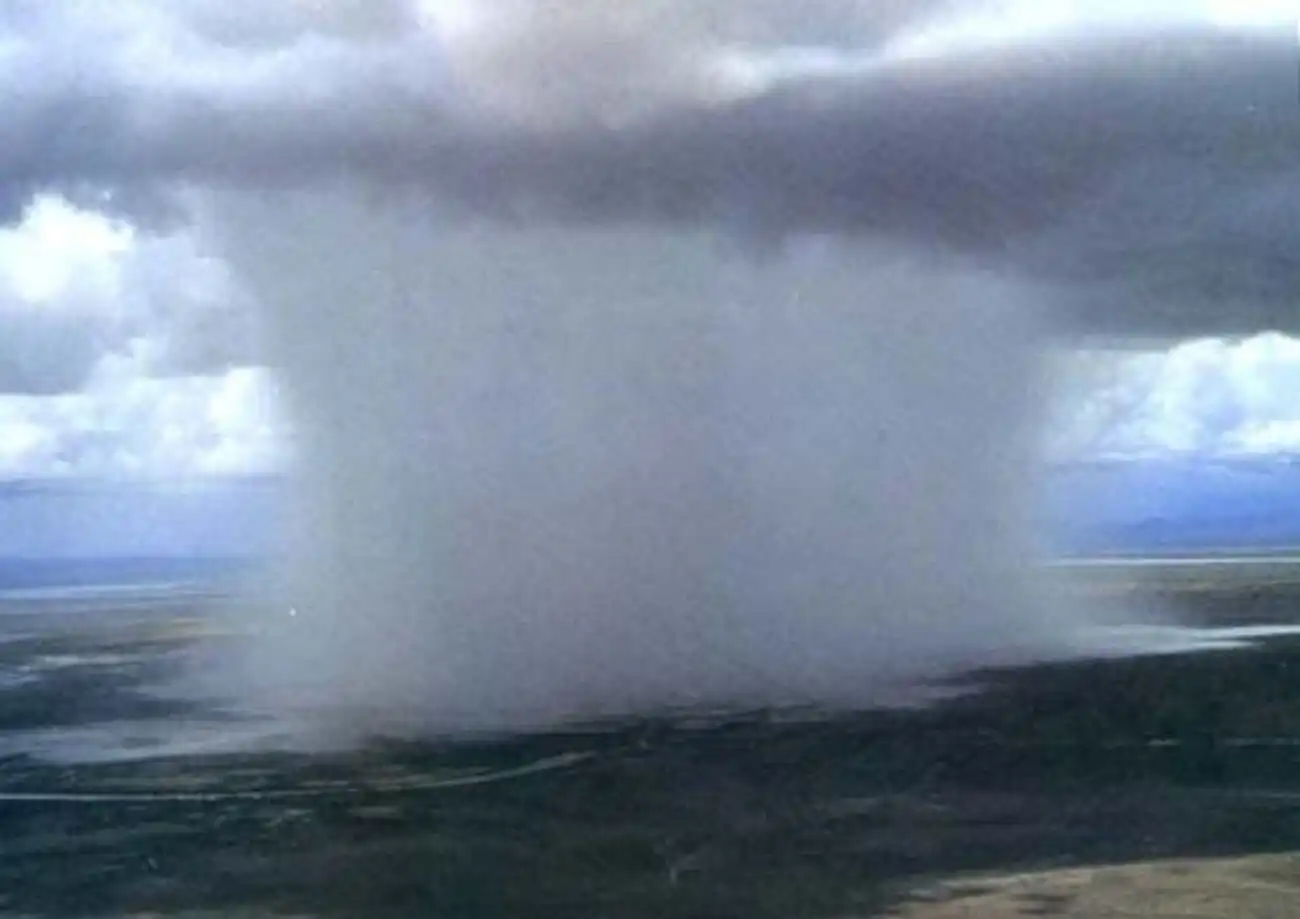
Wind speeds in wet microbursts can reach up to 150 mph, making them especially hazardous. Fortunately, their presence is often marked by visible precipitation shafts and radar echoes, providing pilots and meteorologists with clearer indicators.
Dry Microbursts
In contrast, dry microbursts occur in environments with little to no precipitation reaching the ground. The downdraft forms through evaporative cooling of high-altitude moisture, which never condenses into visible rain. These microbursts are more prevalent in arid or semi-arid climates and are exceptionally dangerous because of their lack of visual warning signs.
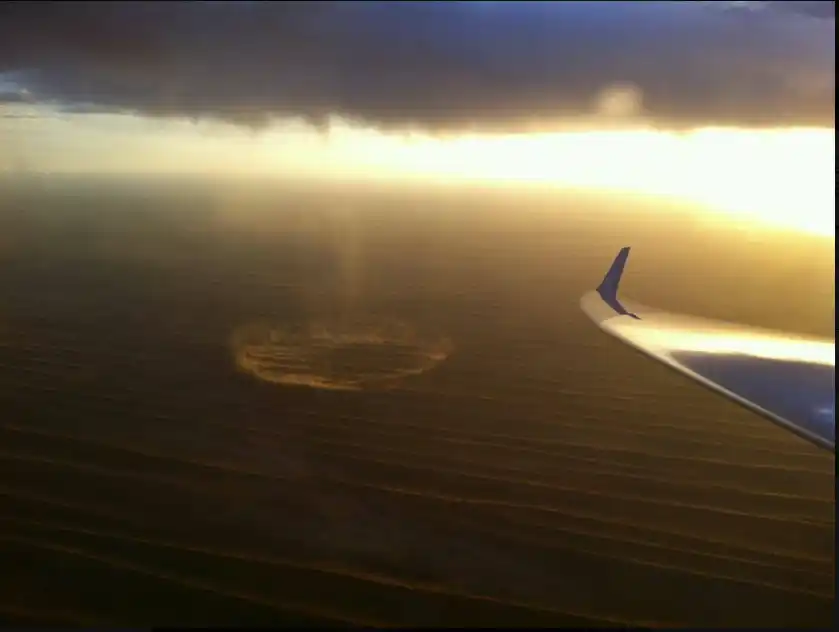
Despite being less intense than wet microbursts, with wind speeds typically reaching 100 mph, their stealthy nature and lower radar visibility make them far more challenging to anticipate.
The Life Cycle of a Microburst: Three Critical Stages
To fully understand microbursts, it’s essential to examine their developmental stages, each with distinct aerodynamic implications for aircraft.
1. Downburst Stage
This is the initiation phase, where cooled, dense air begins to descend rapidly through the atmosphere. Aircraft in this zone may suddenly experience a headwind, which falsely boosts lift and may encourage the pilot to reduce thrust—a potentially fatal miscalculation.
As the aircraft continues forward, the headwind can abruptly transition into a severe tailwind, leading to a sudden loss of lift, decreased airspeed, and dangerous sink rates. This is often the most perilous phase, particularly during final approach.
2. Outburst Stage
Once the downdraft reaches the ground, it spreads outward in a radial pattern. This creates strong lateral and vertical wind shear across multiple vectors, destabilizing aircraft trajectories. Pilots encountering this stage must be prepared for intense turbulence and the need to make continuous control corrections.
Outburst winds can exceed 45 knots, dramatically altering an aircraft’s flight path and requiring immediate power adjustments and climb angles to regain stability.
3. Cushion Stage
In the final phase, the air rebounds slightly after impacting the ground. This rebound effect can create turbulent eddies and vertical updrafts, resulting in sudden variations in altitude. Pilots must resist overcorrecting, as doing so can lead to pilot-induced oscillations.
The turbulent airflow in this stage often complicates recovery efforts, particularly when the aircraft is close to the runway threshold.
Pilot Strategies for Microburst Avoidance and Recovery
Responding to a microburst is an exercise in situational awareness, decision-making speed, and aerodynamic knowledge. Pilots employ multiple tools and techniques to manage these threats, often starting with avoidance.
Detection and Avoidance Measures
Modern commercial aircraft are equipped with Doppler radar systems capable of detecting wind shear in real-time. Airports also utilize Low-Level Wind Shear Alert Systems (LLWAS) and Terminal Doppler Weather Radar (TDWR) to identify sudden wind gradients.
Pilots are trained to recognize visual cues such as:
- Virga: rain that evaporates before hitting the ground
- Dust rings or debris blowing outward from a central point
- Sudden shifts in wind direction and turbulence
If a suspected microburst is detected, standard protocol mandates aborting the approach or delaying takeoff until the weather system has stabilized.
In-Flight Recovery Protocols
If avoidance fails, pilot response becomes critical. The primary goal is to maintain or recover lift and avoid terrain impact. Recommended actions include:
- Full throttle application: maximize engine thrust to counteract downdraft effects
- Nose-up attitude adjustments: to regain climb performance
- Avoid premature configuration changes: such as retracting landing gear or flaps, which could destabilize the aircraft
These measures require precise execution under immense pressure. Hence, recurrent simulator training is mandated by most aviation authorities to ensure readiness for such high-stress scenarios.
Real-World Case Study: Aeromexico Flight 2431
On February 24, 2019, Aeromexico Flight 2431, an Embraer E190, crashed shortly after takeoff due to a suspected microburst event in Durango, Mexico. Initial climb was disrupted by a sudden downward wind surge, leading to a loss of control.
Investigators later determined that the microburst was not the sole factor. Pilot error, including poor situational awareness and failure to adhere to training protocols, also contributed. Additionally, unapproved training activities onboard complicated the recovery.
This tragedy underscores the fact that even with advancing weather radar and cockpit technology, human vigilance and procedural discipline remain vital in microburst scenarios.

The Future of Microburst Safety in Aviation
Efforts to mitigate microburst risks continue to evolve. Artificial intelligence, satellite meteorology, and predictive modeling are now integrated into aviation weather systems to enhance detection and early warnings. Meanwhile, aircraft manufacturers are working on improving automated response protocols that can override pilot input during a microburst event to ensure survivability.
However, technology cannot replace the value of intensive pilot training, scenario simulation, and meteorological literacy. The microburst remains a rare but lethal adversary, demanding vigilance from every link in the aviation safety chain—from tower controllers to flight crews.
Conclusion: Constant Vigilance in the Face of Atmospheric Fury
Microbursts epitomize nature’s unpredictability. They test the limits of aircraft performance, challenge pilot decision-making, and expose gaps in detection infrastructure. Through a mix of cutting-edge weather monitoring, rigorous training, and in-flight discipline, the aviation industry continues to strive toward mitigating their dangers. But in every flight briefing, in every thunderstorm forecast, microbursts remain a specter pilots must be ready to confront.