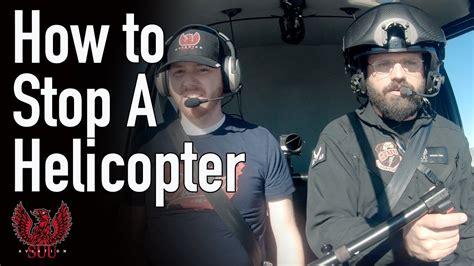
When witnessing a helicopter abruptly transition from forward motion to a sudden stop mid-air, it’s easy to mistake the maneuver as a pilot overreaction or system failure. However, what you’re actually observing is a critical and deliberate flight procedure known as a quick stop. This maneuver serves both practical and training purposes in the complex world of rotary-wing aviation, combining aerodynamic principles, pilot reflexes, and mechanical precision in one fluid action.
A quick stop is not merely about deceleration—it’s about maintaining aerodynamic balance, situational control, and aircraft integrity while halting forward momentum. Pilots train extensively to master this complex skill, particularly because of its relevance in real-world emergency and tactical scenarios. As such, understanding the why and how of helicopter quick stops provides a deeper appreciation for the complexities of rotorcraft flight.
What Is a Helicopter Quick Stop?
A helicopter quick stop refers to a sudden reduction in forward airspeed while transitioning to a hover. This technique is typically executed from a low-altitude, low-speed flight path and involves a precise balance of pitch, power, and pedal inputs. The goal is to stop the helicopter’s forward movement rapidly—without losing altitude, gaining unintended lift, or drifting laterally.
The maneuver begins with the pilot initiating a flare—a pitching up of the nose. This change in pitch increases drag and decreases forward speed. Simultaneously, the pilot must manage collective (vertical lift), tail rotor inputs (yaw control), and throttle or power levels (rotor RPM) to keep the aircraft stable.
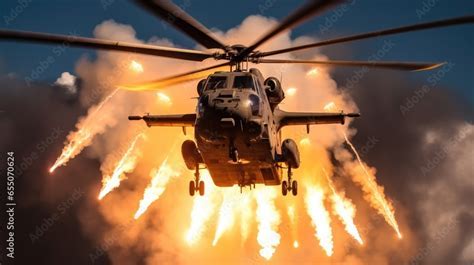
The art of the quick stop lies in keeping the helicopter’s main rotor RPM stable while redirecting energy from forward motion into a controlled hover. Done correctly, the maneuver allows the helicopter to pause midair with minimal altitude loss, positioning it safely for either landing or further maneuvers.
Why Pilots Perform Quick Stops
Pilots don’t just learn quick stops for the sake of adding another trick to their repertoire. This maneuver serves critical safety, tactical, and operational functions, including:
- Emergency Avoidance: Avoiding mid-air collisions with other aircraft, drones, or unexpected obstacles.
- Takeoff Cancellation: If a pilot realizes an error, miscommunication, or danger during takeoff, a quick stop can halt the ascent before reaching hazardous conditions.
- Tactical Advantage: In military or law enforcement scenarios, helicopters may need to approach a target rapidly and then stop abruptly to minimize detection or respond quickly to changing situations.
- Precision Landings: In complex environments like rooftops or ship decks, stopping precisely over the landing zone is paramount.
By mastering the quick stop, pilots ensure that their situational awareness and response times remain sharp in unpredictable conditions.
The Aerodynamic Science Behind Quick Stops
The quick stop leverages several aerodynamic principles simultaneously. When a helicopter is in forward flight, the rotor disc generates lift but also a considerable amount of translational thrust, helping to move the aircraft horizontally. The flare maneuver, which is central to the quick stop, changes the angle of attack of the entire rotor disc.
By tilting the disc backward, the pilot increases drag, allowing kinetic energy to dissipate while the rotors still generate lift. The collective pitch may need to be adjusted upward to maintain altitude during the deceleration. If the collective is increased too rapidly, the helicopter can balloon upward; if not enough, the aircraft may descend prematurely.
Managing this balance is crucial because descending into one’s own rotor wash—the turbulent downwash generated by the spinning blades—can cause a sudden loss of lift known as settling with power. This phenomenon increases the risk of an uncontrolled drop, which becomes particularly hazardous close to the ground.
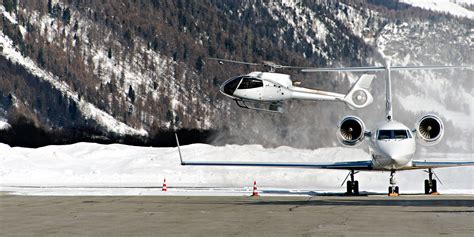
Common Mistakes and Real-World Risks
As with any maneuver requiring precision, quick stops carry significant risk if performed incorrectly. One of the most frequent errors involves allowing the helicopter to descend too soon during deceleration. In such cases, the aircraft may move into its own rotor wash before it has fully stopped forward movement.
This dangerous scenario not only reduces lift but also raises the likelihood of tail rotor strikes. Since the tail boom is often the lowest point on the aircraft’s rear, striking the ground or nearby obstacles can lead to catastrophic failure.
A sobering example occurred in 2021 during a U.S. Customs and Border Protection training flight. During a quick stop exercise, the helicopter entered an unanticipated yaw—beginning to spin sideways close to the ground. In the attempt to correct it, one of the flight instructors inadvertently disabled key flight control systems. The result was a nose-first crash that severely damaged the aircraft and highlighted how even small mistakes in this maneuver can escalate quickly.
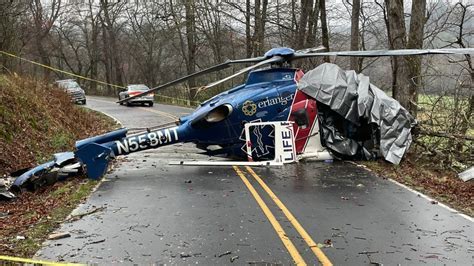
This incident underscores why quick stops are reserved for experienced pilots and must be practiced regularly under supervision. The FAA stresses that understanding the aerodynamic envelope of your specific aircraft is essential for safe execution.
Quick Stop vs. Rejected Takeoff: Know the Difference
Another often misunderstood concept is the difference between a quick stop and a rejected takeoff. Both are abortive maneuvers but are used in different flight phases and serve distinct operational purposes.
- Quick Stop: Occurs after forward motion begins, typically in low-altitude cruise. The goal is to decelerate and hover in place.
- Rejected Takeoff: Executed during the initial climb, before achieving full climb speed or altitude. The goal is to safely descend or return to the landing zone without entering full flight.
Unlike a quick stop, a rejected takeoff does not require an abrupt pitch adjustment. Instead, the focus is on keeping the aircraft aerodynamically stable while choosing a safe path back to the ground. It is less aggressive and often preferred in scenarios where altitude and space allow for a more measured response.
The FAA provides specific training guidance for both maneuvers, emphasizing that pilots should not interchange them casually. Understanding their nuances is critical not just for safety, but for compliance with flight regulations and operational SOPs.
Role of Autopilot Systems in Quick Stops
Modern helicopters are often equipped with autopilot and flight director systems that assist with stability and heading control. However, these systems are typically not designed to execute quick stops autonomously. The maneuver’s complexity requires tactile feedback and nuanced input that autopilots, as of now, cannot reliably replicate.
That said, some advanced autopilot suites do offer partial stabilization assistance. For instance, they can help maintain yaw control or hold altitude during hover entry. But the flare, deceleration rate, and final hover position still depend on manual pilot control. This highlights why quick stops remain a core competency for rotary-wing pilots, even in the age of increasing cockpit automation.
Training for the Quick Stop: What Pilots Learn
Flight training programs place a strong emphasis on mastering quick stops early in a pilot’s education. The typical progression includes:
- Simulated Quick Stops: Performed at higher altitudes in controlled environments to understand aircraft behavior.
- Low-Level Quick Stops: Introduced once the pilot demonstrates control stability.
- Real-World Scenarios: Quick stops in crosswinds, near obstacles, or within confined landing zones.
The key learning outcomes include mastering energy management, anticipating aerodynamic lag, and refining fine motor inputs on the controls. Instructors focus on building pilot intuition, since quick stops often arise during unpredictable real-world events.

The Tactical Edge: Military and Law Enforcement Applications
In combat and tactical law enforcement operations, quick stops offer a strategic advantage. Whether it’s inserting a SWAT team onto a rooftop or executing a rapid pickup in hostile territory, the ability to come to a dead stop in minimal time is invaluable.
In these high-stakes scenarios, the margin for error is virtually zero. Pilots must account for external variables such as wind direction, rooftop obstacles, line-of-sight threats, and landing surface integrity—all while maintaining rotor RPM and hover stability.
Because of this, many military rotorcraft, such as the UH-60 Black Hawk or the MH-6 Little Bird, are optimized for rapid maneuvering and feature advanced flight control systems to aid in extreme quick stop environments. Yet, even with these enhancements, pilot proficiency remains the determining factor.
Conclusion: A High-Stakes Ballet in the Sky
Quick stops are one of the clearest demonstrations of a helicopter’s unique aerodynamic capabilities and the pilot’s precision under pressure. They represent more than a flashy maneuver—they are a vital skill in the toolkit of any competent rotorcraft pilot.
Executed correctly, they can save lives, provide tactical edge, and ensure operational safety in a wide variety of environments. Executed poorly, they can turn into high-risk incidents with irreversible outcomes. In a domain where the margin for error is slim, mastering the quick stop is not optional—it’s essential.
Whether you’re watching from the ground or holding the controls yourself, there’s no mistaking the intensity and precision behind every quick stop. It’s not just a maneuver—it’s aeronautical artistry under pressure.